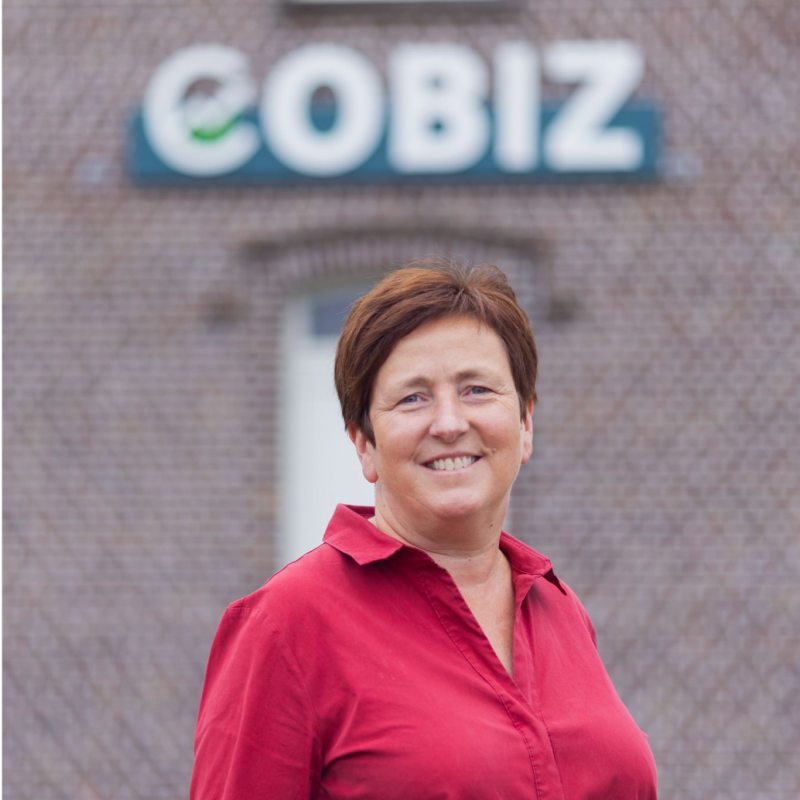
Anja Warrot
Anja Warrot is Co-owner at VanAnaarBeter.com.
Talks about
In episode 63 of the BlackBird podcast, host Andy Coomans talks with couple-entrepreneurs Dirk Colman and Anja Warrot, both former finance executives who moved into recruitment. They built Van A naar Beter from a Dutch franchise concept (started 2013, independent from 1 January 2017) into an organically grown SME with 10 employees, housed in a renovated former NMBS railway station that acted as their biggest marketing asset. Facing the war for talent, a doubling in the number of client conversations needed per hire, and heavy consolidation in the recruitment market, they abandoned a diversification plan and instead sold the company to Select Group — a deal closed in just two months, chosen largely on cultural fit and guarantees for their people. They candidly describe the emotional side of 'selling your baby', announcing the sale to the team, and the integration period. Today they've returned to their financial roots with Cobiz, supporting entrepreneurs with financial questions.
Insights & takeaways
The through-line
Anja Warrot's recurring preoccupation is turning AI, specifically Claude, into a practical, everyday tool for entrepreneurs and their numbers, rather than a novelty for writing texts or making images . Over the period covered she moves from testing and demonstrating Claude on her own work to systematizing that experience into training and workshops for KMO's, sharing prompts and skills for free and running recurring sessions . Underneath the AI focus sits an older habit of questioning "zo doen we dat hier nu eenmaal" and looking for the one habit, process or way of working worth challenging or improving a little every day . Her earlier work in recruitment, visible in the podcast material, already carried the same data-driven instinct: watching a metric double, trusting the number, and acting on what it told her about the business model 16.
On using Claude for real work
Warrot treats Claude as a working colleague she tests deliberately, not a gimmick. She fed it a bare AutoCad drawing with no explanation of the client's method and asked for a meetstaat, then compared it against the client's own calculation: "Ik was onder de indruk van het resultaat" and in the second round "werd het pas écht interessant" when Claude "leerde extra zaken die typisch waren voor een meetstaat" and even "vond een menselijke fout" in the client's own numbers . She frames the value not as replacement but as time and decision quality: "Minder zoeken. Minder knippen en plakken. Minder manueel controleren." and "Niet om je werk over te nemen. Wel om sneller inzicht te krijgen en betere beslissingen te nemen. Daar zit voor mij de echte meerwaarde." . When new Claude models appear, her instinct is to re-run the same assignment and ask "Maakt dit model minder fouten? Ziet het sneller verbanden? Bouwt het een beter dashboard?" .
On entrepreneurs' fear of AI and numbers
A repeated theme is naming the objections entrepreneurs voice and dismantling them one by one. She quotes them directly: "AI, dat is niets voor mij," "Ik ben niet technisch genoeg," "Straks staan er fouten in mijn cijfers en zie ik het niet," "Ik heb geen tijd om dat allemaal uit te zoeken." She answers the time objection head on: "Ik heb daar eigenlijk geen tijd voor." Net daarom is dit zo interessant... Dat is geen hype. Dat is slimmer ondernemen." She also flags that most entrepreneurs already use AI but shallowly: "81% van de Belgische KMO's gebruikt AI. En toch merk ik dat veel ondernemers er vandaag nog maar een klein stukje van gebruiken." Her prescription is focus rather than breadth: "Kies één AI-tool en leer er echt goed mee werken. Dan ben je al veel verder dan de gemiddelde gebruiker."
On cash and the cijfers that matter
Beyond AI tooling, Warrot's COBIZ work centers on which numbers actually matter to a business. She distinguishes profit from cash bluntly: "Winst is een cijfer op papier. Cash is wat er effectief op je rekening staat. En daartussen zit soms een wereld van verschil." The related workshop pushes entrepreneurs to cut clutter: "Geen overvloed aan rapporten, maar een helder overzicht waarmee je betere beslissingen neemt." with the guiding line "Less is more." She frames every offering, including AI training, against the same test of what it delivers for "jouw cash, je tijd en je Comfort" .
On trust from clients
Warrot repeatedly returns to gratitude for the trust entrepreneurs place in her and her team on decisions that matter to their business: "zalig om het vertrouwen te krijgen van klanten om mee te werken aan cruciale stappen in hun onderneming" and "We staan er zelf niet vaak genoeg bij stil hoe bijzonder dat is." This sits alongside her older belief, from her recruitment years, that struggling with finance is not something to be ashamed of because "finance is a specialty like any other trade" 16.
From the stage
In the BlackBird podcast, Warrot and Dirk Colman give a business history not present in the written posts: they sold their recruitment agency Van A naar Beter to Select Group after ten years because the no-cure-no-pay model broke down when the number of client conversations needed per successful hire doubled during the war for talent and never came back down 16. They describe abandoning a fully prepared diversification plan, brand names and logos ready, after concluding on holiday that the company would be better off inside a larger group, and they detail the mechanics of the handover: Select's people were on the parking lot the same morning the sale was announced, closing the gap between announcement and buyer presence, which let the team switch mentally within a day 16.
Takeaways
- Test new Claude model releases by rerunning the same assignment and comparing whether it makes fewer errors, spots relationships faster, and builds a better dashboard .
- When introducing AI to skeptical entrepreneurs, name their exact objections first (not technical enough, no time, afraid of errors) before making the case .
- Push clients toward depth with one AI tool rather than shallow use of many, since most KMO's already touch AI but underuse it .
- Separate profit from cash explicitly when advising on business decisions: profit is paper, cash is what is actually in the account .
- Design financial workshops around "less is more," giving a small set of decision-relevant numbers rather than a flood of reports .
- When selling or restructuring a company, close the gap between announcing change and having the new reality visibly present, since that speed of transition is what lets a team adjust emotionally 16.
- Being data-driven, they saw the number of client conversations needed per successful hire double during the war for talent — and it stayed that way in the market, breaking their business model.
- They abandoned an already fully worked-out diversification plan (with brand names and logos ready) after realizing on holiday that the company, its clients and employees would be better off inside a larger group.
- When announcing the sale, Select's people were on the parking lot the same morning to reassure staff; having no gap between announcement and buyer presence, plus honest answers, made the team switch mentally within a day.
- Many entrepreneurs feel ashamed of struggling with financial questions because they think they should have it under control, but finance is a specialty like any other trade.
Career
Roles
- COBIZCo-founder COBIZ | Flexibele CFO & opleidingen financieel sturen en AI voor KMO'sSep 2024 – Present
- van A naar BETERZaakvoerder van A naar BETER - SelectiekantoorFeb 2017 – Sep 2024
- COFI bvba (COnsulting FInance)Business Finance ConsultantOct 2015 – Dec 2016
- Brouwerij PALM N.V.Van Financieel Assistent naar Directeur Finance / ICTJul 1995 – Sep 2015
Education
- BlackBird Business Class2023 - Jun 2024
- FedergonSociale wetgeving & preventiebeleid2018 - 2018
- Carl Van De Velde trainingsinstituutMaster in Results, Groeiopleiding voor ondernemers2016 - 2017
Vlerick Gent - Management SchoolICT Management2009 - 2009
- Fiscale Hogeschool Brussel#228schoolFiscale Wetenschappen1999 - 2001
- Ehsal BrusselLicentiaat Handelswetenschappen, Specialisatie Accountancy1990 - 1995
From public career histories · 10 entries
Media & appearances
1- 16podcastBlackBird Business Events · 28 Dec 2024
Dirk Colman and Anja Warrot explain why they sold their recruitment agency Van A naar Beter to Select Group after 10 years, driven by the no-cure-no-pay model's pressure and market consolidation, and how the two-month sale process and emotional handover unfolded.