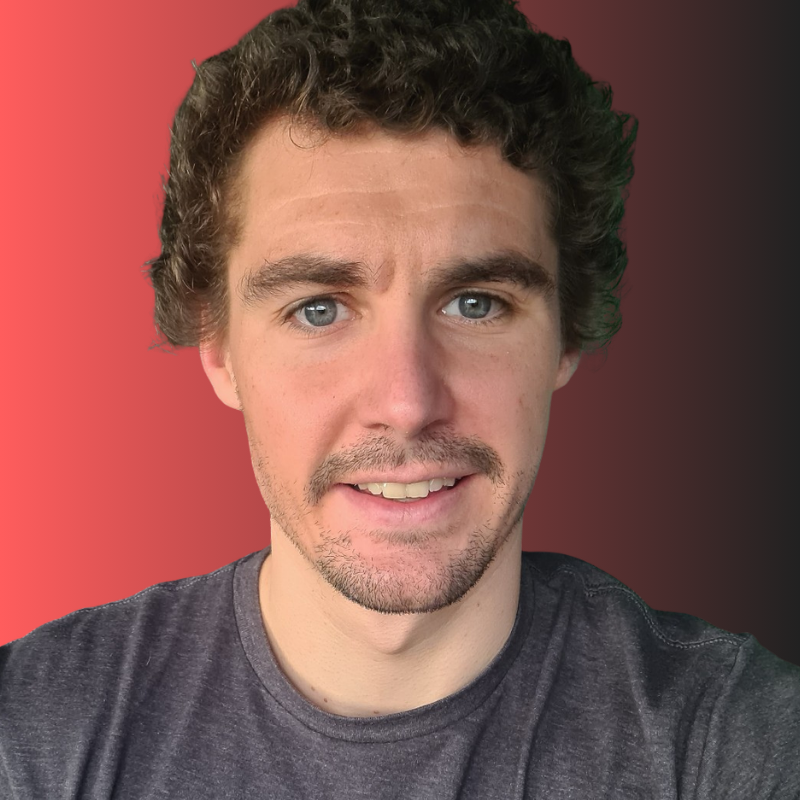
Antoine Van Malleghem
Antoine Van Malleghem is co-founder and chief technology officer of Botronics, a role he has held since December 2022. He is based in Braine-l'Alleud and states expertise in artificial intelligence, robotics and technical leadership.
Before Botronics, he spent five years at Hermes Engineering, from September 2017 to December 2022, as a team manager and consultant.
He studied computer engineering at the Université catholique de Louvain, completing a Master 2 between 2011 and 2016, and followed this with a Master 1 in management science at the Louvain School of Management in 2016 and 2017.
Insights & takeaways
Across his public writing, Antoine Van Malleghem returns again and again to one core engineering conviction: build for independence from any single hardware vendor. When NVIDIA raised Jetson board prices by "between 33% and 101%" without explanation, he used the moment not to criticize NVIDIA but to restate a design principle he clearly holds dear: "you must avoid being too tied to a given piece of hardware" . He is careful to note the nuance that comes with building physical products, since making your own motherboard inevitably binds you to a given SOM, but his advice is pointed all the same, urging engineers to "think twice, for example, before using a proprietary SDK that only works with certain hardware" and asking pointedly, "Why do you think hardware companies provide free software?" . This is presented as general architectural wisdom rather than a grievance, and he's quick to add that the price hike "didn't impact our BOM" , suggesting the principle is one he actually practices, not just preaches.
That same insistence on rigor shows up in how he talks about hardware validation. A stray 50 cm I2C cable on the iXi trolley taught him and his team a costly lesson about electrical noise, traced eventually to interference from "the frame of the trolley itself" even though the magnetometer sat "1 m from the motors" . He treats this kind of failure as instructive rather than embarrassing, the sort of thing you "learn the hard way" . The same discipline appears in his description of new PCB test cycles, covering "NVMe read and write speeds, USB device speeds, CAN testing, RTC, and much more," with a line that captures his engineering mindset succinctly: "this is the step where you can trust nothing and just validate everything" . He also finds real satisfaction in the unglamorous last stretch of feature development, describing himself as an engineer who prefers "this 'last 20%' phase," tackling unhappy flows and residual bugs even though "you get fewer 'wow' effects" .
Van Malleghem is explicit that robotics software is a different discipline from web or general software engineering, a claim he makes from firsthand correction of his own prior assumptions. He admits he once believed, like many with a pure software background, that the jump into robotics would be easy, and concedes "I have to admit I thought so too in the past" . Experience taught him otherwise, particularly around low-level system understanding: "Never thought I would have to write my own driver, but here I am" . This distinction between abstraction-heavy software work and the physical, kernel-level demands of robotics is one of his most consistent talking points, and he frames it as a curve people should locate themselves on before assuming competence transfers .
On entrepreneurship, his tone is candid rather than promotional. He describes the gap between what people warned him about founding Botronics and what he actually experienced: "I thought I could imagine and understand this. I was wrong!" . He is equally direct about the cost and the reward, noting both how "stressful startup life is" and how fast one learns "how business works, how the entrepreneurship world works" . Mistakes are treated as data, not shame: "I made a lot of mistakes... but from these mistakes, I learned a thousand things" . That learning crystallizes into a specific belief about venture investing, that backing is fundamentally a bet on people: "Now I understand 100% why investors invest in a team. Trust me, that's the key" . Related to this is his belief in curated surroundings for idea generation, summarized in his own maxim, "you are like the people you surround yourself with. Choose wisely!" .
His view of the Botronics team itself is unusually emphatic. He states plainly that after "worked in a lot of different teams," he has "never seen a team like this one" , and frames the coming year around a clear operational purpose: "delivering as fast as possible while ensuring quality, so that we can revolutionize the world of golf" . This ambition is tied to product philosophy elsewhere too, particularly around human-robot interaction, a topic he treats as more than regulatory box-ticking. Discussing a proposed standardized protocol for robots communicating via sound, light, or motion, he notes that on the golf trolley "we don't have sound," but sees potential in light "though only from the screen, so not that powerful" and especially in motion, adding "we already have some ideas on how to do so" . For him, this isn't abstract EU policy discussion but a direct design constraint for the product he is building.
Finally, he positions himself as invested in Belgium's robotics ecosystem specifically, not just his own company. He expresses visible pride at Belgium's ranking in deeptech, "number 10 worldwide," and states a clear intent: "I clearly want to continue this way, trying to make Belgium stronger in robotics" . That commitment materializes concretely in his organizing of the first RO
Career
BotronicsChief Technology OfficerDec 2022 – Present
- Hermes Engineering#441factoryTeam Manager & ConsultantSep 2017 – Dec 2022
- Louvain School of Management#14schoolMaster 1 (M1), Management Science2016 - 2017
Université catholique de Louvain#4schoolMaster 2 (M2), Computer engineering2011 - 2016
From public career histories · 4 entries
Media & appearances
2- 13interviewAryan Jagushte · 1 year ago · 16:47 · 137 views
- 14podcast22Astronauts with Ilir Aliu · 1 year ago · 53:39 · 129 views
Antoine Van Malleghem discusses his background as the co-founder of Botronics, which develops robotic golf trolleys, and explains his career path starting with software and AI work at large companies before transitioning into robotics four to five years ago. He reflects on how his father's independent work with wood influenced his entrepreneurial mindset, contrasting this with his mother's role as a bank employee, and emphasizes the difference between being independent and being an entrepreneur.