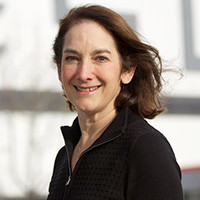
Beth Davies
In this SuperNova Conversations interview at FTI SuperNova, Beth Davies, former HR executive at Gap, Apple, Microsoft and Tesla and now founder of HR Reimagined, reflects on her career and philosophy of reinventing HR. She recounts rewriting Tesla's 56-page employee handbook into a 3.5-page 'anti-handbook' shared publicly with candidates as an exercise in radical honesty about culture. She argues that culture — how a company makes decisions and works together, not perks — is the real retention differentiator, and warns against iterative 'Frankenstein' HR, advocating instead to ask 'if HR were invented today, what would it look like?'. She also covers remote work's mentorship gap, treating employees like adults, AI in recruiting and HR service delivery, fail-fast culture illustrated by SpaceX, the limits of meritocracy for diversity, and her own struggle with identity when leaving companies and transitioning toward retirement.
Insights & takeaways
Beth Davies's thinking centers on a single provocation she returns to again and again: what would HR look like if it were invented today rather than inherited from a hundred years of incremental patchwork? She calls the result of that patchwork process a kind of "Frankenstein," and her core diagnostic question — "If HR was invented today, what would it look like?" 1 — functions less as a rhetorical flourish than as an actual operating principle. She points out that employee education still largely mirrors the one-room schoolhouse model, and she treats that continuity as evidence that most HR functions are copied forward rather than redesigned, which is why she warns leaders never to paste what worked at one company onto a different one without rethinking it from scratch 1.
That skepticism toward inherited orthodoxy extends to how she talks about mistakes and control. She rejects the idea that eliminating errors is a sign of organizational health, arguing instead that "companies are eliminating mistakes, they have put themselves on a path for failure" 1, and reframing failure itself: "The failure is not learning from your mistakes, not making a mistake" 1. This isn't a throwaway aphorism for her; it connects to a specific management philosophy she lays out about delegation — leaders should govern by setting boundaries, not by dictating process: "Set the frame, hire smart people and then let them figure it out. They're adults, they can do it" 1. She extends this logic to the present moment by noting that younger employees may simply know more than their leaders about new tools like AI, so control has to mean setting the frame rather than owning the day-to-day path 1.
On hiring and culture, Davies is emphatic about radical honesty as a retention strategy rather than a nicety. She describes deliberately telling candidates how hard the work will be, on the theory that hiring is expensive and that surfacing mismatches during the interview process protects both the company and the candidate's future goodwill, since you want people who leave to remain fans rather than critics 1. Her flagship example is Tesla's replacement of a 56-page rulebook with a 3.5-page "anti-handbook" that described how the company actually communicated and worked, explicitly telling readers it was fine if that culture wasn't for them, and sharing it publicly so new hires could ramp up faster 1. That same honesty shapes her view of differentiation: she argues that copying visible perks — dogs in the office, casual Fridays — accomplishes nothing, because "if everybody's doing dogs in the workplace, everybody has dogs in the workplace," and real differentiation comes from "how you make decisions" 1. She's unapologetic about the exclusionary implication of this stance, stating plainly, "We're not going to be the company for everybody" 1.
Davies is candid, almost self-critical, about her own career pattern, and she uses it to make a broader point about attachment and timing. She says she always left jobs without a next one lined up, reasoning that job-hunting while still employed would have split her commitment, and that the resulting transition periods helped her distinguish which of her traits were authentically hers versus absorbed from the company culture she'd just left 1. But she pairs this with a striking admission: "Every company I left, I left too late... the writing was on the wall... but I was so in love with the companies that I held on" 1. The lesson she draws isn't that leaving without a plan is risky, but that emotional attachment to a company's identity can blind even someone who preaches non-conformist HR to the signals telling her she was no longer making her best impact 1.
Her comments on fairness and equity resist easy consensus language. She's wary of meritocracy as a governing ideal precisely because it ignores unequal starting points, illustrating this with the contrast between a child of an engineer and a child of a factory worker entering the tech industry from very different baselines, and she argues that D&I efforts should instead focus on creating conditions where all smart people can bring their talents forward 1. This is consistent with her broader distrust of frameworks that sound neutral but quietly encode existing advantage, and it dovetails with her worry about remote work: she suggests that stripping away in-person proximity cuts junior employees off from the informal mentorship of simply watching senior people run meetings, a channel she believes has quietly built most careers 1.
On technology, Davies takes a notably calm, undramatic position. She doesn't treat AI-enhanced CVs as a new crisis for recruiters, arguing that good follow-up questions — "tell me the story, how did you make that happen" — still expose fabrication regardless of whether the embellishment came from AI or a human imagination 1. She's also willing to name an upside to automation that isn't the usual efficiency argument: AI chatbots replacing HR call centers could give employees an unexpected confidentiality benefit, since they'd never have to put a sensitive question to another human being 1. Her broader take on the current post-pandemic moment is that trust between leadership and employees is fragile precisely because promises about flexibility can be reversed the moment a company's survival feels threatened, and she frames the next few years as a search for that balance rather than a settled answer 1.
Threading through all of this is what she calls an "evolutionary mindset," which she treats as a practical requirement rather than a personality trait for the unusually adaptable: "I know the world is going to be changing and I need to change with it, and that's okay. It's normal, it's natural, it's not a threat, it just is" 1. She connects this directly to pace: the lifecycle of any given way of doing things has compressed from decades to a couple of years, which is why she frames non-conformism in HR not as risk-taking but as basic career maintenance 1. Taken together, her recurring throughline is that companies and individuals alike fail not from making mistakes or standing out, but from clinging to inherited structures, comfortable identities, and borrowed playbooks past the point they still serve anyone.
- Contrary to conventional wisdom, Davies always left jobs without the next one lined up, because job-searching while employed meant she couldn't give her full commitment — and the transition periods let her rediscover which traits were hers versus absorbed from the company.
- Being brutally honest with candidates about how hard the work is pays off because hiring is expensive and you want people to remain fans of the company even after they leave; mismatches should be surfaced during the interview process, not after.
- Tesla replaced its 56-page rulebook with a 3.5-page 'anti-handbook' describing how the company communicates and works, explicitly telling readers it's okay if the culture isn't for them — and shared it publicly with candidates so new hires could ramp up faster.
- HR practices become 'Frankenstein' through iteration — employee education still mirrors the one-room schoolhouse of 100 years ago — so leaders should ask what the function would look like if invented today (VR, app-based, purposeful interactions), and never copy-paste what worked at a previous company into a different context.
- Remote work risks cutting junior employees off from the informal mentorship of watching senior people work in meetings, a hidden channel through which most careers were actually built.
- Control should be the frame, not the day-to-day path: set parameters, hire smart people, and let them execute — especially since younger employees may know more about new tools like AI than their leaders.
- AI-enhanced CVs don't fundamentally change screening: good follow-up questions ('tell me the story, how did you make that happen') still expose fabrication, whether AI-generated or human-invented.
- If your culture and perks look like every other company's, employees will leave for better money; differentiating on how you make decisions and operate — not on dogs in the office or half-day Fridays — is what drives retention.
- Meritocracy sounds fair but ignores unequal starting points — a child of an engineer enters tech with a different baseline than a child of a factory worker — so D&I should focus on creating conditions where all smart people can bring their talents.
- The post-pandemic tension is that executives who promised flexibility may suddenly reverse rules when the company's survival is at stake, eroding employee trust; the next few years will be about finding that balance.
- AI could replace HR call centers with chatbots, with an unexpected confidentiality benefit: employees never had to ask a sensitive question of a human being.
- The lifecycle of doing things one way keeps shrinking — from decades to a couple of years — so a non-conformist, 'evolutionary mindset' is now a career requirement rather than a liability.
- Davies admits she left every company too late — the signals that she was no longer making her best impact were there, but attachment to the company identity made her hold on.
Career
Roles
- Career Curves PodcastPodcast HostAug 2019 – Present
- Aurum Speakers BureauKeynote SpeakerJun 2018 – Present
- IE Business SchoolAdjunct Professor2018 – Present
- HR ReimaginedFounder and Lead ConsultantSep 2017 – May 2022
- Tesla#701factoryDirector, Learning & DevelopmentMay 2011 – Sep 2017
- Microsoft StoresConsultant and then Director, Customer Experience & TrainingJul 2009 – May 2011
- Davies Retail & HR ConsultingPrincipal Consultant2008 – 2010
- AppleDirector, Retail Training2006 – Mar 2008
- AppleDirector, Worldwide Talent DevelopmentNov 2003 – Oct 2006
- BeadcraftersCOOOct 2002 – Aug 2003
- Retail Training InstituteFounder & Principal ConsultantNov 1997 – Nov 2003
- Gap IncVarious positions in Employee Development1990 – 1997
- Pettit & MartinAssociate Attorney1988 – 1989
Education
- Cleveland Heights High
- Indiana University BloomingtonBA, Sociology
Stanford Law SchoolJD, Law
From public career histories · 16 entries
Media & appearances
2- 1interviewSuperNova · 29 May 2024
Ex-Apple/Tesla/Microsoft HR leader Beth Davies shares at FTI SuperNova how radical honesty, non-conformist HR ('if HR were invented today') and culture-as-differentiator build innovative companies.
- promoSuperNova · 12 Jan 2024
Short promo clip of Beth Davies (Apple & Tesla alumni) inviting viewers to SuperNova Antwerp, March 21-22 2024, where she'll speak about people practices and culture at hypergrowth companies.