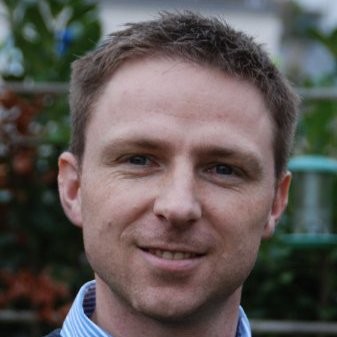
Bjorn Tremmerie
Recorded live at SuperNova 2025, this podcast episode features Bjorn Tremmerie, Head of Venture Capital and Impact Investing at the European Investment Fund. He explains the EIF's fund-of-funds model, its four funding pillars (EIB, European Commission, member states, and private institutionals), and its scale of roughly €20-25 billion invested across hundreds of VC funds. Tremmerie candidly admits he once doubted European venture could ever deliver returns, but says market data forced him to change his mind, and he now criticizes European pension funds and insurers for still failing to invest in European VC despite abundant proof points. He argues Europe captures 1 in 4 early-stage euros globally but only 10% of scale-up capital, and highlights initiatives like the €3.6B European Tech Champions Initiative to fund billion-euro European funds. He closes with calls for a stronger pan-European identity, more tolerance for failure, and an ambition that institutionals flock into European venture within 5-10 years.
Insights & takeaways
Bjorn Tremmerie's central argument, repeated across both appearances, is that Europe already has the raw material for venture success and the real deficit is one of capital allocation and confidence rather than talent. At the European Investment Fund he has spent over two decades building the European VC market as a fund-of-funds investor rather than a direct backer of startups 2, and from that vantage point he insists the missing ingredient was never brains. "We hebben altijd de brains gehad. Ja, we hadden misschien 25 jaar geleden niet genoeg de rolmodellen," he says, framing the last generation's problem as a lack of visible founders who proved the path was viable 2. He points to the fact that "Ondernemer worden in technologie was aanzien als een kamikaziemissie" in an earlier era, a perception he argues is now broken by a cohort of successful European tech founders in every country 2.
That confidence shows up as a genuine growth bet: Tremmerie is explicit that he expects Europe's ecosystem to grow faster than the US, "not talking about the size absolute in comparison with the US" but about rate of growth 1. He backs this with a striking reframing of how people count success, comparing it to an Olympic medal table where "if you were to put the European flag on there, Europe would actually have the most medals" 1, and with a hard statistic that "one euro out of four invested globally in the early stages is landing in Europe" 1. He is also willing to cite specific bright spots that complicate the usual US-centric narrative, noting UiPath from Romania as one of EIF's strongest exits and that "Estonia is punching way above its weights in terms of unicorns per capita," alongside his broader claim that Southern and Eastern Europe have shown the fastest growth in startup ecosystem value over the last decade or more 1.
Where his tone turns sharp is on institutional capital, particularly European pension funds and insurers. He does not mince words: "I think they're not doing their duty," he says, asking pointedly "why are they still neglecting at scale the opportunity of investing in European venture as well" 1. His diagnosis is that these allocators have done nothing wrong only in the narrow sense that they've done nothing at all, held back by backward-looking statistics and scar tissue from the dot-com era, and he argues the risk-free entry point they're waiting for will never arrive without them taking the leap 1. He pairs this criticism with a concrete offer rather than just a complaint, saying EIF has the capacity to "build products, 500 to billion programs, that you can invest in a pool of European managers where you're going to get 15% net IR as an institutional" 1, effectively telling allocators the infrastructure exists and the excuse of insufficient deal flow no longer holds.
He is equally clear-eyed about the scale gap that still separates Europe from the US, particularly at the top end of fund size. "The US has 100 plus funds with a size of more than 1 billion in Euro. In Europe we have less than 10," he says, and connects this directly to control: without billion-euro European funds, European champions end up dependent on non-European capital and Europe loses board seats needed to steer its own companies 1. This is where he locates Europe's real weak point in the funding lifecycle: not at the early stage, where the one-in-four-euro figure shows strength, but at growth-stage scale-up rounds over €100M, where only about 10% of global money lands in Europe, a gap he calls out as an area where Europe is "really not good enough" 1.
Geopolitics runs through both conversations as an accelerant rather than a side note. In the Dutch-language interview he describes recent events plainly: "Wij hebben een wakeup call gekregen afgelopen weken," pointing to shifts around the new US administration as a trigger for European initiatives to fund and support its own tech ecosystem 2. In the later podcast he generalizes this into a broader claim about mood: "Whatever is happening geopolitically is a big wakeup call and I think people are not asleep anymore" 1. Tied to this is a genuine step change in ambition that he frames almost as a market signal in itself, citing new European fund managers whose explicit goal is backing "the first trillion dollar company coming out of Europe" 2, and describing this not as fantasy but as a stated near-term target: "It's not a dream, it's an ambition that in five or 10 years time they will say here we are, where can we invest?" 1. He also pushes back directly on chronic pessimism about European company size, noting that "Europa kan geen 100 miljard bedrijven creëren" is contradicted by Spotify's own market cap, concluding flatly "Dus we kunnen het wel" 2.
On practical structure, Tremmerie is careful to distinguish between healthy and unhealthy uses of public money. Regional vehicles like the Baltic Innovation Fund work, in his account, by matching government money with EIF money to unlock initiatives a pan-European mandate couldn't otherwise focus on, but he draws a firm line against programs that edge toward subsidization because that distorts the market 1. He extends this into a broader warning about fragmentation: tying unlocked national money strictly to domestic investment makes funds uninvestable, and in his view Europe cannot be built if every country insists on "my country first" under a European label, since capital has to flow across borders to work 1. On governance, he offers a somewhat defensive but pointed observation about EIF's own model, arguing that because fund investment decisions naturally take 9 to 18 months even for private LPs, the slower pace of a public institution doesn't actually cost competitiveness the way it would in direct startup investing 1.
Finally, he applies a consistent, low-drama philosophy to risk and founder decisions. On failure he is unsentimental: "Failure is not bad if it's by trying to do something new" 1. On the pressure many founders feel to reincorporate in the US, he counsels resistance where possible, arguing that expanding into the US market does not require moving incorporation and headquarters to a Delaware Inc., while conceding it's understandable if that's genuinely the only path to funding 1. Taken together, his positions form a coherent worldview: Europe already produces the talent and the early-stage capital, the shortfall is concentrated at growth-stage scale and among sidelined institutional allocators, and the current geopolitical moment together with a new generation of visible founders and ambitious fund managers gives Europe a real, near-term shot at closing that gap on its own terms.
- European institutional investors (pension funds, insurers, asset allocators) have done 'nothing wrong' because they've done nothing at all — their failure is neglecting to engage with European venture at scale despite years of data and proof points.
- Europe captures 1 in 4 euros invested globally at early stage, but only 10% of global scale-up money (Series C/D rounds over €100M) goes to European companies — this is where Europe is 'really not good enough'.
- The US has 100+ VC funds larger than €1B; Europe has fewer than 10 — funding billion-euro European funds is needed so European champions don't depend on non-European capital and Europe keeps board seats to steer companies.
- The fund-of-funds business model 'saves' EIF from bureaucracy criticism: fund investment decisions naturally take 9-18 months even for private LPs, so slower public governance doesn't hurt competitiveness the way it would in direct startup investing.
- Regional programs like the Baltic Innovation Fund work by matching government money with EIF money to unlock initiatives that a pan-European mandate couldn't focus on — but EIF refuses programs that come too close to subsidization because that harms the market.
- European pension funds are held back by backward-looking statistics, being burned in the dot-com era ('taking baby steps we were falling smack on our face'), and a lack of recent exit distributions — but waiting for risk-free entry means missing the returns.
- EIF can build €500M-1B institutional products delivering 15% net IRR from a pool of 40-50 proven European fund managers — the capacity exists, allocators just need to engage or use gatekeepers.
- Tying unlocked national money strictly to domestic investment makes funds uninvestable; Europe can't be built if every country insists on 'my country first' under a European label — capital must flow cross-border.
- Founders should resist pressure to fully flip to a Delaware Inc.: you can expand to the US market without moving your incorporation and headquarters, though he concedes it's understandable if that's the only way to get funded.
- Southern and Eastern Europe have shown the fastest growth in startup ecosystem value over the last 10-15 years, with UiPath from Romania as one of EIF's strongest exits and Estonia punching way above its weight in unicorns per capita.
- For impact funds, impact is 100% correlated to returns, so managers serious about it shouldn't be afraid to tie their carried interest to achieving impact metrics.
- The EIF doesn't invest directly in startups but as a fund-of-funds in VC funds across Europe, and has done so for 22 years, effectively building the European VC market from near non-existence.
- Nearly €100B of the EIF's €140B works through guarantees to banks: the EIF absorbs part of credit losses so financial institutions take slightly more risk when lending.
- As a public EU institution the EIF must serve EU goals of autonomy, sovereignty and strategically relevant sectors — AI, semiconductors, life sciences, quantum, space, cybersecurity and now defense — and is being asked to invest more actively there, hopefully not too late.
- The new Trump administration acted as a geopolitical wake-up call that accelerated European initiatives to fund and support its own tech ecosystem.
- Europe's missing ingredient 25 years ago wasn't brains but role models; now every European country has successful tech founders showing engineers they don't need to join a big corporate or move to America.
- Some European fund managers are now launching funds with the explicit goal of backing the first trillion-dollar company coming out of Europe, signaling a step change in ambition.
Career
- European Investment Fund (EIF)Head of Venture Capital and Impact InvestingMar 2015 – Present
- European Investment Fund (EIF)Head of ERP-EIF DachfondsNov 2012 – Present
- European Investment Fund (EIF)PrincipalOct 2002 – Oct 2012
- KBC Securities#162factorySenior AssociateJun 2002 – Sep 2002
- FLV FundInvestment ManagerMay 2000 – May 2002
- ING Investment BankingOfficerSep 1997 – Apr 2000
- University of RegensburgErasmus Exchange Programme1996 - 1997
KU Leuven#1schoolMaster's degree, Commercial Engineering1994 - 1997
Université catholique de Louvain#4schoolCommercial Engineering1992 - 1994
From public career histories · 9 entries
Media & appearances
2- 1podcastSuperNova · 18 Jun 2025
Bjorn Tremmerie (EIF) explains how Europe's largest VC fund-of-funds deploys €3-4B/year, slams European pension funds for neglecting proven European venture returns, and bets Europe's ecosystem will grow faster than the US.
- 2interviewDe CFO Podcast · 16 Apr 2025
Bjorn Tremmerie of the European Investment Fund (EIF) explains at SuperNova how the EU's €140B fund-of-funds machine backs European VC and why Europe now has the ambition and role models to build trillion-dollar tech companies.