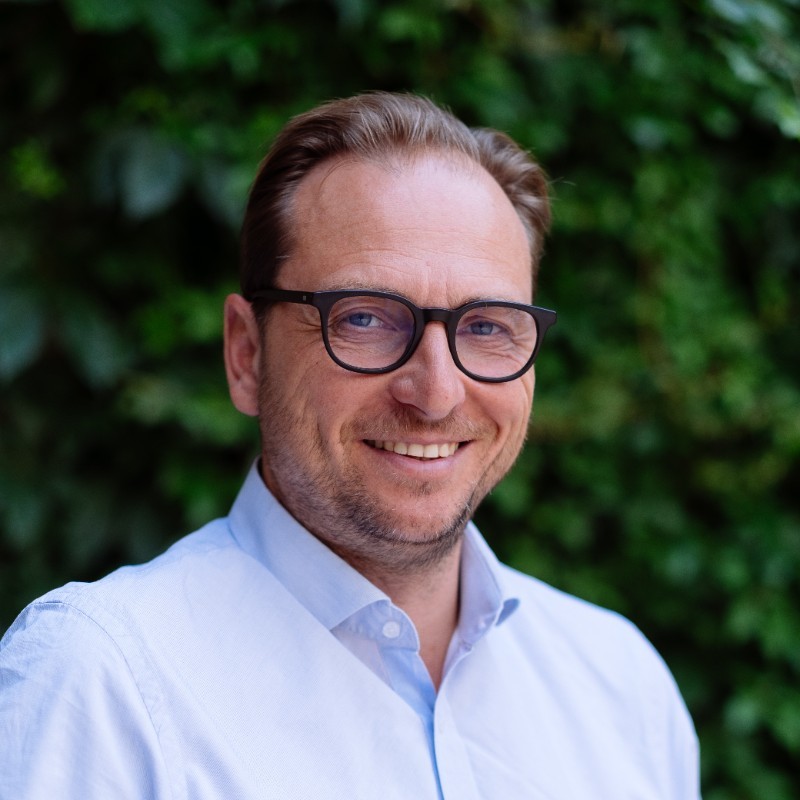
Boris Bogaert
Boris Bogaert's career follows the arc of the Flemish tech founder generation: early operator at a major internet company, then serial founder with successful exits, then institutional investor.
He joined Massive Media, the Ghent company behind Netlog and Twoo, in 2007 as an early employee. That company was acquired by Meetic (IAC) in 2012. During and after that period, Boris co-founded two SaaS startups focused on digital expense management: Cardwise and Xpenditure, which were later combined and scaled as Rydoo. Sodexo Group acquired Rydoo in March 2017.
In 2020, Boris co-founded Pitchdrive alongside Koen Christiaens and Wim Derkinderen, identifying a gap in pre-seed and seed-stage investment infrastructure in Belgium. Pitchdrive raised its first fund from a syndicate of Belgian operators and angels, including Lorenz Bogaert, Toon Coppens, Jonas Dhaenens, and Luc Verelst. The third fund closed at EUR 40M in 2024.
Boris has also built a portfolio of angel investments, with around 11 portfolio companies across enterprise applications and Fintech.
Boris represents the operator-turned-investor path that has become common in Belgian tech. His Rydoo exit provided the capital and credibility to build Pitchdrive into a proper institutional fund rather than a loose angel syndicate.
Insights & takeaways
Boris Bogaert speaks with the fluency of someone who has been on both sides of the table, and that dual vantage point shapes almost everything he says. He does not talk about venture capital as an abstract allocator of money but as a partnership forged in discomfort. The story he returns to, about Harald McPike putting €5M into Xpenditure on common shares with no preferred rights or vetoes, is not just an anecdote but a thesis: sometimes the investor should sit in exactly the same boat as the founder, no safety net, no structural advantage. That instinct runs through Pitchdrive's own design. Bogaert has deliberately capped the fund at around €50M, pushing back oversubscribed money, because the model is built to hit 4x through a healthy middle of solid exits rather than betting everything on one unicorn to save the portfolio. It is a quieter, more founder-aligned version of venture math, and he says it plainly: "Wij willen het liefst aan de kitchen table zitten" 2.
His read on markets is blunt and unsentimental. He does not hedge when he says SaaS as a category is finished: "Saas is weg. Kijk eens naar de beurskoers van Monday, van HubSpot de laatste weken en maanden. SaaS, voor ons bestaat dat bijna niet meer" 2. For him the opportunity has migrated from crowded sales-and-marketing tooling to business process automation, where AI can save companies real money rather than just organize their pipelines. Layered onto that is his observation that the AI wave is spreading faster than any previous technology shift, a claim he makes in almost identical language across two different conversations a year apart: "de snelheid waarop het verandert is ook echt een factor vier tegenover alle andere revoluties" 3, and later, more viscerally, "Geen enkele CEO die zegt: je moet nu ChatGPT beginnen gebruiken. Mensen zijn dat beginnen gebruiken. Dat maakt een ongeziene virale speed die je nog nooit gezien hebt" 2. The consistency of this point across sources suggests it is not a talking point but a genuine, evolving conviction about how adoption now happens from the bottom up, unmandated, almost viral.
He is equally clear-eyed about how funding itself has changed shape. The old ladder of pre-seed, seed and angel rounds has, in his view, simply collapsed into one continuous negotiation: "Pre, seed, angel round — it's all one round. Die rounds zijn een beetje broken. Dat bestaat eigenlijk niet meer" 2. At the same time, round sizes have grown roughly fivefold in a decade, because investors want longer runway and are chasing fewer, stronger teams. Paradoxically, he notes that building has never been cheaper, since experiments that once needed five developers can now be run by two people in days, yet raising that first seed round has become harder, not easier. This tension, cheaper building set against tougher fundraising, is one of the sharper insights he offers about the current moment.
On founders themselves, Bogaert is almost clinical about the limits of human intensity. He puts a number on it, more than once: "Voor mij is de maximum leeftijd van de founder die dat aan kan, dat zelfde craziness, is 10 jaar" 2, echoed in his observation that "een gemiddelde startup founder houdt het 10 jaar vol en dat is lang, vooral de stress, en dan moet je vooral heel goed voor jezelf zorgen" 3. He compares the eventual exhaustion to an athlete or manager stepping away at the peak, and he is unromantic about salaried life as the alternative, comparing a paycheck to a drug: "Voor mij is de loon hetzelfde dan heroïne. Dat is dezelfde verslaging. Ene keer als je loon hebt, moet je dat loon elke keer hebben" 2. His advice to graduates follows directly from this: join an early-stage startup rather than a corporate, because the first ten employees are effectively entrepreneurs themselves, while corporate life traps most people in a cage they never leave.
What makes a founder worth backing, in his telling, is restlessness rather than satisfaction. He describes teams that hit €1M ARR and immediately ask how to reach €3M, celebrating only briefly before moving on, summed up in his own shorthand: "Succes maar niet te lang. En dan next" 2. This same restlessness explains his skepticism toward manufactured ecosystems. He has seen attempts to engineer the next Silicon Valley with buildings, perks and public money, and dismisses them flatly: "Wat pingpongtafels en wat zotte mensen — doesn't work. Ik kan u zeggen: dat werkt niet. Veel overheidsgeld daarin pompen: doesn't work. Dat moet vanuit een buik komen" 2. For him, ecosystems like the so-called Netlog mafia only emerge organically, over fifteen years, from a core of companies that actually succeed and then seed new founders themselves.
That belief in earned, first-hand experience also shapes how Pitchdrive selects mentors: only people who have founded and scaled a company themselves are allowed near portfolio founders, because authenticity, "feeling the pain," is non-negotiable and book-learned advice is rejected outright. It connects to his broader origin story about building Netlog from Ghent with a mindset that anything was possible internationally, "die cultuur was wel van: alles is mogelijk. Vanuit Gent kunnen wij hier internationaal denken" 2, and his pointed reminder that the data advantage platforms like Meta enjoy today, Netlog effectively had back then, "de data die vandaag de Meta heeft, hè, die hadden wij toen" 2. Running through all of this is a final, practical takeaway he repeats to founders: valuation on paper means nothing until an outside party actually pays, so the real number is cash on the account at exit, and every founder should be thinking about their exit plan from day one, not as a sale of the whole company necessarily, but as a clear-eyed answer to the question of what winning actually looks like.
- The average startup founder lasts about 10 years, so Pitchdrive looks for the balance between drive and self-care in founding teams.
- Truly early-stage startups now build their entire company around AI as a foundation, whereas startups even two years old are still trying to integrate it — a clear generational divide.
- Flemish founders keep asking whether to start in Belgium first; Pitchdrive's advice is to think and act globally from day one.
- Despite AI and automation, deals still get made through human relationships and trust built in person at a bar or meeting room — and the speed of this technology shift is roughly a factor four versus previous revolutions.
- Harald McPike invested €5M in Xpenditure on common shares with no preferred rights or vetoes, deliberately outcompeting all VCs; lesson: sometimes investors should go common to truly sit in the same boat as founders.
- Pitchdrive deliberately caps fund size (~€50M, overscribed money pushed back) because its model targets 4x returns via a healthy mid-field of exits rather than depending on extreme power-law outliers like mega-funds do.
- SaaS as an investment category is effectively dead ('SaaS is weg'); the opportunity has shifted to business process automation where AI can directly save companies millions, versus overcrowded sales/marketing tooling.
- Seed funding stages have collapsed: pre-seed, seed and angel rounds no longer exist as separate rounds — 'it's all one round' — while average round sizes have grown roughly 5x in ten years because investors want sufficient runway and stellar teams.
- The AI wave is 4-8x faster than the internet wave because adoption is bottom-up ('shadow AI'): ~90% ChatGPT/LLM adoption inside corporates happened without any CEO mandating it, creating unseen viral speed.
- Ecosystems like the Netlog mafia cannot be engineered top-down with buildings, ping-pong tables or government money — they must grow organically from a core of successful companies spawning new founders over 15+ years.
- Pitchdrive only allows mentors who have themselves founded and scaled a company — 'I feel the pain' authenticity is a hard requirement; book-learned mentoring is rejected.
- Staying relevant in B2C is structurally harder than B2B — Netlog was 'a very popular café' and even at tens of millions of members faced the near-impossible task of reinventing itself, which it did with Twoo becoming the world's biggest dating site by reach in ~16 months.
- A founder can sustain peak intensity for a maximum of about 10 years — after that the same craziness and energy is nearly impossible, comparable to Jürgen Klopp stepping away.
- Top founders are marked by restlessness: after hitting €1M ARR they immediately ask how to get to €3M, celebrate briefly and move on; Gilles of Henchman reported daily sales to the whole board in the last weeks of each quarter.
- Graduates should join an early-stage startup rather than a corporate: the first 10 employees are entrepreneurs themselves, and corporates trap 80% of people in a salary 'cage' they never escape.
- With AI, experimentation that used to require five developers can now be done by two people in days, making building cheap while raising a seed round has become harder.
- Valuation is meaningless until an external party pays: 'cash op de rekening' at exit is what counts, and founders should discuss their exit plan from day one — which doesn't have to mean selling the whole company.
Career History
Managing Partner at Pitchdrive (2020 - present), co-manages the fund alongside Koen Christiaens and Wim Derkinderen
Co-Founder at Rydoo / Xpenditure (2012 - 2017), expense management SaaS acquired by Sodexo Group in 2017
- Co-Founder at Cardwise (2012), digital card and expense startup
Employee at Massive Media (2007 - 2012), publisher of Netlog and Twoo, acquired by Meetic/IAC in 2012
- Angel Investor, portfolio of approximately 11 companies
Media & appearances
2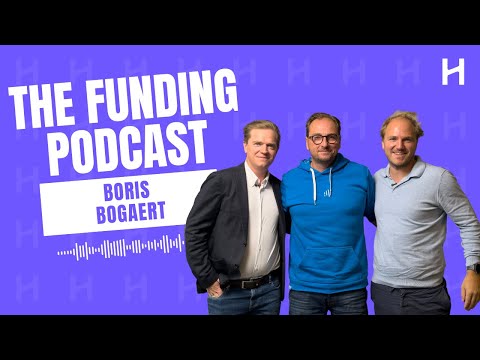 2podcastBORIS BOGAERT (PITCHDRIVE) - from entrepreneur to vc investorThe Harbour · 20 Nov 2025
Boris Bogaert (Pitchdrive) traces his path from pre-internet BBS ventures via Netlog and Xpenditure to running a ~€100M early-stage VC, sharing candid takes on founder qualities, the death of SaaS, and the AI wave's unprecedented speed.
 3interviewSuperNova Conversations: Jürgen Ingels, Boris Bogaert & Hendrik KeerisSuperNova · 23 Jul 2024
At SuperNova 2024, Jürgen Ingels, Boris Bogaert and Hendrik Keeris discuss the event's philosophy, AI-native startups, and Ingels' prediction that tiny engineering teams will build billion-revenue software companies.