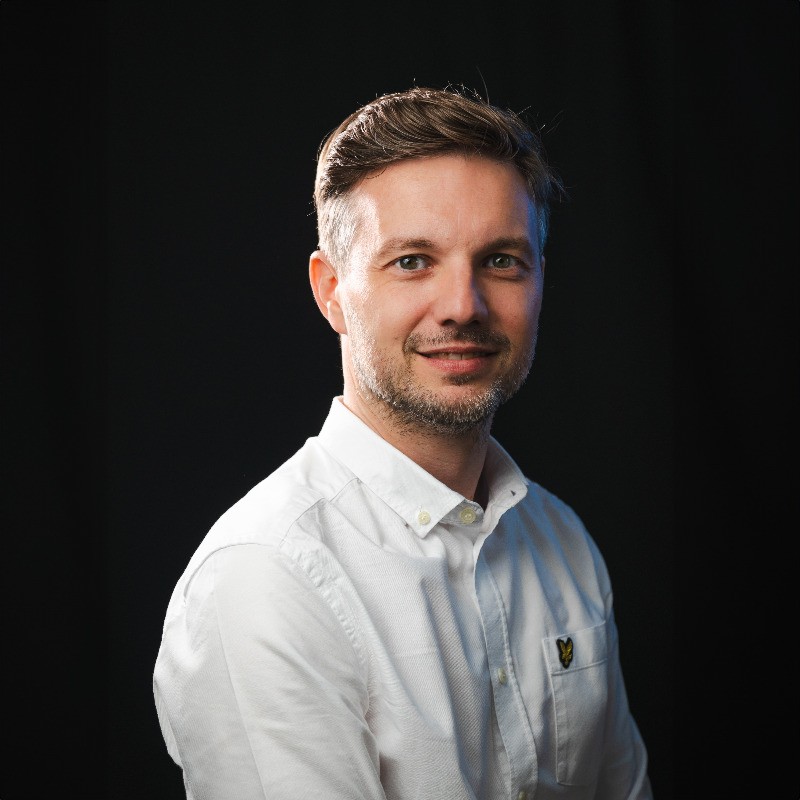
Bram Van de Wege
Bram Van de Wege is the founder of ErgoXR, which he started in March 2025 and where he is chief executive and chief technology officer. He is based in Waregem. Since January 2019 he has also owned VdW Automation VOF.
He has taught computer science and mathematics at VTI Waregem since September 2003, where he was also a docent from 2003 to 2014 and has been pedagogical ICT coordinator since October 2017. Between January 2004 and December 2014 he taught at CVO Waregem. From November 2022 to August 2024 he worked at Hogeschool West-Vlaanderen - Vlaamse Autonome Hogeschool as a project worker on the XR-Lerend netwerk, and from July 2016 to March 2018 he was a programmer at Uitgeverij VAN IN.
He studied at Arteveldehogeschool, completing a graduaat in the teaching of computer science, mathematics and technology.
Insights & takeaways
Bram Van de Wege's public voice centers on a single, repeated diagnosis of why workplace ergonomics training fails and a single proposed cure. The diagnosis: "Van een eenmalige theoretische ergonomieopleiding blijft amper 10% hangen. Je lichaam leert een beweging nu eenmaal niet uit een presentatie" . He returns to this point from multiple angles, framing it as a biological fact rather than an opinion: muscle memory needs repetition, not lecture. He explains the mechanism directly, "Een beweging wordt pas een gewoonte na 30 tot 50 herhalingen" , and draws the practical conclusion that follows from it: "Daarom werkt één cursus per jaar niet — en korte, regelmatige oefensessies wél" . This is the throughline of nearly everything else he says. He is not selling a gadget; he is arguing for a different training model, and the technology is presented as the delivery mechanism for that model.
That model is described with some precision across his posts. He lays out a three-phase learning sequence moving from heavy scaffolding to full independence: "Fase 1: stap-voor-stap instructies met virtuele objecten, met bijsturing bij elke stap. Fase 2: dezelfde oefening, zonder hulplijnen. Fase 3: echte objecten" . He calls this progression "Van begeleid oefenen naar zelfstandig correct bewegen" , and frames the underlying justification in learning-science terms as "Neuroplastisch leren" backed by "aantoonbare gedragsverandering na 30 interactieve sessies van 20 minuten" . His summary formula, repeated almost verbatim across posts, is that "Kort, frequent en actief oefenen verslaat één lange theorieles — elke keer" .
On feedback and motivation, he is explicit that correction has to be immediate and the experience has to stay rewarding rather than punitive: "Fout tillen? Dat zie je meteen. ErgoXR geeft directe feedback tijdens elke oefening: nudges op het juiste moment, replay en pauze om je houding te bekijken, en sterren per fase" . The star system doubles as a pacing mechanism, "3 sterren? Door naar de volgende. 1 ster? Nog eens proberen," which he says keeps training "motiverend — en blijft het hangen" . This same insistence on active correction over passive viewing recurs when he describes specific movements: watching a technique video is not enough, "je voert de beweging zelf uit, stap voor stap, terwijl ErgoXR elke houding live meet en je onmiddellijk corrigeert" , and the same phrasing appears for pushing objects, "je voert de duwbeweging zélf uit, stap voor stap, en wordt bij elke afwijking onmiddellijk bijgestuurd met real-time feedback" .
He is careful to ground the technology claims in measurement rather than impression, both for the individual trainee and for the people managing prevention programs. On the clinical/assessment side he invokes an established standard, "REBA (Rapid Entire Body Assessment) is dé standaard om houdingsrisico te beoordelen — normaal een handmatige analyse door een ergonoom," and positions the product's contribution as automating and continuously repeating that assessment: "Bij ErgoXR gebeurt dat live, tijdens elke beweging, automatisch" . On the hardware side, he is specific rather than vague about what produces this measurement: "een Meta Quest 3 voor het bovenlichaam, sensoren voor het onderlichaam, data verwerkt op een smartphone," yielding "je volledige lichaam als real-time mesh in beeld, inclusief live REBA-score," with the closing claim that "Elke beweging wordt objectief gemeten — niet geschat" . For the HSE manager or prevention advisor, he translates this into a management tool: "Objectieve data over houdingsverbetering doorheen de tijd — geen buikgevoel, maar meetbare vooruitgang" . The recurring opposition in his language, between gut feeling and data, between estimation and measurement, is one of his clearest stated positions.
Alongside the technical description, he offers plain-language ergonomic advice that functions as proof of concept for the underlying philosophy, short, concrete, repeatable tips rather than long explanations. On lifting and moving objects: "Duw waar het kan: je gebruikt je lichaamsgewicht, houdt je rug rechter en hebt meer controle," extended to everyday examples like "de winkelkar, de vuilcontainer én de rolcontainer op het werk" , and reinforced later with "Duw slim, niet hard," with attention to "voetpositie," "handpositie," and bending "lichtjes door de knieën zodat je kan dynamisch bewegen" . He treats the wheelbarrow as a paradigmatic case of a common, high-risk daily task, "dagelijkse kost voor de tuinier of bouwvakker, en een klassieke boosdoener voor de onderrug" , which fits his broader claim that the product's exercise library is built from real occupational movements: "Van box tillen tot palletten oppakken, van duwen en trekken tot de step-up en rotatie-oefening... bewegingen uit de dagelijkse werkpraktijk in logistiek, retail, productie en zorg" , with custom exercises available for sector-specific tasks .
Finally, he is consistent about crediting expertise behind the technology rather than presen
Career
ErgoXRFounderMar 2025 – Present
- VdW Automation VOFCompany OwnerJan 2019 – Present
- VTI WaregemPedagogisch ICT CoördinatorOct 2017 – Present
- VTI WaregemLeraar Informatica - WiskundeSep 2003 – Present
- Hogeschool West-Vlaanderen - Vlaamse Autonome HogeschoolProjectmedewerker XR-Lerend netwerkNov 2022 – Aug 2024
- Uitgeverij VAN IN#384factoryProgrammeurJul 2016 – Mar 2018
- CVO WaregemDocentJan 2004 – Dec 2014
- VTI WaregemDocent2003 – 2014
Arteveldehogeschool#20schoolGraduaat, Regentaat informatica, wiskunde, technologie
From public career histories · 9 entries