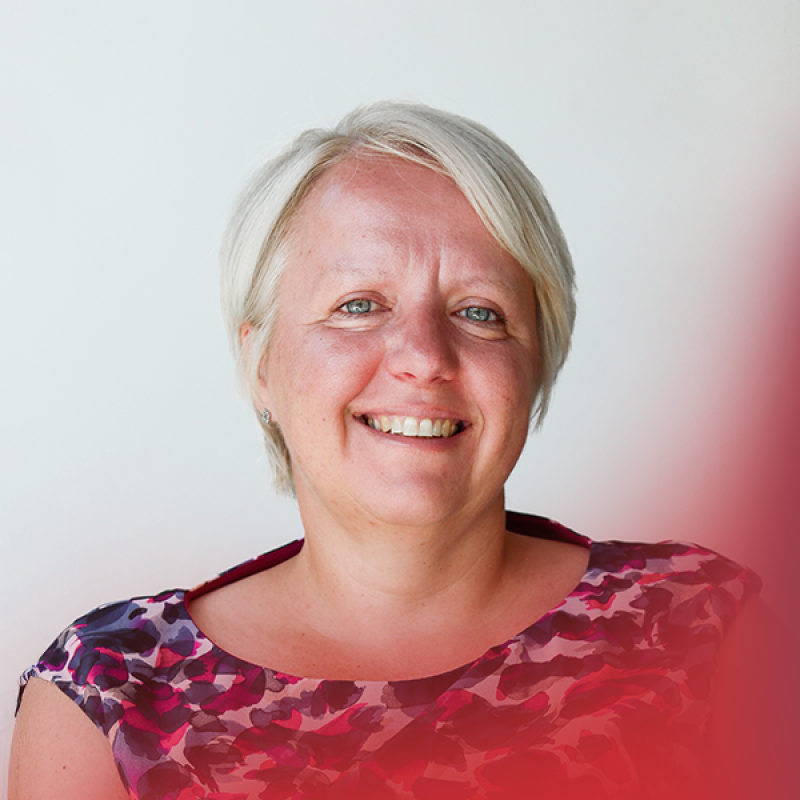
Caroline Van Der Steen
Caroline Van Der Steen is Co-founder and CEO of Artion, an Aalter-based compliance management SaaS platform for environmental and safety inspections.
Insights & takeaways
Caroline Van der Steen's story keeps returning to a single realization: she was an entrepreneur long before she called herself one. Her account of building an independent enforcement department within the Ghent city government is not framed as a bureaucratic career but as running a "mini-enterprise within government" 1, complete with hiring, networking and negotiation. That reframing matters because it explains her confidence later on that quitting a tenured job was not really a leap into the unknown. Her risk calculus was simple: ask what the worst outcome could be, and if the answer is merely returning to work as an engineer, the fear dissolves 2. She describes the actual moment of quitting not with anxiety but with relief, "als een bevrijding, als buitenkomen uit de gevangenis en frisse lucht inademen" 2.
The idea for Artion did not come from a whiteboard exercise but directly from her enforcement work. She had seen, over and over, that the overwhelming majority of non-compliant business owners were not defiant but simply uninformed about what they had to comply with 1. That gap became her market thesis, and a visit to a scaling software company crystallized it into something concrete: "Ik dacht: zoiets moet ik hebben, daar kan ik de wereld mee veroveren, dat is schaalbaar" 2. It is a telling detail that her prior consultancy, VDS Milieuadvies, succeeded commercially precisely because of her enforcement background, clients wanted someone who knew how an inspector thinks, but she still walked away from it because pure intellectual services do not scale 12. The pivot from service to SaaS was less about chasing trends than about recognizing the structural ceiling of her own expertise-based business.
Money and pricing are places where her thinking visibly evolved rather than arrived fully formed. She moved from hourly billing to fixed project pricing only after nine or ten months in business, once she understood that time-based fees could never capture the value of her knowledge. Her conclusion, stated flatly, is that "pricing groeit mee met de mindset van de founders" 1, meaning underpricing is less a market problem than a confidence problem founders have to outgrow. The same logic shows up in her insistence that credibility is self-generated: "Je kunt niet verwachten dat uw klanten u serieux nemen als je uzelf niet serieux neemt" 1. This is not offered as motivational language but as an operating principle she applied to her own invoicing.
Bootstrapping too long is the mistake she returns to most insistently across both conversations, and she has two nearly identical metaphors for it. In one telling it is driving "met een Ferrari op de autostrade met onze voet op de rem" 1; in the other it is worse, "een voet op het gaspedaal en een voet op de rem, en het liefst nog de handrem mee aangetrokken" 2. Behind the image is a concrete operational complaint: without funding, cash flow constraints forced her to choose which invoices got paid and blocked her from building a team, even though the market opportunity was already visible 12. When Artion did raise, she was explicit that finding capital was not the hard part, what she wanted was "smart money", investors with actual SaaS expertise who could advise between board meetings, because none of the three founders had run a SaaS company before 1. She was also strategically transparent that multiple VCs were courting them simultaneously, reasoning that in a small investor market everyone talks anyway, so hiding it would only cost her leverage 1.
Negotiating with investors clearly reshaped how she thinks about power and self-presentation. She describes the process as choreographed, nearly every investor performing skepticism as a tactic before flipping, sometimes within the same conversation 2, and she notes the strange discontinuity of an investor going quiet immediately after closing, "Dat heb ik die investeerder nooit meer gezien" 1, only to reappear afterward as a partner rather than a gatekeeper. It was also in these rooms, not in her fifteen years of enforcement work, that she experienced sexism for the first time, being cut off after two words in an ego-driven environment, and her conclusion is pointedly two-sided: men need to yield the floor, but she also has to learn to claim it herself 2. Practically, this experience pushed her to hire a financial specialist and a lawyer who understood "the game" immediately after the first overwhelming VC meetings, advice she now frames as essential for any founder negotiating funding for the first time 1.
On team and identity, she is unusually candid about a limiting belief she had to dismantle: an initial refusal to take on co-founders rooted in fear that more experienced entrepreneurs would sideline her, which she now calls plainly a "stomme angst" 2. Hiring her first employee, she says, is what actually turned consulting into a business, because it was the moment she stopped being the product and started being able to act like an entrepreneur. It also punctured a myth she had been telling herself about solo independence: "Vrijheid, dat is niks, vrijheid alleen. Eigenlijk heb ik mezelf gewoon een job gegeven. Ondernemen moet toch meer zijn dan dit" 1. She pairs this with self-awareness about her own weaknesses, naming her tendency to start things without finishing them, and treating team-building not as delegation but as a deliberate correction, surrounding herself with people who like to finish what she starts 2. If she could redo the earlier phase, she says she would let go of the belief that she alone could do it better, faster 1.
Running through all of this is a definition of success that stays remarkably unglamorous. She calls herself "een beetje Alice in Wonderland", treating each day as one of ongoing surprise rather than mastery 1, and she resists any framing of Artion as a personal creation to be protected forever, describing it instead as a project she intends to exit and hand to others within a decade 2. Her closing formula for what winning actually means is equally deflationary and, in context, sincere: "Winnen is voor mij elke dag blij zijn dat ik 's morgens wakker word" 2. Taken together, her recurring advice to other founders is not about tactics so much as sequencing and honesty: raise earlier than feels comfortable, price according to your own conviction in your value, be transparent rather than clever in negotiations, and treat every fall, including a first one in a funding meeting, as something you get up from after five minutes, "Na 5 minuten staat ge op en ge gaat gewoon door. Dat is voor mij wel echt ondernemen" 2.
- Her mental model for taking risks: always ask 'what is the worst that can happen?' — for her, worst case was going back to work as an engineer, which made quitting a tenured government job feel safe.
- Her consultancy business wasn't scalable (pure intellectual service, saturated market with little evolution), which drove her to seek a recurring, scalable SaaS business model around periodic inspections.
- When pitching a new idea, expect 100 skeptical reactions; one enthusiastic believer (like Jean-Michel Teerlinck) is the game changer that makes all the no's forgettable — but incorporate the skeptical feedback into the business model.
- Her initial refusal to take on co-founders came from a limiting belief/fear that more experienced entrepreneurs would 'keep her small and push her out' — she calls it a 'stomme angst' she had to overcome.
- Running a startup without funding felt like driving with one foot on the gas, one on the brake and the handbrake on — cash flow constraints actively blocked team building despite clear market potential.
- Fundraising negotiation is a choreographed dance: nearly every investor initially reacts skeptically as a test/tactic, and several flipped completely within the same conversation; a strong story, financial plan, pitch deck and resilience against rejection are essential ingredients.
- She only experienced sexism for the first time during investor conversations — being interrupted after two words in an ego-driven male environment — and concluded it's a two-way responsibility: men should give women the floor, but she also has to literally claim her podium.
- Knowing her biggest weakness (starting things but not finishing them) lets her deliberately surround herself with people who love finishing, which the new funded team finally allows.
- Being an ex-civil servant is a selling point rather than a handicap: other entrepreneurs convinced her that the leap proves daring, decisiveness and expertise.
- She explicitly does not see Artion as her 'baby' but as a project she wants to successfully exit and hand over to others within 10 years.
- Her 10 years building an independent environmental enforcement department in Ghent was effectively a 'mini-enterprise within government' — hiring, building networks, negotiating — which retrospectively revealed her entrepreneurial nature.
- Her startup idea came directly from enforcement experience: 99% of non-compliant entrepreneurs simply didn't know what they had to comply with, revealing a market for compliance 'ontzorging' (unburdening).
- Having previously inspected (and even shut down) companies was unexpectedly her USP as a consultant: clients wanted her because she knew exactly how the inspector thinks.
- She moved from hourly billing to fixed project pricing after ~9-10 months because hourly rates couldn't capture the value of her expertise; 'your pricing grows with the mindset of the founders' — founders systematically undercharge until they take their own added value seriously.
- Hiring her first employee was the moment consulting became a business: it freed her time to actually 'be an entrepreneur' and made her realize 'freedom' as a solo consultant just meant she had given herself a job.
- Artion's market insight: no one googles for inspection-management software, yet almost every company struggles with Excel to track mandatory inspections — a boring, unserved compliance niche with essentially no competition, which intrigued investors precisely because it seemed too good to be true.
- Bootstrapping too long severely braked Artion's growth — 'driving a Ferrari on the highway with the handbrake on' — forcing the founders to choose which invoices to pay and preventing team building; she would raise much earlier if doing it again.
- For Artion, finding money was not the hard part; they explicitly sought 'smart money' — investors with SaaS expertise willing to advise between board meetings — because all three founders lacked SaaS knowledge, and they were open about this from the first VC meeting.
- Being transparent that multiple VCs were competing (and that they knew of each other) created negotiation leverage; hiding it would have been foolish in Belgium's small investor world where everyone talks.
- Investors play a 'hard to get' role during negotiation and switch completely after closing: 'I haven't seen that investor since' — post-closing, Pieter-Jan behaves as an entrepreneur-partner, which was initially disorienting.
- After the first overwhelming VC meetings they immediately hired a financial specialist and a lawyer who knew 'the game', which she calls crucial for founders negotiating for the first time.
Career
Roles
ArtionCo-founder & co-ownerJun 2021 – Present
- BNI Oost-VlaanderenBNI lidJan 2019 – Jul 2023
- VDS milieuadviesFounder & Co-ownerJan 2019 – Sep 2024
- Stad Bruggestadsecoloog directeurMar 2012 – Dec 2018
- Stad Gent#609factoryingenieur diensthoofd Dienst MilieutoezichtJun 2002 – Mar 2012
Ghent University#2factorydoctoraatsstudentJan 2001 – May 2002
Education
- Jarno De Smedt - GroeistrateegCoachingstraject ondernemenOct 2019 - Dec 2024
- BusinesslabCoachingstraject ondernemenSep 2018 - Dec 2023
From public career histories · 10 entries
Media & appearances
2- 1podcastThe Harbour · 27 Mar 2025
Caroline Van der Steen recounts her journey from 15 years as a Ghent/Bruges civil servant in environmental enforcement to founding VDS Milieuadvies (sold) and SaaS startup Artion, which raised €800K from VCs including Entourage.
- 2podcastConnexi · 30 Sept 2024
Caroline Van der Steen (co-founder Artion) shares how she quit a 15-year civil servant career in 2018, got the SaaS idea for Artion from a Silverfin company visit, and closed her first funding round in April 2024.