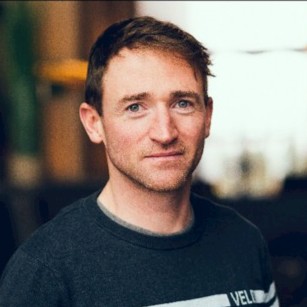
Christophe Morbee
Christophe Morbee is the CEO of besox and General Partner at NewSchool.vc, a Belgian VC fund backing the next generation of tech founders.
Christophe Morbee runs besox, a Belgian HR Tech company, while also serving as General Partner at NewSchool.vc, a venture fund with the tagline "Backing the next generation of mobsters," a nod to the Belgian mafia ecosystem metaphor.
He describes himself as passionate about Entrepreneurship, investing, running, and poker. His dual role as operator and investor places him at the intersection of Company Building and capital allocation in the Belgian tech scene.
Insights & takeaways
Christophe Morbee's public voice splits cleanly into two registers: the operator building Besox and the investor building NewSchool, and the throughline connecting both is a distaste for standing still. He is blunt about what he considers real entrepreneurship versus mere management: "Gewoon een bedrijf hebben die ieder jaar hetzelfde doet, dat is managen, dat is niet ondernemen." 7 That line explains a lot of his own history at Besox, where he pushed 20-25% annual growth for six to seven years at profit margins of 0-5%, deliberately trading profitability for expansion 7. It also explains why, when a bank balked at financing that growth, he switched lenders and personally pledged his house as collateral rather than slow down: "Ik heb wel mijn huis in borg gegeven om juist die tweede schijf te krijgen." 7 The willingness to take on personal risk to keep growth uninterrupted is a recurring pattern, not a one-off anecdote.
That same risk calculus carries over into how he talks about venture investing. He rejects the conventional framing that public equities are the safe bet and startups the gamble: "Ik vind in mijn ogen een groot risico om te investeren in Apple vandaag dan om te investeren in pre-seed tech." 7 This is not a throwaway provocation but a stated investment thesis: NewSchool is built to write many small pre-seed checks (30-40 startups, up to €15-20M raised) on the belief that concentrated bets on mature, expensive public names carry more downside than a spread of early-stage founders. It is also why he draws a sharp line against private equity, even though he acknowledges it would have been the easier fundraising path — "would have raised €15-100M already" by his own account 7 — because buying already-profitable companies is, in his words, "meer making rich people richer" 7. He wants to be backing people who are still building the thing, not people extracting value from something already built.
On what he actually looks for in founders, Morbee is unusually explicit about method. He weighs team drive, technical ability, and sales/marketing capacity, and he flags the last as the systematic weak point of Flemish founders 7. But the most distinctive thing he says is about how he tests conviction rather than just credentials: "Soms test ik dat ook wel, de drive van de founders, door in het weekend of na de uren of 's morgens vroeg te bellen om te kijken of dat er een telefoon wordt opgepakt." 7 This is a concrete, repeatable diagnostic, not a vague appeal to "passion," and it fits his broader instinct that commitment should be observed under real conditions rather than taken on faith.
His account of the Officient exit shows the emotional register underneath the analytical one. Turning an angel check fourfold in three years visibly reset his sense of what was possible: "Ik dacht maal vier op drie jaar tijd. Wat is dat hier jong? Welke wereld dat ik nog doen." 7 That reaction is presented as the hinge moment that pushed him from being an occasional angel investor into building NewSchool as an actual fund. The Aikido Security and Spotable award wins, which he references directly on LinkedIn — "very happy to be an investor there with NewSchool.vc" and describing himself as someone who loves "finding teams like these who give their all and make it happen" — read as continuations of that same excitement, not new material.
Structurally, he is candid about why he chose the solo GP model and what its edge actually is: speed. With no partners to align with, he argues decisions happen in days, which matters most at pre-seed, where founders otherwise lose months of sales momentum to fundraising 7. He also frames NewSchool's differentiation not around capital size but around Besox's infrastructure: a 4,000-client network that feeds dealflow and introductions, plus the unusual ability to see real-time hiring and retention data in portfolio companies because Besox runs their payroll — "no other VC has" that vantage point 7. He is equally clear-eyed about the limits of small deals, noting that VCs generally won't engage with €300K rounds because the fund's economics can't be sustained by small checks even at a strong multiple, and that founders seeking VC money should be targeting €1-3M-plus raises 7.
Finally, there's a consistent thread about culture transfer from Besox to the startups he backs: low workload, good offices, unlimited leave, on the logic that if employees commit like entrepreneurs they deserve entrepreneurial freedom, and that a founder's own schedule naturally prevents the policy from being abused 7. He also describes a flywheel effect around exits, where liquidity events like Officient and Yuqido generate both new founders (employees who mention startup ideas at office events) and new capital circulating back into the Ghent ecosystem 7. Read together with his more routine LinkedIn activity, promoting hiring at Besox , payroll client testimonials , NewSchool closings , and startup partnerships , the picture is of someone who treats talent, capital, and infrastructure as parts of a single loop he is actively trying to keep spinning.
- He deliberately waited to buy the family business until his father's partner's son also showed interest, because a joint takeover by both sons made negotiation easier and avoided the other father pushing for a higher valuation.
- When KBC refused a second €215K credit line due to projected negative equity in the management company, he switched banks and pledged his own house as collateral — without telling his father.
- During six-seven years of aggressive office expansion Besox operated at profit margins between 0 and 5%, deliberately sacrificing profitability for 20-25% annual growth.
- His investment decisions rest mostly on the founding team: internal drive to solve the problem, technical capability, and crucially the ability to market and sell — a skill he finds Flemish founders systematically underinvest in.
- He tests founders' drive by calling or emailing them on weekends, early mornings or after hours to see whether they pick up the phone.
- VCs are generally not interested in €300K rounds because the fund organization can't be fed by small deals even with a big multiple; founders seeking VC should target €1-3M+ rounds.
- The strength of a solo GP fund is speed: with no partners to align with, decisions happen in days, which matters especially at pre-seed where founders lose months of sales momentum to fundraising.
- NewSchool's unique edge: Besox's 4,000-client network provides dealflow and customer introductions for portfolio startups, and by running their payroll he gets real-time insight into team growth and retention that no other VC has.
- He avoids private equity despite it being an easier market to raise for ('would have raised €15-100M already') because buying profitable companies is just 'making rich people richer' versus backing founders who change tomorrow's landscape.
- He transfers old-school HR practices to startups: low workload, nice offices, unlimited leave — arguing that if employees commit like an entrepreneur, they deserve the same freedom, and partners' schedules naturally prevent abuse.
- Exits like Officient and Yuqido create a flywheel: employees at office warmings tell him they have startup ideas for when the company sells, and exited tech founders reinvest in the Ghent ecosystem.
Career
Roles
NewSchool.vcGeneral PartnerFeb 2025 – Present
- besoxCEONov 2014 – Present
- Sociaal Secretariaat van de KustBusiness Development ManagerMay 2003 – Oct 2014
Education
HOWEST Hogeschool West-Vlaanderen#12schoolBachelor, Marketing2000 - 2003
From public career histories · 4 entries
Media & appearances
1- 7podcastThe Harbour · 25 Sept 2025
Christophe Morbee explains how he took over his family's social secretariat, rebranded it to Besox and grew it 20-25% yearly to 110 employees, then leveraged early angel wins (4x on Officient) into NewSchool, a solo GP VC fund raising up to €15-20M for 30-40 pre-seed tech startups.