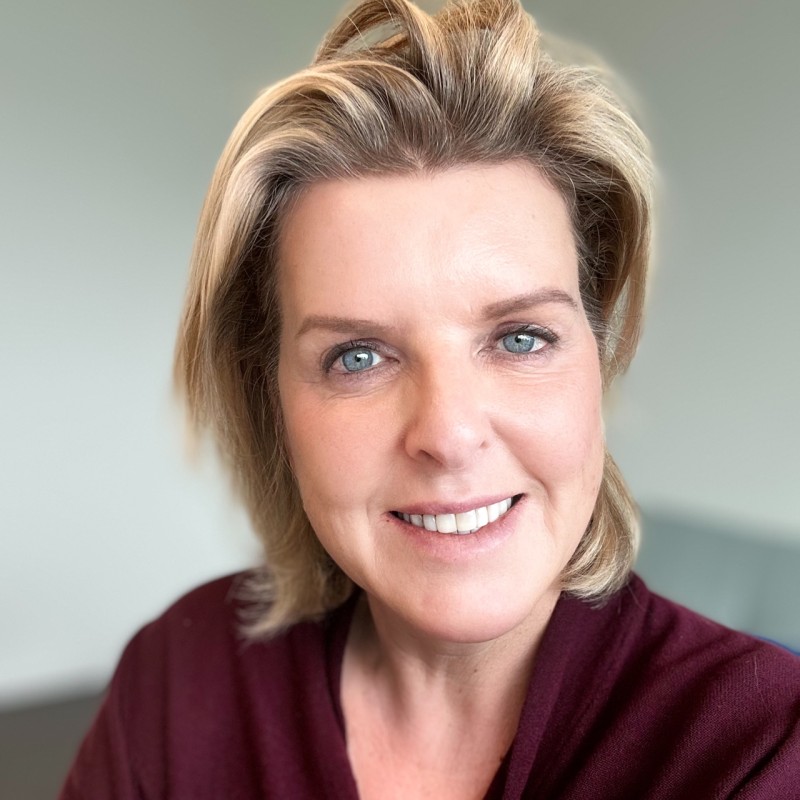
Daniëlle Vanwesenbeeck
Talks about
In this Connexi podcast, host Bert Vandebuerie interviews Daniëlle Vanwesenbeeck, who founded MASTERmail in 2004, a production company specialised in direct marketing and postal mailings processing 10-12 million pieces per year. She recounts starting without a plan, hiring 'key persons' to build the company, and deliberately investing in machine autonomy so headcount fell from 17 to 11 while efficiency rose. She discusses three pivotal moments: realising there is no book on entrepreneurship (you must trust your gut), combining entrepreneurship with 2.5 years in the Flemish Parliament and the burnout-like crash after the elections, and winning the Womed Award in 2012 which opened networks and made her an advocate for less modest Flemish entrepreneurship. She also covers difficult moments, including an employee's suicide and a departing sales person who poached clients, which she turned into a rebuild of sales and marketing.
Insights & takeaways
Daniëlle Vanwesenbeeck's thinking centers on a single conviction repeated across her appearances: entrepreneurship is something you learn by jumping in, not by planning it on paper. She built MASTERmail without a business plan, reasoning that endless study is a form of delay — "af en toe moet je ook gewoon de dingen loslaten en durven springen" 1. That same instinct explains why she left an employer relationship altogether: once she had production partners and her own client network, she realized "eigenlijk heb ik niemand nodig om dingen te realiseren" 1. Her definition of success follows the same logic of independence rather than scale — "succes heeft niks te maken met omzet" 1, and she is explicit that growing headcount is not the point: "ondernemen is niet perse willen zoveel mogelijk mensen willen hebben" 1.
A recurring theme is the discipline of making yourself dispensable. She describes the first years of a startup as a "fixing phase" of near-total focus on clients with limited means, followed by the harder step of hiring expensive key people who can run sales or production themselves — people she calls the ones who "houden de 'poutrelle' van uw bedrijf vast en daarop kun je uw bedrijf bouwen" 1. Without that step, freedom disappears entirely, which she frames almost as a warning: "hoe kunt je een vakantie neer als uw bedrijf niet zonder u kan draaien, dan heb je geen leven niet meer" 1. This is paired with a very concrete operational belief — that her company's real value isn't the machinery itself, since anyone can buy a machine, but the IT complexity behind programming mailings so operators need to interpret as little as possible, which let her cut headcount from 17 to 11 while multiplying throughput 1.
She is candid about mistakes and treats them as data rather than shame. Emptying the entire war chest to build a company building in the middle of the banking crisis, with no orders coming in, is a story she tells against herself, and her stated rule afterward is procedural rather than emotional: "als je fouten maakt, leert daaruit, doe daar iets zodanig dat je dat de volgende keer niet meer meemaakt" 1. The same pragmatic reflex shows up when a nine-year sales employee left and began calling her clients — instead of treating it purely as betrayal, she rebuilt the sales team and marketing so the narrative became the MASTERmail story rather than one person's story, and had lawyers rewrite the employment contracts 1.
Her time in politics gave her a comparative lens she returns to often. She describes business and politics as running at different speeds: business decisions are fast and binary, while politics is "the art of the possible and of balance," and she thinks each world could learn from the other's pace and nuance 1. Politics also cost her physically — after the elections ended and the adrenaline of running seven days a week on reserve dropped away, she felt drained, which she offers as an explanation for why entrepreneurs often step back out of political life 1. Throughout, she keeps a phrase-level shorthand for staying in motion: "liever niet stilstaan, niets is achteruitgaan" 1, and on negotiating for what you want, "een nee heb je en een ja kun je krijgen" 1.
On managing people, she draws a sharp line between an entrepreneur and a manager: a manager wants everything running to plan under control, while an entrepreneur wants to jump on the train of opportunity whether or not it was in the plan 1. She says she is "allergic" to the Excel-driven management style of multinationals and deliberately keeps meetings to a minimum at her own SME, replacing them with short informal check-ins at her staff's own request 1. This people-first instinct hardened after a team member's suicide, which she says taught her she had missed the signals; since then she has deliberately built social vigilance into the workplace, arguing that as an entrepreneur you have to care for your people because they are what makes the company 1. Her one named external vulnerability is structural rather than personal: total dependence on bpost as the sole postal distributor, since a decision by one large player could disrupt her whole business with no alternative supplier available 1.
Finally, she frames her public storytelling as an obligation rather than self-promotion. Winning the Womed Award made her realize that many Flemish entrepreneurs are too modest and underrate what they've actually achieved, and she has since used her own story to open networks for people just starting out 1. This is consistent with why she says she joined settings like Connexi in the first place: "voor een stuk denk ik is het belangrijk dat ondernemers ook teruggeven aan andere ondernemers" . Across both sources, the throughline is the same — build lean, delegate real authority early, treat setbacks as instructions rather than verdicts, and use whatever platform you have to hand information forward to the next entrepreneur.
- She started MASTERmail after realising that with production partners and her own client network, she didn't need an employer — and she started without a business plan, arguing you can keep doing studies forever but at some point you just have to jump.
- Hiring expensive 'key persons' who can run sales or production themselves is the hard but essential step for a startup SME — they hold the 'poutrelle' (girder) on which you build the company.
- She emptied the entire war chest to build the company building in the middle of the banking crisis and learned never to do that again — building during a crisis with no orders coming in is a hard story.
- By focusing on machine autonomy, headcount dropped from 17 to 11 while efficiency rose: 16 years ago a machine ran 3,000-4,000 pieces/hour with two operators; now one operator runs 10,000 envelopes/hour while also tending another machine.
- MASTERmail's added value is not the machines (anyone can buy a machine to fill an envelope) but the IT complexity of programming mailings so operators need to interpret as little as possible.
- The first four years of a startup are the 'fixing phase' — 200% focus on clients and getting things done with limited means — before key hires free you to work on the business instead of in it.
- Politics and business run at two speeds: business decisions are fast and black-or-white, while politics is the art of the possible and of balance — and each world could learn from the other's pace and nuance.
- After the elections when politics fell away, the adrenaline dropped and she felt physically and mentally drained after months of running 7-days-a-week on reserve — explaining why entrepreneurs step out of politics.
- Winning the Womed Award made her realise many Flemish entrepreneurs are too modest and don't realise what they do isn't self-evident; sharing her story opens networks and helps starting entrepreneurs.
- She is allergic to 'Excel management' seen at multinationals and keeps meetings minimal at her SME — at her own people's request there are barely any meetings, with short informal 'overleg' moments instead.
- The difference between an entrepreneur and a manager: a manager wants everything to run controlled according to plan, while an entrepreneur wants to jump on the train of opportunity whether it's in the plan or not.
- Her biggest business fear is total dependence on bpost as the single postal distributor — a decision by one large player could disrupt her whole business and there's no alternative supplier.
- After a team member's suicide, she concluded she had missed the signals and since then deliberately built social vigilance into the workplace: as an entrepreneur you must care for your people because they make the company.
- When a sales person of nine years left and started calling her clients, she turned the threat into an opportunity by rebuilding the sales team and marketing so the story became the MASTERmail story instead of one person's story, and she had lawyers redo the employment contracts.
Career
Roles
- Voka - Kamer van Koophandel Vlaams-Brabant#683factoryVoorzitter Raad V Bestuur - Voka Vlaams-BrabantJun 2021 – Present
- MASTERmailOwnerJan 2004 – Present
- Voka - Kamer van Koophandel Vlaams-Brabant#683factoryVoorzitter Voka Groot-LeuvenApr 2021 – Apr 2021
- Vlaams Parlement#658factoryVolksvertegenwoordigerJan 2017 – May 2019
- Link2Bizaccount manager1998 – 2003

From public career histories · 7 entries
Media & appearances
2- 1podcastConnexi · 27 Apr 2020
Daniëlle Vanwesenbeeck, founder-CEO of direct-mail company MASTERmail and ex-parliamentarian, shares how she built her business without a playbook, made herself dispensable, and what politics taught her about entrepreneurship.
- promoConnexi · 29 Feb 2016
Short promo clip where Daniëlle Vanwesenbeeck explains she joined Connexi to share entrepreneurial experiences with other entrepreneurs.