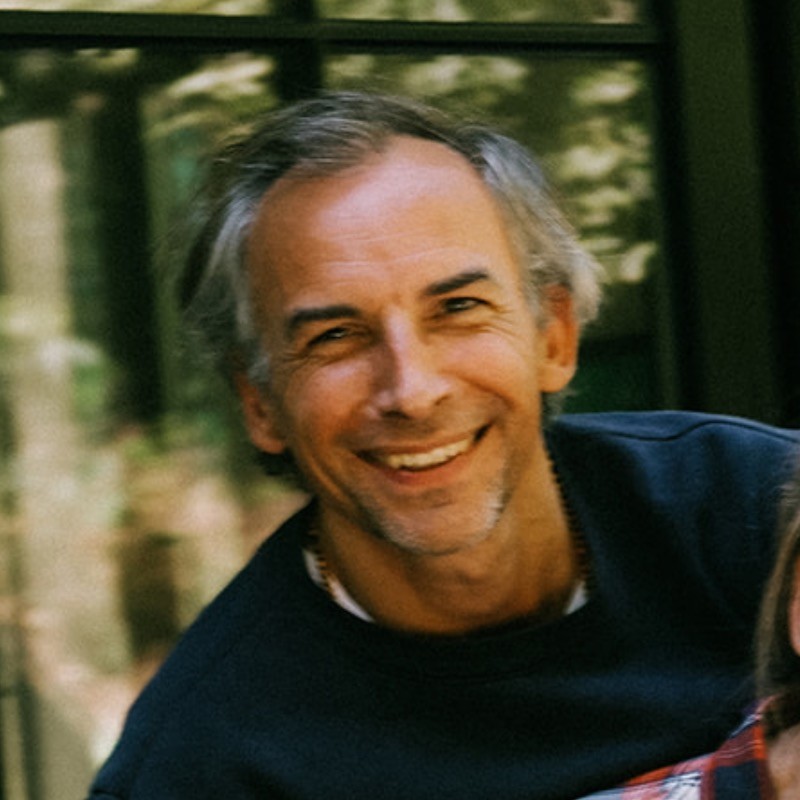
Dimitri Oosterlynck
In episode 26 of the BlackBird podcast, host Andy Coomans interviews Dimitri Oosterlynck, founder of alcohol-free ginger drink Gimber. Dimitri recounts starting Gimber without a business plan after a burnout in his previous animation business, selling the first 25 hand-brewed bottles in his wife Sylvie's concept store and deliberately choosing concept stores over the traditional horeca/distributor route. Five years later Gimber sells ~1.5 million bottles annually, generates nearly €20M revenue with ~80 employees in 18-20 countries, backed by an Austrian investor and PMV. He explains why he handed the CEO role to Tim after only months, framing his own role as the composer/playmaker who reports to the CEO, and why the management ESOP creates 'skin in the game'. The conversation is rich on founder psychology: playing to win vs. playing not to lose, letting go of your 'baby', and separating ownership from the operational role.
Insights & takeaways
Dimitri Oosterlynck's thinking centers on a single recurring paradox: the things that look like risks are often the safest choices, while playing it safe is the real danger. "Ik heb zelf de indruk dat eigenlijk het gevaarlijkste is om geen risico te nemen," he says 2, and this belief shows up everywhere in how he built Gimber, from betting his last €270 on 25 bottles of ginger concentrate 2 to quitting a previous business six months in because half-measures don't work: "als je iets wil uitbouwen en je wil er een succes van maken... dan moet je er minimaal 110% voor gaan" 1. He frames this as a binary choice every entrepreneur faces — "Ga je spelen om te winnen of ga je spelen om niet te verliezen?" 1 — and his own answer is unambiguous: commitment has to be total, because half of a hundred percent isn't a viable strategy for building something real.
That conviction extends to how Gimber went to market. Rather than following the drinks industry's standard playbook — horeca for visibility, retail for volume, distributors for sales — Dimitri built a direct network of concept stores reached through courier services, a choice he now frames as having started out naive but turned into genuine competitive advantage 12. The logic, in hindsight, was that concept stores offered an open, health-seeking audience with virtually no competition, a channel Gimber still exploits 2. He backs this with a broader read on the market: big brewers are pouring money into alcohol-free products and expect roughly a quarter of production to be alcohol-free by 2024-25, with one in four under-25s in England no longer drinking 2 — evidence that the unconventional bet on an alcohol-free ginger drink was riding a real structural shift, not a niche fad.
A second major thread is health as the entrepreneur's foundational asset. "Ons lichaam, dat is echt ons eerste kapitaal," he says, comparing it to a credit card that quietly depletes with every overdraw until one day it's empty 2. He's explicit that this isn't abstract wellness talk but a business mechanism: a negative spiral where declining health produces worse decisions, which damages the business, which further erodes mental health — a loop he experienced directly after an untreated burnout that pushed his numbers into the red 1. His prescription is blunt: "Investeer massaal in gezondheidskapitaal, dat zal de allerbeste zet zijn" 2. Recovery, in his account, came from reinventing himself with sharper focus rather than pushing through, and he ties his own resilience to something almost sensory — "Per fles die ik verkocht voelde ik het leven en voelde ik mijn energie weer omhoog gaan" 1, as if each sale was a small proof of life during a hard stretch.
On people and culture, Dimitri repeatedly undercuts the romance of the entrepreneurial idea itself. "Een idee is niets waard, daar geloof ik echt in. Vroeger dacht ik omgekeerd," he says, arguing the impulse behind a company is banal and that everything built on top — product, marketing, distribution, the accumulated daily corrections — is what actually creates value 2. That belief pushes him toward heavy investment in people and feedback systems rather than idea-protection. He installed near-monthly feedback rituals at Gimber, including prepared two-way sessions between every manager and colleague, and a 'shoot at the CEO' format that let the team fire any question at leadership for two hours, which he credits with defusing tension after a dismissal 2. "Feedback is echt de view van succesvolle ondernemingen, dat besef ik elke dag," he says 2, treating open critique as infrastructure rather than an occasional nicety. His hiring philosophy follows the same instinct for trusting people over credentials: he hires for vibe over CV, asking whether he'd be happy standing next to someone at a trade fair or spending twelve hours in a car with them, because "enthusiasm is much harder to fake than experience or references" 2. That trust in latent capability generalizes into a broader claim about organizations: "Ik denk dat wij eigenlijk het potentieel van onze mensen zeer zwaar onderschatten" 2.
Perhaps the clearest evolution in his thinking is about his own role. Early on he was CEO and the driving operational force; later he deliberately stepped back, promoting his managing director Tim to CEO far sooner than planned, inspired by another entrepreneur handing his company to a much younger successor, on the belief that people grow only when given real space and responsibility 1. Dimitri now describes himself through a musical metaphor: "Als je een bedrijf begint ben je eigenlijk een beetje de singer-songwriter... en als founder ligt effectief op vandaag mijn meerwaarde voor het bedrijf veel meer in de compositie" 1. He extends the metaphor into sport, calling himself "een middenvelder die assists moet doen en dat hij kan scoren samen met het management team" 1 — explicitly ceding the scoring role, reporting to the CEO, and accepting the CEO's decisions rather than steering day to day. This is a notable reversal from someone who once needed to control outcomes directly; his stated growth is learning that his highest-value contribution is now in product and brand, not command.
Finally, he treats ownership and alignment as the glue holding a growing company together. Describing Gimber's management buy-in structure, he points out that every manager put personal savings on the line and had to convince someone at home to support the decision — "Iedereen wil winnen, want iedereen heeft er een stukje van zijn spaarcenten voorgelegd en iedereen heeft wel iemand thuis moeten overtuigen om het te doen" 1. For him this shared financial and emotional stake matters more than any theoretical risk of conflicting interests in decision-making, because it points every nose in the same direction 1. He extends this logic to customers as well, framing early buyers not as transactions but as declarations of belief: "Elke fles die gekocht wordt is een stem voor Gimber: we geloven in jullie, we geloven in je project, we willen er een stukje mee bouwen" 2. Across both interviews, the throughline is consistent: real commitment, whether financial, physical, or emotional, is what turns a banal idea into a company, and Dimitri's own journey from a nearly broke founder to a "founder-composer" stepping back from the CEO chair reads as a lived argument for going all-in on the right things and none at all on the wrong ones.
- Gimber deliberately avoided the traditional drinks route (horeca, then retail) and launched via concept stores, where there is an open, health-seeking audience and virtually no competition — a strategy they still exploit.
- Big brewers are massively investing in alcohol-free and expect ~25% of their production to be alcohol-free by 2024-25; in England one in four people under 25 no longer drinks.
- If you start a company with real ambition, hire an HR lead within the first five people — someone who anticipates which profiles you'll need in six months and owns onboarding; not doing so cost Gimber a lot of time.
- Gimber institutionalizes feedback: near-monthly sessions where every manager has 2x10-minute prepared feedback moments with all colleagues, plus a 'shoot at the CEO' event where the team could fire any question at management for two hours — which defused tensions after a dismissal.
- Hiring a personal assistant, on the advice of another entrepreneur, freed up 50% of his time as CEO.
- Burnout follows a pattern: when mentally broken you make wrong decisions, take on one project too many for cash, which makes things heavier — a vicious spiral that only breaks by reinventing yourself with focus.
- The idea itself is worth nothing — the impulse is banal; everything you build on top of it (product, marketing, distribution, people, the millions of daily corrections) is what makes the company.
- Gimber's biggest bottleneck is not demand but the speed of recruiting and onboarding the right people.
- His hiring filter is vibe over CV: 'would I be happy standing next to this person at a trade fair, or sitting 12 hours in a car with them?' — enthusiasm is much harder to fake than experience or references.
- There are no wrong decisions at the moment you take them — you only know afterwards; solve the problem when the problem occurs.
- Gimber deliberately avoided the traditional drinks-industry route (horeca for brand awareness, retail for volume, distributors for sales) and instead built a unique direct network of concept stores using courier services — a naive choice that turned into a competitive advantage.
- Gimber took on an Austrian investor after only 2 years not for the capital but for their knowledge of scaling in the German-speaking market and broadening the company's worldview.
- A negative spiral connects health and business: declining health leads to worse decisions, which hurts the business, which hurts mental health further — Dimitri saw his numbers go into the red this way after an untreated burnout.
- If you decide to build something into a success, doing it 50% of the time is impossible — you must go at least 110%, which is why Dimitri quit his previous business six months after starting Gimber.
- Dimitri promoted his managing director Tim to CEO after just months instead of the planned 1-2 years, inspired by Pascal Danneels handing the keys of his construction company to a 32-year-old — believing people develop when they truly get space and responsibility.
- As founder, Dimitri now sees his added value in 'composition' (product development, branding) rather than conducting: he reports to the CEO, accepts the CEO's decisions, and plays as a midfielder giving assists rather than scoring himself.
- A management buy-in/ESOP means every manager put savings on the table and had to convince someone at home — that personal commitment aligns everyone's noses in the same direction and is worth more than the risk of conflicting interests in decisions.
Career
- GIMBERFounder, Majority Shareholder and Board Director GIMBERDec 2017 – Present
- Dimitri OosterlynckVisual Artist1993 – Present
- GIMBERGimberman in chief (Founder and CEO)Mar 2018 – Dec 2022
- GIMBERChairmanDec 2017 – Jan 2025
- Alliance CreativeFounder & Executive ProducerJan 2011 – Dec 2017
- MagicworldsFounder & CEOOct 2007 – Dec 2017
- hooox#486factoryfounder & CEO2001 – 2007

From public career histories · 9 entries
Media & appearances
2- 1podcastBlackBird Business Events · 22 Jun 2023
Gimber founder Dimitri Oosterlynck explains how a homemade ginger drink grew in 5 years to €20M revenue across 18 countries, and why he stepped back as CEO to focus on product and brand as founder-composer.
- 2podcastConnexi · 28 Jun 2021
Gimber CEO Dimitri Oosterlynck tells how he turned €270 and 25 bottles of ginger concentrate into an international alcohol-free brand of ~85 people, sharing lessons on feedback culture, resilience after burnout, and health as an entrepreneur's first capital.