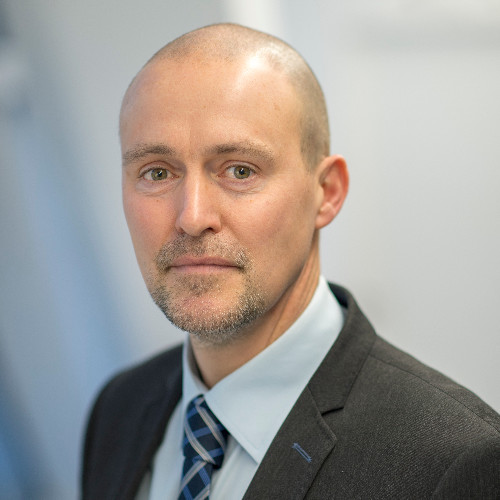
Erwin Verstraelen
Erwin Verstraelen is Vice President Innovation at Port of Antwerp-Bruges.
Insights & takeaways
Erwin Verstraelen's central argument, repeated across both accounts of the Agoria mission to China and Taiwan, is that Europe has grown too comfortable and too cautious to innovate at the pace the moment demands. "Het belangrijkste dat echt voor ons een prioriteit is als Europa, dat is stoppen met zelf genoegzaam zijn," he says 1, and the diagnosis recurs in different phrasing throughout: Europe develops for quality first and tries to scale only afterward, while China scales fast with imperfect products and learns from the market as it goes 2. For Verstraelen this is not a minor cultural quirk but the decisive variable separating who captures the economic upside of new technology and who arrives too late to matter.
He is emphatic that this is a mindset problem before it is a resource or regulatory problem. "Innovatie is in essentie een mindset. Met op safe te spelen, ja, dat ga je niet innoveren, hè. Zo simpel is dat. En dat zijn wij compleet verleerd," he argues 2, and he distills the port's own internal philosophy into a blunt motto: "No guts, no glory. Punt. Dat is de essentie van innovatie." 1. He points to Northvolt's bankruptcy as an example of European institutions abandoning innovation after a single setback, when real innovation requires tolerating failure over long timelines 12. The Chinese auto industry's rise in EVs, in his telling, wasn't foreseen because Europe was busy mocking rather than watching 12.
A recurring, very concrete theme is his account of drone delivery in Shenzhen, which he insists is misunderstood if read as a business case. Coffee delivered by drone isn't profitable in itself; it is a deliberate strategy to rack up flight volume in a dense urban environment so operators learn what safe, responsible operation of the "low altitude economy" actually requires 12. He draws a direct line from this to his own port, describing how Antwerp created "regelluwe zones," regulatory sandboxes where legislation for drones, remote-piloted shipping, and smart cameras was co-written alongside the experiments themselves, rather than imposed in advance 1. He is proud that the port built a genuine commercial drone ecosystem, inspections, chemical sample transport, oil-spill detection, so that the activity is self-sustaining rather than dependent on subsidy 2, and he offers a vivid image of what that looks like in practice: "Wij vliegen hier in Antwerpen met drones rond met 15 kg aan chemische stalen door de lucht." 1.
On the question of Chinese technology and security, Verstraelen takes a position that will read as contrarian in policy circles: the anxiety has arrived roughly fifteen years too late. "Doe iets van elektronica open, dat is Chinees. Als je daar nu zorgen over maakt, ja, dat is ongeveer 15 jaar te laat." 2. Every container crane in the world already comes from China, he notes, and even European-branded electronics are full of Chinese components, so excluding Chinese state-of-the-art technology, as the EU did with its 5G decision, simply sets Europe back years without actually removing the dependency 12. He redirects the real security concern elsewhere entirely: the port's cyberattacks come from Russian actors, not Chinese ones, and he cites five port installations being hit three days before the invasion of Ukraine as evidence that this is geopolitical hybrid warfare, not a China problem 12.
Underlying all of this is a claim about scale that he states almost as a law of competitive reality: "Je kan niet concurreren op dat vlak met een land waar dat elk jaar 4 miljoen mensen met een stemdiploma afstuderen." 2. Combined with demographic decline across mature economies, all sitting below the 2.1 reproduction rate needed to sustain population, he sees humanoid robotics as an inevitable, not optional, part of the future industrial mix, and he points to Taiwan as evidence the technology has already moved past the tinkering phase into standardized, plug-and-play industrial components, meaning it's nearly ready for primetime 12.
His closing framing is less about copying China wholesale and more about refusing to look away from it. "Als je echt state of the art innovatie wilt in technologie, ja dan moet je gewoon dom zijn om de Chinezen te negeren." 12. What he took from the trip wasn't abstract, it was visceral: "Ja, de toekomst zie je daar gewoon elke dag in de realiteit." 1. And he pushes back on the fatalism that Europe simply lacks the freedom to act this way, insisting the port's own sandbox experiments prove otherwise: "Het is niet dat we niks kunnen of niks mogen, hè." 1.
The organizational takeaway he offers is structural as much as philosophical: innovation shouldn't be quarantined in a single department. "Wij noemen onszelf het innovatief facilitatieteam en niet het innovatieteam, want dat is in mijn beleving is het hele bedrijf het innovatieteam." 2. Read together, his positions form a consistent playbook, create regulatory-free zones to learn fast, treat failure as tuition rather than verdict, stop treating Chinese technology as inherently suspect while ignoring the actual geopolitical threats, and build innovation capacity across the whole organization rather than isolating it. The throughline in every source is urgency: the window to act like China moves is closing, and self-satisfaction, in his account, is the one input Europe can no longer afford.
- China's government actively co-designs regulation to help innovation scale as fast as possible, whereas Europe first tries to mitigate everything that could go wrong before knowing how the technology evolves, losing the economic upside once the train has left.
- Drone coffee delivery in Shenzhen isn't about the business case; it's a deliberate strategy to create flight volumes in a complex urban environment to learn what's needed for safe, responsible operations in the low altitude economy.
- The Port of Antwerp created regulatory sandboxes ('regelluwe zones') and co-wrote legislative frameworks for drones, remote-piloted shipping and smart cameras that didn't exist when the experiments started.
- Worrying about Chinese technology in ports is ~15 years too late: every container crane in the world comes from China, and even European-branded electronics contain Chinese components; excluding Chinese tech (like the EU's 5G decision) set Europe years behind.
- The port's real cyber threat comes from Russian, not Chinese hackers — cyberattacks are a geopolitical weapon, and five port installations were attacked three days before the invasion of Ukraine.
- European complacency and mocking China caused the entire European auto industry to miss what was happening with electric vehicles in China.
- Europe abandons innovation too quickly — citing Northvolt's bankruptcy — while innovation requires accepting failure over long timelines; 'no guts, no glory' is the port's internal innovation motto.
- In Taiwan the humanoid robot industry has already moved past the tinkering phase into standards, protocols and plug-and-play industrial components — a sign it's ready for primetime production.
- China's innovation model is to scale as fast as possible with imperfect products and learn rapidly from market feedback, while Europe develops for quality first and then tries to scale — Europe shouldn't copy the model wholesale but must create regulatory-free experimentation zones from which legislation can emerge.
- Shenzhen's coffee-delivery drones are not about the business case but about deliberately creating flight volumes in a complex urban environment to learn what's needed for safe operation of the 'low altitude economy'.
- The Port of Antwerp deliberately built a commercial drone ecosystem (inspections, chemical sample transport, oil-spill detection) so it becomes financially sustainable rather than subsidy-dependent, co-writing regulatory frameworks along the way.
- Worrying about Chinese tech in ports is 15 years too late: every container crane in the world comes from China, and Chinese components sit inside European-branded equipment; excluding Chinese state-of-the-art tech (as with 5G) sets Europe years back.
- Cyberattacks on the port are geopolitical hybrid-war operations, not from Chinese but Russian hackers; three days before the invasion of Ukraine, tank installations in five ports were attacked.
- With every mature country below the 2.1 reproduction rate, humanoid robots will inevitably become part of the technology mix just to keep production levels stable; Taiwan has already turned humanoid robotics into standardized plug-and-play industrial components, meaning it's nearly ready for primetime.
- European complacency caused the entire auto industry to miss what was happening with Chinese EVs; innovation requires accepting failure rather than abandoning efforts like Northvolt after one setback.
Career
- Port of Antwerp-BrugesVice President InnovationFeb 2024 – Present
AlfapassBoard MemberApr 2020 – Present
The Beacon#474factoryBoard MemberSep 2018 – Present
NxtPortBoard MemberMar 2019 – Dec 2022
- Port of Antwerp-BrugesChief Digital and Innovation OfficerNov 2017 – Feb 2024
- ArvestaChief Information OfficerSep 2011 – Nov 2017
- Lecot-RaedscheldersGroup DirectorJan 2011 – Jul 2011
- IBM#7factorySenior Managing Consultant - Strategy and TransformationNov 2006 – Jan 2011
- EMD#555factorySolution architect team leader1999 – 2006
- KBC Bank & Verzekering#10factoryOrganizational consultantSep 1995 – Jun 1999
- Koninklijk hoger instituut voor defensieAlumnus, 19de sessie van de hoge studies veiligheid en defensieSep 2024 - Jun 2025
Tilburg University#67schoolExecutive masterclass Information security management, Information security strategy2015 - 2015
- UFSIA#157schoolMBA, economics1993 - 1994
University of Antwerp#5schoolMaster in Applied Economic Sciences, Transport Economics1988 - 1993
From public career histories · 14 entries
Media & appearances
2- 1podcastVirtual · 03 Dec 2025
Erwin Verstraelen (Port of Antwerp-Bruges) and podcast hosts debrief an Agoria innovation mission to China/Taiwan, arguing Europe must ditch complacency and copy China's speed of experimentation — from drone delivery and humanoid robots to regulatory sandboxes like the Antwerp port.
- 2podcastVirtual · 03 Dec 2025
Erwin Verstraelen (VP Innovation, Port of Antwerp-Bruges) recounts an Agoria innovation mission to Shenzhen and Taiwan, arguing Europe must drop complacency, create regulatory sandboxes and embrace Chinese tech speed in drones, humanoid robots and EVs.