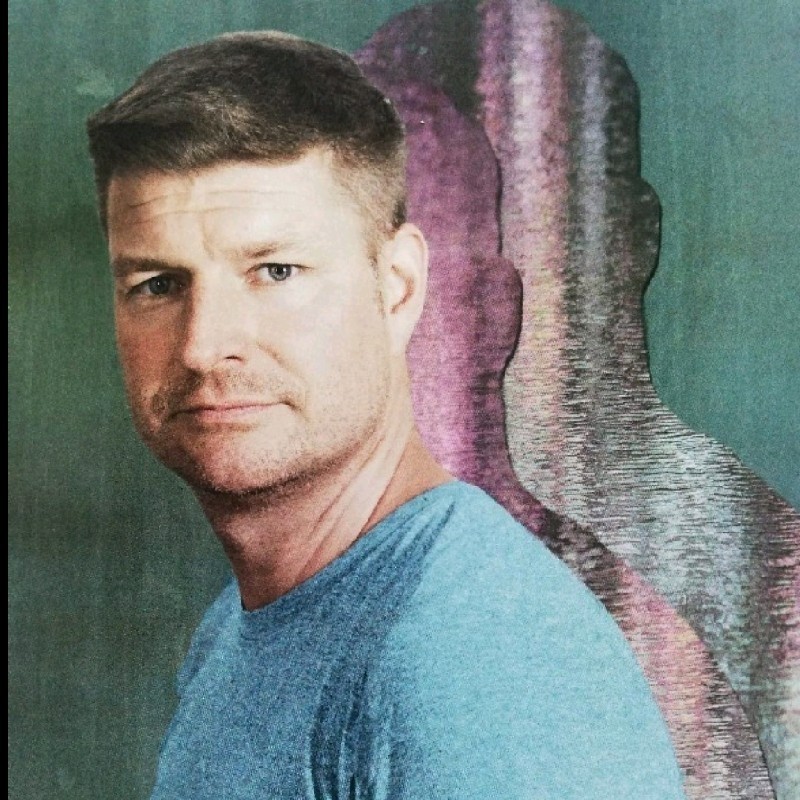
Ingmar Nopens
Ingmar Nopens is the CEO of Earth Plus, a role he took up in January 2026. He is based in Gent, and states his expertise as building world class teams, team management, research and development, holistic thinking and problem solving. He has also been managing director of C-biotech since November 2022 and a senior researcher at Capture since September 2014.
Between September 2020 and September 2024 he was chief advisor at Cobalt Water Global. At AM-Team he was scientific advisor from January 2017 to September 2019 and then COO until November 2022. His academic career was at Ghent University, where he was a PhD student from 1999 to 2005, a post-doc from December 2005 to September 2008, associate professor at BIOMATH from October 2008 to September 2018 and full professor there from October 2018 to January 2025. He held a post-doc position at Lund University in late 2005.
He studied bio-science engineering, environmental technology at Ghent University from 1994 to 1999, following KA Lokeren.
Insights & takeaways
Ingmar Nopens writes with the persistence of someone who keeps returning to the same unresolved argument: that climate policy and corporate net-zero planning are built on a temporal illusion. His central, recurring concept is "carbon debt" — the idea that cumulative emissions, not distant target dates, are what the atmosphere actually responds to. As he puts it, "the atmosphere responds to cumulative emissions — the area under the curve — not to the date at which a company eventually reaches net zero" . From this follows his sharpest and most repeated position: the conventional sequencing of "first reduce, then compensate" is wrong. He argues instead that "reduce and compensate should happen in parallel" , since "every serious sustainability roadmap already identifies emissions that will remain hard to abate or unavoidable for many years" , so waiting until 2040 or 2050 to address them only lets the debt compound . He is explicit that this is not a license to slow down mitigation — Beyond Value Chain Mitigation "shouldn't be an alternative to reducing emissions. It is about acting in parallel" — but a correction to what he sees as a dangerously linear, date-driven mindset.
That skepticism toward long-horizon technological fixes is another constant. He repeatedly singles out direct air capture and CCS as emblematic of a broader failure to reckon with basic energy math and urgency. In Dutch he calls the current default strategy "procrastinatie," warning that heavy investment in "de technologie van de toekomst om net zero te bereiken in 2050, zijnde daccs" is "too little too late" . He extends the critique elsewhere: "the math regarding energy and cost just does not hold" for direct air capture, comparing it to the energy waste of Haber Bosch, and dismissing it as a false "silver bullet" . On CCS specifically, he frames the deeper problem as one of systemic complicity rather than technical feasibility, asking whether such projects are "financing the decarbonisation of the existing system — or financing the transition to a different one" , and noting that reliance on high carbon prices to make CCS viable "adds another vulnerability" while "our carbondebt continues to accumulate" . His preferred alternative is consistently framed in biological and natural-process terms: reduce fossil carbon use, cycle carbon through CCU "where it makes sense," and replace fossil carbon with biogenic carbon , trusting that "Nature has it all figured out" through "natural process intensification" .
Nopens is equally insistent that climate risk is not a future abstraction but a present, systemic, and interconnected failure of foresight. He points to droughts disrupting inland shipping, wildfires, and low river levels shutting down power plants as evidence that "it's just the beginning of the serious impact climate change has on our society" , and he is unsparing about political inertia: "Politicians back in the nineties thought we had decades to solve the problem. Politicians today still think we have decades to go and keep procrastinating action" . He treats supposedly surprising disruptions as predictable failures of planning rather than genuine surprises, asking pointedly about low water levels halting inland navigation, "was this scenario never modelled?" and, regarding insurance and storm damage, "Dit zagen we toch van mijlenver aankomen? Of waren we naïef?" . This is paired with a critique of adaptation-only strategies: he argues that insurers, "as they are paying the bills and see the risk on their balance sheet" , are pushing adaptation, but warns "there is a limit to adaptation" because today's 100-year storm or heatwave becomes tomorrow's 10-year event, making continual adaptation "impossible. And too expensive" . His conclusion is that capital should shift toward "source control rather then end of pipe solutions" .
A parallel and increasingly prominent theme is his insistence on systems thinking that goes beyond carbon accounting alone. He champions the idea of "Soil Health Boundaries" as an analog to planetary boundaries, arguing the soil conversation has been too narrowly fixated on "SOC, carbon sequestration and carbon credits" when soil health is "much broader: water retention, biology, nutrients, structure, resilience and the interactions between them" . He uses the Belgian peat fire as a concrete illustration that carbon-rich stores are not inherently safe: "The immediate vulnerability wasn't a lack of carbon — peat is extremely carbon-rich. It was drought and loss of soil moisture that made that carbon vulnerable to fire" , concluding that "measuring carbon alone doesn't tell us whether an ecosystem is healthy or resilient" . This ecosystems framing recurs in his professional commentary on construction and pollution, where he argues problems like PFAS or building emissions should not be treated in isolation but connected across "a pollution angle and a soil health angle" , describing this integrated approach as core to how he wants organizations to operate .
Underlying all of this is a demand for honesty about uncertainty and inadequate ambition. He rejects the idea that 1.5°C remains realistic, stating flatly in Dutch that current net-zero scenarios are not dynamic and that targets are simply revised downward when missed: "Het enige dat dynamisch is is de vele doelstellingen... die niet gehaald worden en dan maar naar beneden worden bijgesteld" . He also flags that even existing warming projections may understate the trajectory, noting that predicted shifts in summer heat distributions may not "even account for the current AI and datacenter race" , and separately warns that data centers and DACCS "will even require more energy than we need today" . His closing provocation, repeated across posts in different forms, is a challenge to complacency: "Why are we still not acting massively?" . The practical takeaway from his body of commentary is a call to fund immediate, source-based, nature-aligned transformation now rather than betting on distant technological silver bullets, and to treat carbon debt, soil health, and systemic infrastructure risk as urgent, parallel obligations rather than sequential items on a decades-long roadmap .
Career
Earth PlusCEOJan 2026 – Present
C-biotechManaging DirectorNov 2022 – Present
- CaptureSenior ResearcherSep 2014 – Present
- Cobalt Water GlobalChief AdvisorSep 2020 – Sep 2024
- AM-TeamCOOOct 2019 – Nov 2022
BIOMATH - Ghent UniversityFull ProfessorOct 2018 – Jan 2025
- AM-TeamScientific AdvisorJan 2017 – Sep 2019
- Lund UniversityPost-docOct 2005 – Nov 2005
- KA Lokeren
From public career histories · 13 entries