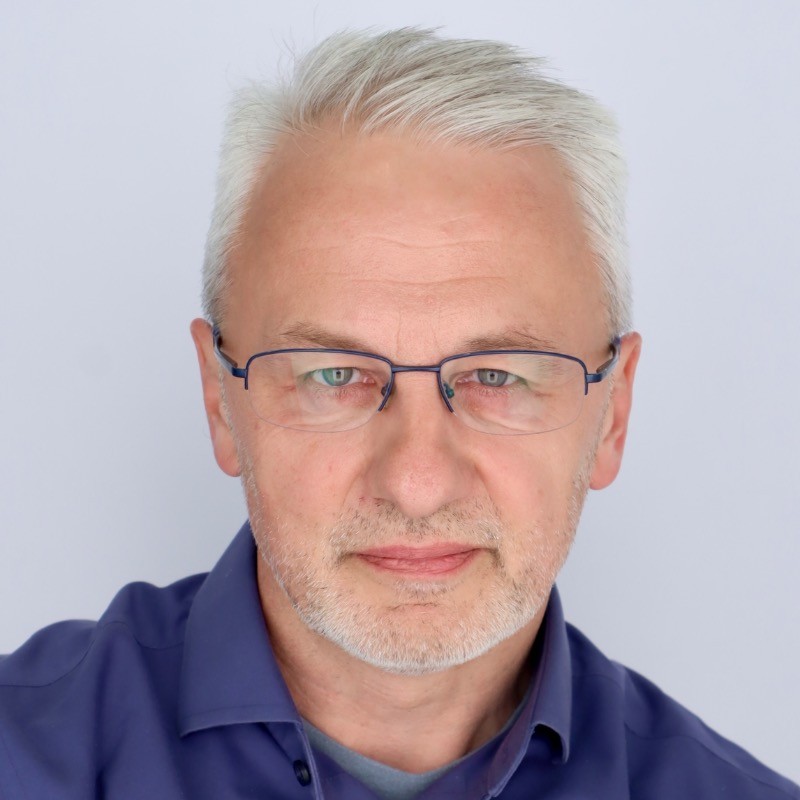
John Baekelmans
John Baekelmans is Technology diplomat / representative at Flanders Investment & Trade (FIT). ## Background
Baekelmans explains that the US is Flanders' largest foreign investor and highlights success stories like AIdaptation — a DARPA-derived autonomous racing company establishing its global HQ at Droneport in Sint-Truiden — as well as Flemish scale-ups Legal Fly and TechWolf expanding to the US. He shares advice for Flemish entrepreneurs (be bold, position confidently, 'fake it till you make it') and argues today's AI boom differs from the 2001 dot-com bubble because business models and applicability are clearer.
Insights & takeaways
John Baekelmans speaks from a specific vantage point: a Flemish tech diplomat stationed in New York, watching Trump's second-term administration up close and translating what he sees into practical advice for Flemish companies trying to break into the US market. The thread that runs through his 2025 remarks is that something structural has shifted in Washington, and that Flanders needs to recognize it fast. He describes the $500 billion Stargate AI announcement as no accident of timing, arguing it was "likely demanded by Trump himself and staged for the day after his inauguration" 3, and he reads the optics literally: tech CEOs sitting closer to the president than former presidents did. His summary phrase for the new environment is blunt: "Het new normal in the US is Tech First, the rest later" 23. He does not frame this as an abstract observation but as an opportunity clock starting to tick for Flemish exporters and investors.
His diagnosis of why Flemish companies lose deals in America is consistent across both podcast appearances, almost word for word, which suggests it is a core conviction rather than a passing talking point. Flemish entrepreneurs, he says, sabotage themselves with modesty. "Je mag niet zeggen we think we have one of the best products, we have the best product" 23. He extends this into a broader philosophy of market entry: "Be more bold, standout, zorg dat je niet dezelfde bent als iedereen, en make money to do it" 23. Crucially, he draws a line between confident positioning and dishonesty, insisting the "fake it till you make it" ethos he recommends "heeft niks te maken met dingen te doen die niet kloppen, dat heeft te maken met u sterker te gaan positioneren dan al de rest" 2. For him this is a mindset gap, not a values gap, and he treats it as the single biggest inhibitor standing between Flemish companies and American contracts.
Baekelmans applies the same competitive logic to his own diplomatic work, which is one of his more distinctive positions. He runs the FIT office in New York like a company, with KPIs, sales calls, reviews, and rival-beating strategy documents, including what he literally calls a "Kill de Dutch plan om te zorgen... hoe kunnen wij die klant verslaan vanuit een business opportuniteit om die investering naar Vlaanderen te kunnen krijgen" 23. He justifies this with a rhetorical question that doubles as his operating principle: "Hoe kunnen wij bedrijven kennen of snappen als wij zelf niet als een bedrijf functioneren?" 2. In his telling, government economic diplomacy only works if it thinks and competes like the businesses it is trying to attract or defend.
The AIDaption (also referenced as AIdaptation) case anchors his argument that Flanders isn't merely a passive beneficiary of American tech dominance. He treats the company's decision to base its global headquarters at Droneport Sint-Truiden rather than the US as proof that Flanders can win specific fights: top university talent, test infrastructure, and above all a neutral national position, since staying in the US would have pulled the DARPA-derived autonomous technology toward defense applications 23. He extends the underlying technology into a wider vision, noting that if a company "kunt doen in een racewagen" at 300 km/h, "stel je eens voor wat je allemaal kan met diezelfde technologie toegepast op robotten op slower speed" 3, framing autonomous racecars as a proving ground for broader physical AI. He also sizes the moment for a Flemish audience by putting Stargate's $500 billion in local terms: "Vlaanderen, alle export in Vlaanderen voor een jaar is ongeveer 500 miljard" 3.
He is not uncritical of the American picture. He is skeptical of the political promise that Stargate will create 100,000 jobs, since "datacenters employ few people directly" 23, and he contrasts this with what he considers the more honest and fully counted FDI job numbers Flanders reports. He also registers unease about the direction of the administration's most visible tech figure, saying "Ik heb het gevoel nu dat Musk meer naar de darker side aan het gaan is dan Trump en dat is scary" 2. On the substance of the current AI boom, he pushes back against comparisons to the 2000 dot-com bust, arguing today's boom rests on clearer business models and daily applicability, citing paid tools like Copilot that save "1-2 hours per day" 23 as evidence that revenue logic, not just hype, underlies the investment.
Where Flanders itself is concerned, Baekelmans argues the region has a "right to play" in tech, rooted in genuine strengths, from imec's semiconductor work to what he calls Flemish-origin cancer technologies: "Heel veel van die nieuwe kanker technologieën komen uit Vlaanderen" 3. But he pairs this confidence with a warning about temperament. He faults Europe's instinct to over-regulate before celebrating what it has built, contrasting the plastic-bottle-cap regulatory reflex with SpaceX's chopstick rocket landing, and urges Europeans to "talk more proudly about innovations even before they're 100% finished" because visibility itself attracts investors 23. This is consistent with his earlier work on Antwerp's digital twin project, where the underlying instinct was similarly forward-leaning: build the simulation before you build the thing, since, as he put it, the point "is to create or pre-create, to model, to simulate before you actually create" 4, and richer real-time data, drawn from hundreds of sensors including ones mounted on delivery vans, lets a city "make cleaner" decisions and better guide traffic before problems fully materialize 4.
Across these appearances, the throughline in Baekelmans's thinking is less about specific deals and more about posture: whether it is government diplomacy, a startup pitching in New York, or a city modeling its own traffic before intervening, he consistently argues that boldness, simulation, and confident positioning beat caution and understatement. His concrete takeaways for Flemish businesses are correspondingly simple and repeated almost verbatim across sources: claim you have the best product rather than one of the best, treat US tech-first politics as an opening rather than a threat, and build institutions, whether companies or diplomatic offices, that behave competitively enough to notice and seize that opening before rivals do.
- The Stargate announcement was likely demanded by Trump himself and staged for the day after his inauguration; tech CEOs sat closer to Trump than ex-presidents, signaling 'Tech First' as the new normal in the US.
- AIdaptation chose Sint-Truiden over the US because Flanders offers top university talent, a neutral country position (versus being pulled toward defense in the US), and test infrastructure at Droneport — a diplomatic project two years in the making.
- Autonomous racecars at 300 km/h represent the optimum of Physical AI interacting with the real world; the same IP applied to slower robots unlocks massive applications.
- He runs the diplomatic office like a business, with sales calls, reviews and KPIs, and actively makes competitive plans ('Kill the Dutch plan') to beat neighboring countries on investment dossiers.
- The biggest inhibitor for Flemish companies in the US is themselves: you must say 'we have the best product', not 'one of the best', or you lose the deal — positioning and mindset matter more than in Europe.
- Today's AI boom differs from the 2001 dot-com bubble because business models and applicability are thought through — paid offerings like Copilot deliver 1-2 hours of daily efficiency, unlike 2000 when money chased applications no customer wanted.
- Trump's 100,000-jobs claim for Stargate is doubtful because datacenters employ few people directly; Flanders' FDI job numbers are all counted and real.
- Europe's overregulation hurts competitiveness; Europeans should talk more proudly about innovations even before they're 100% finished, because visibility attracts attention and investors.
- imec's differentiation is moving digital twins beyond planning based on historical big data to a real-time dashboard, by deploying hundreds of fixed and mobile sensors across Antwerp.
- Mounting air-quality sensors on Bpost delivery vans is a cost-effective way to get daily, street-level pollution data since the vans hit almost every street in Antwerp daily.
- Solving Antwerp's mobility problem requires looking beyond the city itself — flows to and from the port and the wider region must be modeled, which is why the twin will expand to all of Flanders.
- The US is the largest foreign investor in Flanders because of synergies on next-generation technologies — life sciences/personalized medicine, offshore wind and semiconductors (imec) — so Flanders should ride US tech waves rather than compete on scale.
- AIDaption chose Sint-Truiden over the US because Flanders offers top university talent and a neutral position: staying in the US would have pushed the DARPA-derived autonomous tech mainly toward defense applications.
- Flemish companies lose US deals by being honest that their product isn't finished; in the US you must claim 'we have the best product' — positioning, not deception, wins the market before competitors arrive.
- Baekelmans runs his diplomatic team like a company — with KPIs, reviews, sales calls and competitive 'Kill the Dutch' plans against neighboring countries — arguing government can't understand businesses unless it functions like one.
- Unlike the 2000 dotcom bubble, today's AI boom has clearer business models and daily applicability (e.g. Copilot saving 1-2 hours per day for €30/month), which makes a burst less likely, though hosts note capex vastly outpaces revenue.
- Trump's tech-first administration is fundamentally good news for Flanders as a technology society, but permitting law and administrative simplification in Flanders will determine whether it can capture the opportunity.
- Europe's over-regulation reflex (the plastic bottle cap meme vs. SpaceX's chopstick landing) hurts competitiveness; Europeans should talk more proudly about innovations even before they're 100% finished, because visibility attracts investors.
- Trump's promise of 100,000 jobs from the $500B Stargate investment is doubtful because datacenters employ few people directly.
Career
PointerProChief Product & Technology OfficerFeb 2026 – Present
The Beacon#474factoryExecutive ChairMar 2026 – Present
LegalFlyVice President of GrowthApr 2025 – Feb 2026
- Flanders Investment & Trade (FIT)#393factoryVice President, AmericasJan 2024 – Mar 2025
AloxyBoard MemberSep 2022 – Jun 2024
- Flanders Investment & Trade (FIT)#393factoryScience and Technology Counselor AmericasFeb 2021 – Jan 2024
HydroScan GroupBoard MemberJun 2020 – Jun 2023
Rombit#96factoryCEOMar 2020 – Jan 2021
imec#8factoryVice President System & Software SolutionsNov 2016 – Mar 2020
- Cisco#189factoryCTO, Internet of Everything Solutions GroupSep 2014 – Oct 2016
- Cisco#189factoryCTO, Smart Connected Communities & IoT City VerticalJun 2008 – Oct 2013
- fifthplay nvChief Technology OfficerNov 2006 – Jun 2008
- Cisco Systems#523factoryDirector, Business Development Technology OfficeMay 1996 – Oct 2006
- Brandweer BelgieOfficier1990 – Mar 2011
- Siemens#32factoryNetwork Engineer, Large Scale PABX Voice networks1990 – 1996
- Provinciaal Veiligheidsinstituut AntwerpenPreventionadvisor Type II2005 - 2006
University of Antwerp, BelgiumMaster, Computer Engineering1986 - 1990
From public career histories · 17 entries
Media & appearances
3- 2podcastVirtual · 05 Feb 2025
Flemish tech diplomat John Baekelmans (FIT, New York) explains how Trump's tech-first US administration, the $500B Stargate AI announcement, and deals like AI racing company AIDaption landing in Sint-Truiden create export and investment opportunities for Flemish companies — if they adopt a bolder American mindset.
- 3podcastVirtual · 22 Jan 2025
Flemish tech diplomat John Baekelmans (FIT, New York) discusses Trump's second term, the $500B Stargate AI announcement, US-Flanders investment ties, AIdaptation's decision to base its global HQ at Droneport Sint-Truiden, and mindset tips for Flemish entrepreneurs entering the US market.
- 4keynoteSuperNova · 09 Nov 2018
imec's Jan Adriaenssens and John Baekelmans demo Antwerp's digital twin, combining interconnected traffic, noise and air-quality models with hundreds of real-time sensors to simulate city interventions and support urban planning.