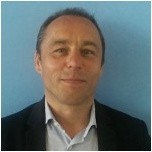
Matthias Vallaey
Matthias Vallaey is a founder based in Hekelgem. Since December 2014 he has been managing partner and co-founder of Big Industries, and since March 2013 he has run MAJAN BVBA as zaakvoerder. Between April 2017 and January 2022 he was also a co-founder of Analogue.
Before that he worked on business development for big data at Cronos from February 2013 to December 2014. He spent close to a decade at Oracle, joining in August 2003 as business development manager and going on to hold roles as client manager consulting, technology account manager and sales manager until December 2012. From July 1996 to July 2003 he was a large account manager at Getronics, and he began his career as a recruitment consultant at Kelter Belgium Ltd in November 1994.
He studied applied economics at Katholieke Universiteit Brussel and at Katholieke Universiteit Leuven, followed by specialised studies in applied economics with Rijksuniversiteit Groningen and supplementary studies in international relations with the Université de Montpellier.
Insights & takeaways
Across dozens of posts, Matthias Vallaey's public voice on LinkedIn is almost entirely organizational rather than personal, but a consistent set of convictions comes through in what he chooses to repeat and what he chooses to announce. The dominant, recurring message is that AI ambitions are only as good as the data infrastructure underneath them. He states this plainly: "Too many AI initiatives stall because the underlying data platform isn't ready" . That single line functions as the thesis behind nearly everything else he posts, from the hiring calls to the product announcements. The framing is consistent whether the post is about recruiting or about a product launch: the platform is the precondition for value, not an afterthought bolted on once a model works in a notebook.
That thesis is operationalized in the description of Big Industries' AWS Data Platform for AI, which he describes as a "ready-to-use AWS Data Platform for AI that can be deployed in days using Infrastructure-as-Code with Terraform" . The emphasis on speed of deployment, security, and production-readiness, so that "teams can focus on creating business value instead of building cloud infrastructure" , reflects a clear position: platform engineering should be treated as reusable, standardized infrastructure, not a bespoke project redone for every client. This is a practical, engineering-first view of AI adoption, oriented toward removing friction rather than adding new layers of tooling for its own sake.
The recruiting posts, which make up the bulk of the material, repeat the same language almost verbatim across many dates, and that repetition itself is telling. The consistent phrasing, "we build the foundations that power AI" , and "Big Industries is building the next generation of Data Platforms" , signals a deliberate, disciplined message rather than a scattershot one. The technology stack named over and over, Databricks, Spark, Kafka, Python, AWS, Azure, Cloudera, alongside MLOps, LLMOps, and "AI Platform Engineering" , defines a fairly specific technical identity: heavyweight enterprise data engineering aimed squarely at production AI use cases, not experimentation or prototyping.
A second theme running through the hiring language is growth through structured learning rather than raw hiring for headcount. The posts consistently promise to "grow through certifications (Databricks & cloud), trainings and a strong learning culture" , and to let new engineers "learn from experienced engineers, earn industry certifications" . The recurring pairing of "challenging enterprise projects" with formal upskilling suggests a stated belief that technical capability at this level is built deliberately, through certification paths and mentorship, not assumed to already exist in candidates.
The one concrete project reference in the material, the EUROCONTROL collaboration, gives the abstract "foundation for AI" language a real anchor. He describes helping "simulate PBN compliance for military aircraft" using "PyTorch and Cloudera AI," explicitly framing the outcome as "replacing costly validation flights with machine learning" . This is the clearest example in the record of the stated philosophy actually paying off: AI applied to a hard, safety-relevant validation problem, delivered as a recognized, peer-reviewed result rather than a demo. It substantiates the broader claim that data and platform work is meant to serve, in his words, moving organizations "from data to production AI" .
Taken together, the throughline across these sources is not a personal philosophy in the reflective sense but a consistent professional position, repeated deliberately across time: AI value depends on platform readiness first, that readiness is built with a specific and named stack, and the people needed to build it should be developed through certification and mentorship rather than hired as finished products. The near-identical recruiting posts function less as content variety and more as sustained reinforcement of that one idea, with the AWS platform post and the EUROCONTROL case study serving as the two moments where the underlying conviction is shown rather than just stated.
Career
Roles
Big IndustriesManaging Partner & Co-FounderDec 2014 – Present
- MAJAN BVBAZaakvoerderMar 2013 – Present
AnalogueCo-FounderApr 2017 – Jan 2022
Cronos#36factoryBusiness Development Big DataFeb 2013 – Dec 2014
- Oracle#75factorySales ManagerOct 2009 – Dec 2012
- Oracle#75factoryTechnology Account ManagerJan 2008 – Oct 2009
- Oracle#75factoryClient Manager ConsultingNov 2005 – Dec 2007
- Oracle#75factoryBusiness Development ManagerAug 2003 – Oct 2005
- GetronicsLarge Account ManagerJul 1996 – Jul 2003
- Kelter Belgium LtdRecruitment ConsultantNov 1994 – Jun 1996
- blankblankSep 1970 – Jan 1971
Education
- KUL Leuven, Université de MontpellierGediplomeerde in de Aanvullende Studies van Internationale Betrekkingen, International Relations and Affairs1993 - 1994
- KUL Leuven, Rijksuniversiteit GroningenGediplomeerde in de Gespecialiseerde Studies van T.E.W., Applied Economics1992 - 1993
Katholieke Universiteit Leuven (KUL)Licentiaat Toegepaste Economische Wetenschappen, Economics1990 - 1992
- Katholieke Universiteit Brussel#93schoolKandidaat Toegepaste Economische Wetenschappen1988 - 1990
- Varsenare
From public career histories · 16 entries