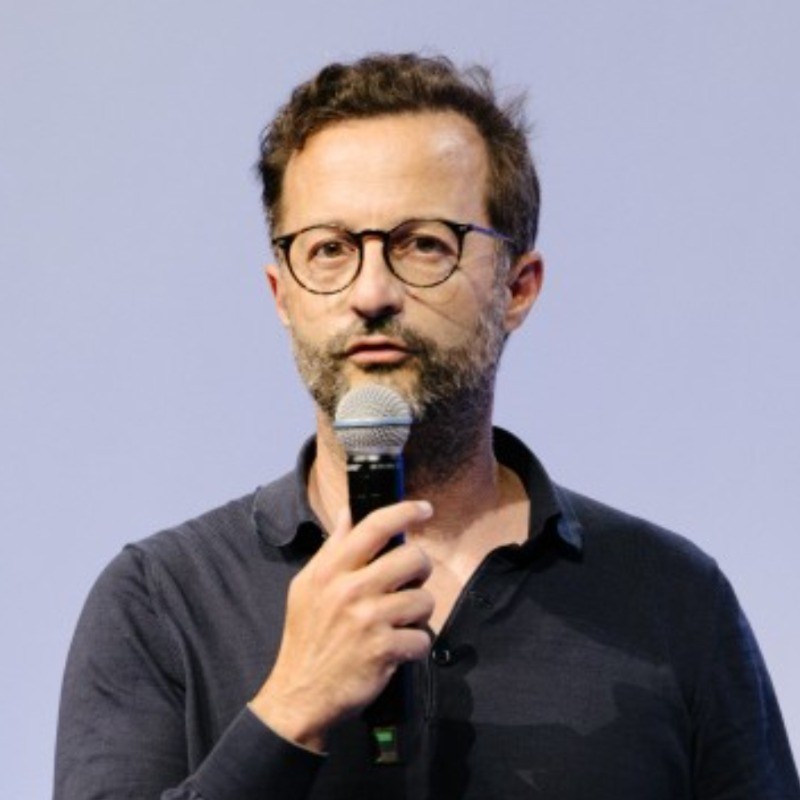
Nicolas Debray
Nicolas Debray is a business angel, board director and ecosystem builder based in Brussels. He has invested in approximately 20 tech startups and sits on the boards of several of them, including Sortlist, Tapio, BeInfluence Europe and Doctor Manager. His investments include Compliment, Smovin, Sylho and Lineal, where he took part in a €500k pre-seed round. In 2009 he co-founded the digital marketing agency Semetis with Gabriel Goldberg. Semetis grew from 2 to more than 50 employees, managed €100 million in ad spend and worked for Proximus, Colruyt, ING, IKEA and Decathlon. In 2019 he co-founded Hakacia, which helps marketing departments adapt, with clients such as Voo, Decathlon, Brico and Dandoy. With Goldberg and a third partner he also bought the Marcom World group. He has taught at ULB and Solvay since 2009 and has been Entrepreneur in Residence at StartLab since 2016. He launched the Speed Scaling program and the Belgium Impact Startup Awards, and now leads the Belgium Startup Awards, whose 2025 edition on June 5 at TheEgg in Brussels selected 49 startups from 81 applications and awarded €100,000 in convertible loans.
Debray studied at Solvay Brussels School of Economics and Management from 1999 to 2005 and worked at the market research agency Dedicated Research before joining Google Belgium in 2007. He left Google in 2009 to co-found Semetis, sold it to Omnicom in 2015, stayed until the end of 2018 and then moved into angel investing, board work, teaching and ecosystem initiatives, co-founding Hakacia in 2019 and the Belgium Startup Awards.
As an angel investor, Nicolas provides capital and mentorship to early-stage founders, drawing on his tech and product background from Google. He is active in Brussels startup events and networks.
Insights & takeaways
The through-line
Nicolas Debray's writing keeps circling back to one idea: the Belgian startup ecosystem is built by connecting people and capital who otherwise stay in separate silos, students and founders, business angels and operators, Wallonia and Flanders, Belgium and its neighbors. Early posts frame this through personal metaphor, tracing a line from streetball on Brussels playgrounds to "the boardroom" and describing how "the intensity of streetball never really leaves you" . Over the run of posts the focus shifts from personal narrative toward infrastructure and policy: chronicling the physical construction of WAT.BXL as a tech hub , organizing roadshows to funnel graduates into startups , and pushing for regulatory fixes on stock option taxation . Alongside this, a separate thread of candor emerges in his "Untold stories of a Business Angel" series, where he walks through a deal that did not work out, admitting plainly "Did I make a ton of money? No" .
On building bridges
Debray describes ecosystem-building explicitly as connective work rather than a solo pursuit: "Building a startup ecosystem isn't a solo game. It's about connecting the dots across borders" . For the Belgium Startup Ecosystem, he states "it's all about building bridges" and that "Tangible value is created when we connect the right stakeholders" . This shows up concretely in the WAT.BXL project, where instead of waiting for a 10,000 square meter hub to finish construction, the team ran a live MVP, "Connecting talent, founders and stakeholders from day one" . The same logic drives the graduate roadshow with FirstMovers and Student Team, aimed at making "the innovation and startup economy the #1 destination for top Belgian graduates" .
On stock options and taxation
Debray treats employee stock options as core startup infrastructure, not a perk: "Stock options are an easy tool for startups to open and share their capital with their key employees... It's a great tool to align all the interests in the long term. It's not a quick hack" . He pairs this with a pointed critique of Belgian tax treatment, framing the math starkly: "Up to 60% of taxes. About 70% chance of making 0€. Shouldn't we change that?!" and calling directly for "a special Startup Regime for Stock Options" . He also points outward for comparison, noting that Luxembourg "has agreed to upgrade its ESOP (Employee Stock Option Plan) framework, paving a clear fiscal pathway to attract top minds" .
On being a business angel
Debray is candid that angel investing is a financial activity with a return expectation, not charity: "The drive is definitely about giving back, learning and elevating people. But a startup has responsibilities... and money has value. It remains a financial activity, not philanthropy" . His retelling of a specific deal walks through both the discipline and the disappointment: negotiating terms so that "As a business angel, I accepted fewer shares with a high valuation but protected my downside with a liqpref" , while ultimately conceding "Did I make a ton of money? No. Unfortunately I did not succeed in elevating the project to another level" . He also details the operational strain that followed a capital raise, noting that "€30k MRR doesn't cover many salaries" once a fully loaded cost per FTE is factored in .
Takeaways
- When negotiating a deal with a high pre-money valuation, secure a liquidity preference to protect downside as an investor
- Belgian founders should treat stock options as an alignment tool, not a quick hack or bonus substitute
- Advocate for a dedicated startup stock option tax regime given the current combination of up to 60% taxation and roughly 70% odds of zero payout
- Use graduate-facing roadshows (with partners like FirstMovers and Student Team) to funnel talent directly into startups rather than established employers
- Launch a functioning MVP of a hub or program during buildout instead of waiting for the space or product to be fully finished
- Treat angel investing as a financial activity with real return expectations, even while emphasizing mentorship and giving back
Career
Roles
- LN24Board MemberMar 2026 – Present
- Belgium Startup EcosystemEcosystem BuilderDec 2024 – Present
- BeInfluence EuropeChairman of the BoardJan 2023 – Present
Sortlist#706factoryChairman of the BoardAug 2023 – Present
TapioBoard MemberMar 2022 – Present
SimplycureChairman Of The BoardMar 2020 – Present
- Yago (Ex-Seraphin)Board MemberJan 2020 – Present
Doctor ManagerBoard MemberJul 2019 – Present
- HakaciaManaging DirectorMay 2019 – Present
- Solvay EntrepreneursCoach @StartLab ULB Startup IncubatorOct 2016 – Present
- Smovin#500factoryChairman Of The BoardJan 2020 – May 2026
- NOUKIESBoard MemberSep 2018 – Aug 2025
Solvay Brussels School of Economics and Management (SBS-EM) - ULB#80factoryAcademic DirectorJul 2018 – Jul 2023
- Omnicom Media GroupHead of DigitalApr 2016 – May 2018
- Semetis#422factoryManaging Director & Co-FounderMar 2009 – Feb 2019
- Google#40factoryAccount ManagerNov 2008 – Apr 2009
- Google#40factoryIndustry AnalystApr 2007 – Nov 2008
- Dedicated ResearchMarket ResearcherJun 2005 – Dec 2005
Education
- SDA Bocconi#179schoolMaster, Strategy2006 - 2006
- emlyon business school#171school2004 - 2004
Université libre de Bruxelles#10schoolMaster's degree1999 - 2005
From public career histories · 23 entries