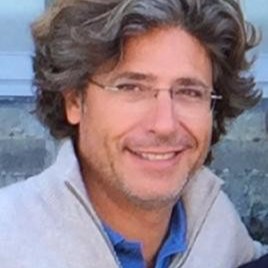
Olivier Marian
Olivier Marian is a co-founder of Arteïa, where he has been chief strategy officer since July 2016. He is based in Brussels. Since January 2014 he has also been the owner of OMADEV.
Before Arteïa, he owned EFEC Holding - GIBILOBA from January 2007 to July 2015. He was a consultant manager at Alligra between February 2005 and October 2006, and owned Endromis from November 1999 to August 2005. Earlier in his career he was a senior operations analyst at Microsoft from January 1998 to November 1999, having worked in the technical department of MARVIN (REUTERS) from June 1996 to January 1998.
Marian took an MBA in finance at Sciences Po in 2003 and 2004. He earlier completed a Master of Science in computer science at the Florida Institute of Technology between December 1993 and October 1994, and studied computer science as a computer engineer at CY Tech from 1991 to 1994.
Insights & takeaways
The through-line
Across his posts, Olivier Marian keeps returning to one gap: the physical object and the record of what it is, who made it, who owns it, and where it has been are almost always separated. He describes collectors whose collections "live in three places — a notebook, a spreadsheet, and their memory" , works whose history sits "in a folder somewhere" while the object hangs "on the wall" , and artists who lose "authority" over their own catalogue raisonné to third parties over a lifetime . The throughline shifts register depending on the product he's discussing — collector-side record-keeping (COLLECT), object-side provenance (CONNECT), artist-side authorship (DCR) — but the underlying claim is constant: trust and control over provenance should sit with the owner or the creator, not with paperwork or intermediaries . More recently he has widened the lens to the market itself, arguing that established auction houses are chasing "luxe et collectibles" revenue because that market now dwarfs fine art in scale .
On provenance
Marian's recurring frustration is that provenance today travels as fragile paper rather than with the object. On the secondary market, he says "the hardest question is always: can I trust this provenance?" , and CONNECT's answer is "an NFC-based digital passport attached to the object itself — authentication and history that travel with the piece, not with paperwork that gets lost" . He frames this as closing a structural gap: "A physical work and its history usually live apart" , and the NFC tag both verifies the object and "gives the maker a direct line to whoever owns it next" . In the Louvre interview he grounds this in a concrete case, describing a project where an artist worked with the museum to attach a secure NFC chip to a metal plate artwork in the Louvre's archives, creating a digital passport accessible via smartphone, which he contrasts directly with traditional paper certificates of authenticity 16.
On artist authority
For Marian, the catalogue raisonné is not just an archival exercise but a question of who controls an artist's legacy. He notes that historically "a catalogue raisonné used to take a lifetime to compile — and even then, authority over it often left the artist's hands" . DCR is built to reverse that: "every work registered, verifiable, and under their control," which he insists "is not just a record — it's authorship, preserved" . He states plainly that this reclaiming of control is "the shift I care about most in this project," describing DCR as letting artists take back authority through attributions that are "recorded, timestamped, and controlled by the artist, not a third party" .
On collectors' fragmented records
Marian's read on collectors mirrors his read on artists: information about what people own is scattered and unreliable. He says "every collector I talk to has the same problem" of a collection split across "a notebook, a spreadsheet, and their memory" , and positions COLLECT as "one private, secure record of what you own, its provenance and its value" . Applied to artists specifically, he frames the same tool as protecting legacy: "your catalogue is your legacy... in one private archive you control. Less time chasing records, more time creating" .
On the market's shift toward luxury and collectibles
Responding to a claim that the art market is recovering, Marian offers a more specific explanation: dealers are pursuing "croissance externe" by adding new product categories to attract clients, not seeing organic recovery . He points to auction houses "comme Christie's et Sothebys" now targeting "30 à 40% de leur ÇA sur luxe et collectibles" , and argues that the collectibles market "représente bien plus chaque année que le marché de l'art," which he says "reste très limité en taille globale" despite headline numbers . He ties this to new collector behavior, noting that new collectors are "souvent d'abord attiré par le luxe, les montres, les objets memorabilia sportifs," which is where he positions Arteïa CONNECT as adding value .
From the stage
In the Techno Impact interview, Marian goes further than any written post by walking through an actual museum deployment: an artist partnering with the Louvre to affix a secure NFC chip to a metal plate artwork held in the museum's archives, generating a smartphone-accessible digital passport of authentication data 16. He uses this case to make his comparison to paper certificates concrete rather than abstract, explicitly framing the problem as verifying that a physical artwork matches its documentation 16 — a real-world proof point that doesn't appear in the LinkedIn posts about CONNECT.
Takeaways
- When evaluating provenance tools, look for solutions that bind authentication to the object itself (e.g., NFC tags) rather than relying on separable paperwork .
- Treat catalogue raisonné projects as governance questions: ask who controls attribution and timestamping, not just who compiles the record .
- For collectors or artists managing scattered records across notebooks, spreadsheets, and memory, consolidating into a single private, controlled archive reduces both risk and time cost .
- Read auction houses' pivot toward luxury and collectibles (30-40% of revenue at firms like Christie's and Sotheby's) as a deliberate growth strategy, not evidence of art-market recovery .
- The Louvre NFC-chip project on a metal plate artwork is a concrete precedent for museum-grade digital passports replacing paper certificates of authenticity 16.
Career
Roles
ArteïaChief Strategy OfficerJul 2016 – Present
- OMADEVOwnerJan 2014 – Present
- EFEC Holding - GIBILOBAOwnerJan 2007 – Jul 2015
- AlligraConsultant ManagerFeb 2005 – Oct 2006
- EndromisOwnerNov 1999 – Aug 2005
- Microsoft#20factorySenior Operations AnalystJan 1998 – Nov 1999
- MARVIN (REUTERS)Technical DepartmentJun 1996 – Jan 1998
Education
- Sciences Po#167schoolMBA, Finance2003 - 2004
- Florida Institute of TechnologyMaster of Science, Computer ScienceDec 1993 - Oct 1994
- CY TechComputer Engineer, Computer Science1991 - 1994
From public career histories · 10 entries
Media & appearances
1- 16interviewTechno Impact by NFT Business · 3y ago · 56:25 · 20 views
Olivier Marian discusses how his startup Arteia uses NFC chip authentication technology to verify and trace artwork authenticity and provenance. He explains a specific project at the Louvre where an artist worked with the museum to attach a secure NFC chip to a metal plate artwork in the Louvre's archives, creating a digital passport that stores authentication information accessible via smartphone. Marian compares this solution to traditional paper certificates of authenticity, addressing the problem of verifying that a physical artwork matches its documentation.