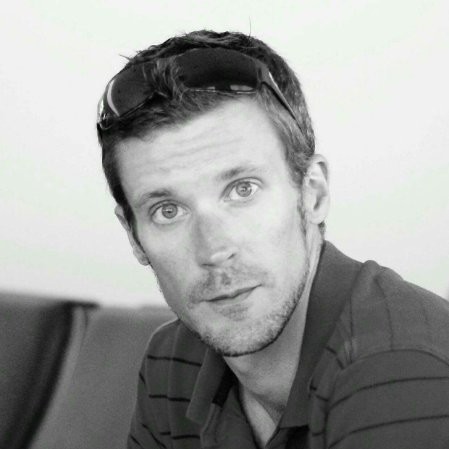
Pieter Drieskens
Pieter Drieskens is the owner of accu-r8, a business he has run since November 2022, and has also served as its project and operations manager since 2022. He is based in Lubbeek. Since December 2023 he has additionally worked as an implementation technician at Charge-R8.
Between November 2020 and December 2022 he was a configuration technician at DRP Config. From December 2006 to December 2023 he worked at Securitas Belgium as a post coordinator.
He studied accountancy and taxation as well as telecommunications techniques at Katholieke Hogeschool Leuven, and completed training at Syntra Antwerpen en Vlaams Brabant (Syntra AB) as an installer of electric charging points and in electricity.
His stated areas of expertise are equipment installation, charging points, load balancing, strategic planning and planning.
Insights & takeaways
Pieter Drieskens's public commentary is narrow but consistent: nearly every post is addressed directly to "HR- of fleetmanager" or "facility manager," and nearly every one takes the form of a pointed question about whether that person's organization is actually in control of its charging infrastructure. The recurring rhetorical device is the direct challenge: "is jouw car policy up-to-date en futureproof?" , "Weet jij als facility manager wat de totale laadcapaciteit van je site is?" , "Heb jij als fleet- of HR manager volledige controle over jouw laaddata én het laadgedrag van jouw medewerkers?" . This is not incidental phrasing repeated by accident; it is the core of his argument, restated from slightly different angles across weeks of posts, which suggests he sees the fleet and facility management audience as chronically under-informed about systems they are nonetheless responsible for.
The dominant theme is complexity and time burden. Drieskens repeatedly frames charging management as something that consumes disproportionate time and mental energy for the people nominally in charge of it. He asks how often a manager thinks "dat laadbeheer is een kluwen waar ik erg veel tijd aan spendeer om het te verzamelen, om te analyseren én om het toe te lichten aan collega's" , and returns to the same point in near-identical terms elsewhere: "Hoeveel tijd spendeer jij aan het uitpluizen van laaddata en het opvolgen van het laadgedrag van werknemers?" and "Hoeveel tijd besteed jij als fleet- of HR-manager aan het beheren van elektrisch rijden én laaddata analyseren en uitpluizen?" . The word "kluwen" (tangle) is the clearest single expression of his stance: charging management, in his telling, is not a clean administrative task but a tangled one that eats disproportionate time relative to its apparent simplicity.
A second, closely related theme is fragmentation of responsibility and vendor overload, aimed specifically at facility managers. He asks bluntly "Hoeveel leveranciers moet jij opvolgen als facility manager?" , and pairs this with concern about reliability and responsiveness: "hoe vaak gaan jullie laadpalen in storing?" and "Hoe snel word jij als facility manager geholpen bij een dringend laadprobleem?" . Read together, these posts sketch a consistent worry: facility managers are stuck coordinating multiple suppliers for infrastructure that breaks down and is slow to get fixed, with no single point of accountability. His question about site capacity — "wat de totale laadcapaciteit van je site is? En hoe je dit optimaal gebruikt?" — extends this into a planning concern, implying that many sites don't actually know their own technical limits, let alone whether they're using them efficiently.
On the HR and fleet management side, his focus shifts toward the employee experience and the "after" of installation rather than the installation itself. He repeatedly raises the home-charging process as an underappreciated pain point: "Weet jij als HR- of fleetmanager wat er allemaal nodig is vooraleer een werknemer de auto thuis wil opladen?" and, pointedly, whether employees are "transparant en persoonlijk begeleid in het hele proces om een thuislader te installeren" . He also asks what happens post-installation — "Lig jij als HR- of fleetmanager soms wakker van wat er na de installatie van laadpalen komt?" — which signals his view that most attention and resources go toward getting chargers installed, while the ongoing management, employee behavior, and data afterward is where the real difficulty lies.
Data visibility is the throughline connecting both audiences. Whether he's addressing facility managers about site capacity or fleet/HR managers about charging behavior , the underlying claim is the same: decision-makers lack real visibility into what is happening with their own charging systems, and that gap in oversight is the actual problem, more than any single technical failure. His question about charging behavior — "Heb jij als HR- of fleetmanager een duidelijk zicht op het laadgedrag van je werknemers?" — is essentially the same question posed to facility managers about infrastructure capacity, just aimed at people instead of hardware.
Across the run of posts there's little evolution in substance; the tone and target audience shift slightly week to week (sometimes facility managers, sometimes HR/fleet managers) but the underlying diagnosis stays constant: charging infrastructure and behavior generate more administrative burden, vendor complexity, and blind spots than organizations expect, and the people nominally responsible for it usually don't have the visibility or support they need. The one outlier, a holiday greeting — "Fijne zorgeloze vakantie!!" — is notable mostly by contrast: it's the only moment where "zorgeloos" (carefree) is wished on the audience rather than questioned, underscoring just how much the rest of his output is built around identifying worry, not offering it.
The concrete takeaway from his own words is straightforward: he is positioning car policy, charging infrastructure, and charging data as areas that deserve regular audit rather than one-off setup. His questions consistently push readers to check currency ("up-to-date en futureproof" ), capacity ("totale laadcapaciteit" ), continuity (uptime and repair speed ), and clarity (visibility into behavior and data ) — a four-part checklist implicit in his own repeated phrasing, even if he never states it as such explicitly.
Career
- Charge-R8ImplementatietechnicusDec 2023 – Present
Accu-R8BedrijfseigenaarNov 2022 – Present
- DRP ConfigConfiguratietechnicusNov 2020 – Dec 2022
- Securitas Belgium#692factoryPostencoördinator SecuritasDec 2006 – Dec 2023
- Katholieke Hogeschool Leuven#29schoolAccountancy & Fiscaliteit
- Katholieke Hogeschool Leuven#29schoolTelecommunicatietechnieken
- Syntra Antwerpen en Vlaams Brabant (Syntra AB)#129schoolInstallateur elektrische laadpalen
- Syntra Antwerpen en Vlaams Brabant (Syntra AB)#129schoolOpleiding elektriciteit
From public career histories · 9 entries