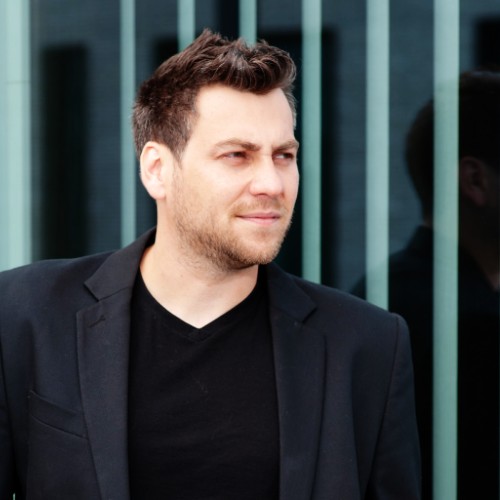
Roel Apers
Roel Apers is Co-Founder & CEO of KLSTR.
Talks about
Insights & takeaways
Roel Apers keeps returning to one core belief: the best accelerator a startup can have isn't a program at all, it's a paying customer or a high-profile pilot that forces the product to be ready. Prototyping quietly in an office lacks stakes, and stakes are what make teams move. This is why he treats performing at Tomorrowland or Supernova not as a marketing opportunity but as a pressure test with no margin for error, noting "you can imagine that there's no room for errors on a stage like Supernova or on a Taylor Swift or on a Beyonce" 1. He's candid that this pressure cuts both ways, admitting "it's very nice to do your development on one of the most photographed stages in the world, but it brings pressure to the team as well" 1.
That pressure produces a working philosophy he sums up as "move fast, don't break. Iterate a lot" 1. For Apers this isn't a slogan so much as a rehearsed discipline: before Tomorrowland, KLSTR spent two weeks deliberately trying to break its own system, "start unplugging network switches while it was running and doing emergency breaks," precisely so that "during the festival itself, it runs smooth like hell" 1. The lesson he draws is that reliability at scale is manufactured in advance through controlled failure, not hoped for on the day.
Hardware, in his account, is a different game entirely from software, one where founders fight battles outside their control. COVID-era chip shortages forced KLSTR to restart software development on a new platform, and a memory supply crisis pushed a component's cost from €2.6 to €27 inside a €15 product. These aren't framed as war stories for effect but as evidence that hardware startups need resilience baked in from the start, since the constraints can appear overnight and are entirely exogenous to product decisions 1.
On team building, Apers is direct that complementary co-founders matter most in the early years, but he resists any tidy narrative that good chemistry lasts forever. Dynamics change as companies mature, divorces happen, illness happens, life events reshape people, and founders need to know their own limits as much as they know their co-founder's strengths 1. This realism extends to his view of failure in Belgium: he acknowledges the practical stigma, since banks that funded a failed venture are unlikely to fund the same founder again, but he reframes the real question away from social judgment entirely. "For me the thing is never is it okay in Belgium to fail," he says, "is it okay? Can I live with myself that I know that I didn't do everything to succeed" 1. It's a personal accountability standard rather than an external one.
He's equally clear-eyed about accelerators and stamps of approval. The imec label opened doors for KLSTR that would otherwise have stayed shut, he says, describing how the company's first external investor started listening specifically because of that endorsement 1. But he pairs this with a warning: not every accelerator stamp carries real weight, and founders shouldn't join one just to have joined something.
What he considers most underrated, though, isn't any single program or investor but Belgium's network density itself. In his telling, the ecosystem is small enough and connected enough that expertise is never more than a phone call away: "it's so easy to just, ah, I need some help in this level, you just call somebody and five minutes later they are in a zoom call and I think that's really underestimated" 1. He sees most founders as failing to exploit this asset fully.
Underlying all of it is a conviction that ambition itself is a prerequisite for survival, not just a nice-to-have. "If you don't have the ambition to scale, you will not last this roller coaster of emotions," he says 1, tying together his points about pressure, iteration, and self-honesty into a single stance: startups aren't sustained by comfort or credentials, they're sustained by founders willing to be tested repeatedly and to answer honestly whether they did enough.
- The best accelerator is a paying customer or high-profile pilot because external pressure forces the team and product to readiness — prototyping in the office lacks stakes.
- Hardware startups fight battles outside their control — COVID chip shortages forced KLSTR to restart software development on a new platform, and a memory supply crisis pushed a €2.6 component to €27 in a €15 product.
- In high-stakes environments the mantra becomes 'move fast, don't break': KLSTR spent two weeks deliberately unplugging network switches and triggering emergency brakes on the five-ton moving ceiling before Tomorrowland so it ran flawlessly during the festival.
- Complementary co-founders matter most in the first years, but dynamics inevitably change as the company matures — divorces, illness, life events — so founders must also know their own limits.
- The imec approval stamp opened investor doors that would otherwise stay closed — KLSTR's first external investor started listening because of it — but founders shouldn't join just any accelerator since many stamps carry little weight.
- Failure in Belgium is still somewhat taboo — banks that funded a failed venture are unlikely to fund you again — but the more important question is whether you can live with yourself knowing you did everything to succeed.
- Belgium's most underrated asset is network density: the ecosystem is so small and connected that any advice or introduction is one phone call away, yet many founders don't exploit it.
Career
Roles
KLSTRCo-Founder & CEODec 2018 – Present
Luminex Network IntelligenceSupport & R&DApr 2017 – Dec 2018
- Big Bang LightningOwnerOct 2014 – Sep 2018
From public career histories · 3 entries
Media & appearances
1- 1podcastSuperNova · 18 Jun 2026
Live at SuperNova, imec.istart's Elisa Descamps and KLSTR co-founder Roel Apers debate what really builds startups: paying customers over pitch decks, hardware's brutal realities, co-founder dynamics, and Belgium's underrated network density.