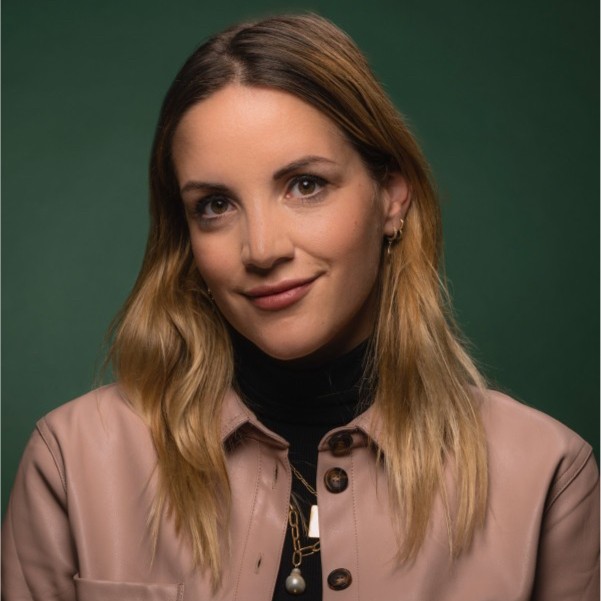
Sarah Parent
Sarah Parent is Co-Founder of Go Ocean.
Insights & takeaways
Sarah Parent talks about building Go Forest less as a story of vision and more as a story of relentless, almost bodily perseverance. "Ik ben zo iemand die bij manier van spreken een halve marathon zou lopen gewoon op karakter," she says of herself, and that self-description runs through everything else she says about the early years 2. She is candid that founders need a kind of existential pressure to function: "Je moet honger hebben, letterlijk. Maar als ge het niet doet vanuit een overleving, ga je niet die extra mijl gaan. Maar dat mag niet te lang duren" 2. The image she returns to for that period is arriving at the supermarket checkout with insufficient balance and asking herself "hoe hard ga ik volledig tegen de limiet" 2. For her, entrepreneurship is inseparable from self-confrontation: "Het is gewoon één van de coolste journeys dat je kunt doen, is ondernemen, omdat je gewoon uzelf ook 100 keer tegenkomt" 1.
That survival-mode period produced one of her clearest lessons about honesty under pressure. With €1,500 left, she pitched Go Forest to the CEO of the world's largest climate consultancy and secured the capital that let her hire her first employees. She is precise about how she frames this: "Ik heb mij gewoon overbluft. Alleen niet mezelf, maar gewoon heel Go Forest. Dat waren geen leugens, maar overcellen" 2. She distinguishes overselling from lying, and treats the moment as a hinge point where readiness had to be manufactured rather than waited for: "ik zei: ik ben er klaar voor of ik ben er klaar mee" 2.
On the business model itself, her thinking visibly evolved. She started with margins she now calls unhealthily low because she wanted maximum money flowing straight into planting projects, and only after a pricing lesson from a televised business segment did she raise prices and cut what didn't sell, making the company viable 1. In the earlier account she frames the same shift more starkly, describing overhead going from under 10% to 25% with the reasoning "als wij niet kunnen bestaan, kan ik ook geen impact meer maken" 2. This is paired with a firm choice of B2B over B2C: companies free up bigger budgets, and bigger budgets mean more impact, so she leaves individual donors to organizations like WWF 1 and is moving away from small €50/month subscribers toward fewer, larger deals because the onboarding cost of many small supporters outweighs their impact 2. Concretely, the company now runs on volume: "Het is een volumegame. Dus dat zijn steunpunten van €3000, €5000, €1000, €500. Dat zijn de deals die we dagelijks binnenhalen" 1, sustained by eight video calls a day and disciplined CRM follow-up 1.
Her first attempt at radical transparency, a blockchain app photographing every planted tree, is one of her most instructive failures. It burned through her entire €50,000 starting budget and collapsed operationally because most planting sites had no internet or signal, data was lost in the Amazon, photos duplicated, and she ended up running her own helpdesk 12. The lesson she draws is not abstract: tech assumptions have to be tested in the field before they're built into a business model. Yet she also notes the failed app still generated press, including a single article that brought in roughly ten clients, so even the wrong tool wasn't a wasted move 1. What replaced it, satellite and AI monitoring that draws a perimeter around each client's trees and timestamps yearly results via a third party, became the company's real differentiator, summed up in her flattest and most repeated line: "Satelliet ligt niet" 1. The ambition behind it is explicit: "Mijn droom, en dat is misschien naïef, is om de meest transparante bomenplanter in de wereld te zijn" 1.
Her theory of impact is deliberately anti-perfectionist. Rather than chasing flawless climate purity among a small group, she wants breadth: "Ik geloof dat je eerder 1000 mensen naar het midden kunt brengen en dat je dan een grote impact hebt dan dat je 10 mensen naar de perfectie krijgt" 1. That same logic shapes who she'll work with. She turns away certain clients, like a foie gras producer, but accepts companies other tree-planting organizations blacklist for pollution, on the reasoning that the worst polluters should give back the most and every tree still counts against the scale of deforestation 2. It also shapes where she plants: the stated mission is "to represent the underrepresented," meaning the most deforested and poorest regions abroad, and inside Belgium mainly Wallonia, where subsidy gaps make funding harder, rather than the easier, already well-supported plots in Flanders 1.
She is unusually blunt about criticism and feedback, treating them as fuel rather than threat: "Durf echt op uw bakkes krijgen. Durf gewoon feedback ontvangen dat op niets trekt. Maar dat gaat u wel duwen naar wat dat wel werkt," and, more bluntly, "Nooit bang zijn van kritiek, want een grijze muis valt niet op en daar gaan ze ook niet over babbelen" 1. This same appetite for hard truths shaped the company before launch, when she put prospective corporate clients through interviews she describes as grinding her into the floor, pushing them to say exactly why they wouldn't buy so the product could be shaped around real resistance rather than assumption 1.
On burnout, her position shifted from something closer to conventional wisdom to something more contrarian. After 25 blood values came back out of balance and a doctor recommended six months of rest, she instead restructured around coaching, energy management and delayed responsiveness, concluding that productivity matters more than raw hours 1. In the earlier account she is explicit that a full six-month stop can make the return harder, especially for self-employed people who cannot simply switch off, and argues instead for immediately building a "new normal" with a multidisciplinary team of coaches and psychologists 2. She also insists burnout is physical as much as mental, pointing to her own thyroid and gut problems as evidence that medical support and supplements mattered as much as rest 2. Throughout, she frames her commercial instincts and her environmental aim as the same project rather than a compromise between them: "Ik zet mega hard mijn sales en marketing skills in voor een groenere wereld" 1, and the underlying belief that makes the whole model work commercially is simple: "mensen kopen van mensen. Dus bouw iets waar dat uzelf echt achter staat" [
- Her blockchain-based app to register every planted tree failed because most planting sites lack internet and even satellite signal, burning her €50,000 starting budget quickly — tech assumptions must be validated in the field.
- Founders need existential hunger ('honger hebben letterlijk') to go the extra mile, but prolonged survival mode destroys the perspective needed to close deals — the stress must not last too long.
- Go Forest deliberately raised its overhead from under 10% to 25% because underpricing impact projects made the company itself unsustainable: 'als wij niet kunnen bestaan, kan ik ook geen impact meer maken.'
- With €1,500 left, she 'over-sold' (not lied) Go Forest to the CEO of the world's largest climate consultancy, secured 'we're going to help you', raised capital and could hire — fake it till you make it under extreme pressure.
- Many small €50/month tree subscribers create heavy onboarding costs relative to impact, so Go Forest is shifting to fewer, much larger B2B deals to grow impact faster.
- She refuses clients like a foie gras producer but accepts 'blacklisted' polluting companies other tree-planting organisations reject, arguing that with so much deforestation every tree counts and the worst polluters should give back the most.
- Growth via franchising to neighbouring countries requires first building the brand and a well-oiled structure in Belgium before the model can be copy-pasted.
- Contrarian burnout advice: six months of full stop makes the way back harder; instead, immediately practice a 'new normal' with a multidisciplinary team of coaches and psychologists — especially since many self-employed people simply cannot switch off for six months.
- CO2 emissions are psychologically intangible with a 20-30 year delay effect — what we feel now comes from our parents' emissions — which is why people worry more about coffee running out than the climate.
- Treat burnout as both mental and physical: her blood work showed thyroid and gut problems, and supplements plus medical support mattered as much as rest and psychology.
- Go Forest differentiates as 'the most transparent tree planter': its impact platform uses satellite imagery and AI pattern recognition to count trees, draws a perimeter around each client's trees, and timestamps yearly results in blockchain via a third party so they can't be disputed.
- Her theory of change: bringing 1,000 people to the middle has more impact than getting 10 people to perfection — imperfect climate activism makes the message reachable for the masses.
- She chose B2B deliberately because companies free up bigger budgets, and more budget equals more impact — leaving the B2C donor market to organizations like WWF.
- Her initial margins were 'unhealthily low' because she wanted maximum money going to the projects; a pricing lesson from a Kamal Kharmach TV episode (raise prices slightly, cut what doesn't sell) made the business viable.
- The first blockchain app — photographing every planted tree — burned the entire startup capital and failed operationally (lost data in the Amazon, duplicate photos, she became a helpdesk), so in year two she switched to satellite monitoring; yet the blockchain angle generated press and ~10 clients from one Bloovi article.
- Corporate nature restoration is a voluntary market with structurally underweighted budgets, so Go Forest runs a volume game: eight video calls a day, strong CRM follow-up, and deals of €500-€5,000 closed daily.
- Cheap 'one dollar one tree' schemes can't fund maintenance and monitoring; Go Forest charges €3-9 per tree including 30 years of maintenance and monitoring, because a tree that dies after year one is pointless.
- In the early days a company literally asked to order 1,000 trees and claim it had planted a million — transparency platforms now make that kind of greenwashing impossible.
- Within corporate clients it's usually the young employees (e.g. junior marketing managers) who push impact initiatives, while parts of the older generation show a strange discrepancy: they'd do anything for their (grand)children except protect the planet for them.
- Before launch she validated the business model through brutal qualitative interviews with companies that 'ground her into the floor', probing why they wouldn't buy and what would change that — which shaped the product before going to market six months later.
- Go Forest's mission 'to represent the underrepresented' means planting in the top-three most deforested and poorest regions, and in Belgium mainly in Wallonia where subsidy gaps exist — deliberately avoiding easy-to-fund Flemish plots.
- After severe burnout symptoms (25 blood values out of balance, doctor advising six months rest) she restructured: coaching, energy management, delayed out-of-office replies, and realizing productivity beats quantity of hours.
Career


Ghent University#2schoolMaster of Science (M.S.), Communicatie2012 - 2014
- thePower#265schoolMay 2021
From public career histories · 8 entries
Media & appearances
2- 1podcastBen's Mentors · 07 May 2025
Sarah Parent, founder of Go Forest and Go Ocean, explains how she built a B2B nature-restoration business (600k trees, 650+ corporate clients) with satellite/AI transparency, and shares raw lessons on unhealthy margins, a failed blockchain app, burnout and coupling purpose to a commercial model.
- 2podcastConnexi · 14 Aug 2023
Sarah Parent, CEO of Go Forest, recounts founding her reforestation company mid-COVID with almost no money, hitting 'insufficient balance' at the supermarket, closing capital with the world's largest climate consultancy, hiring her first employees, and surviving a toxic marriage and near-burnout — all driven by relentless perseverance.