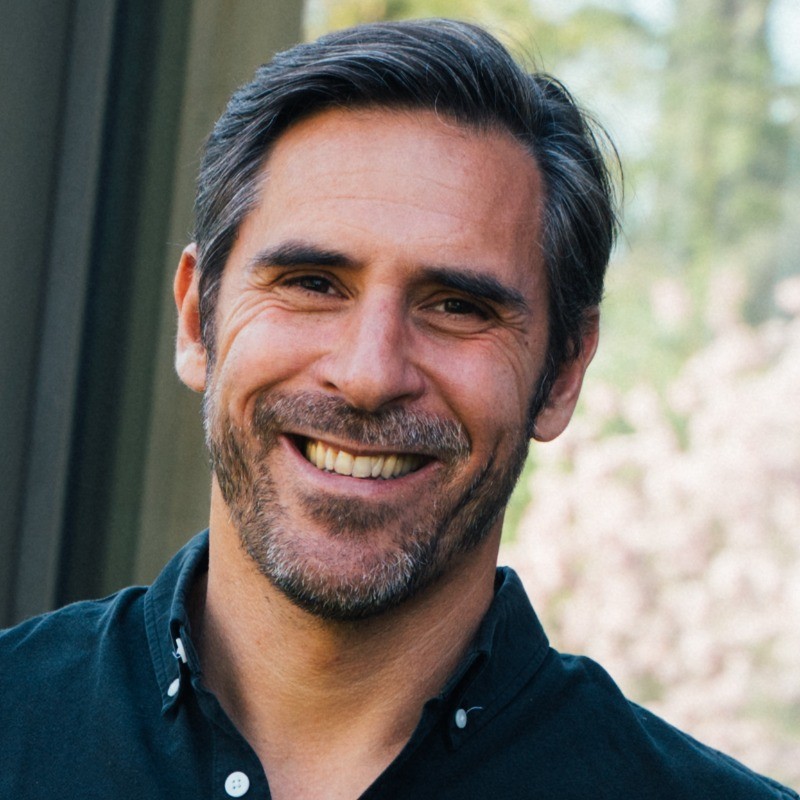
Thibaud Elziere
Thibaud Elziere is a French entrepreneur who first built Fotolia, a stock photography platform, which was acquired by Adobe for approximately 800 million EUR. In 2011 he co-founded eFounders (rebranded to Hexa in 2022) alongside Belgian co-founder Quentin Nickmans, a startup studio operating from Brussels and Paris that has built over 40 B2B SaaS companies. As an angel investor he has backed approximately 100 startups, with notable investments in Algolia, Notion, and Hugging Face. He has also launched other ventures including Gama Space (solar sail project), Iconic House (prestige real estate), and Kate (microcar manufacturer).
Insights & takeaways
Thibaud Elziere's public voice over the past year circles around a small number of obsessions, and the clearest one is a discomfort with the mythology of entrepreneurship. He wrote his book, "Les pieds sur terre, la tête dans les étoiles," precisely because he was tired of the "radical and simplistic narratives about entrepreneurship on social media that lack nuance," the slogans claiming founders must work 24/7 or that money is the only driver 18. He describes the book as "un manifeste pour l'entrepreneuriat," an attempt to tell the story "un peu moins comme on aimerait qu'elle ait été, et un peu plus comme elle s'est réellement passée" . That instinct to demystify runs through everything: the book covers not just his wins but "l'échec de Kate," and he insists "tout le monde en prend un peu pour son grade. Moi le premier" . He returns again and again to one unresolved question, both in the book and in conversation, "après quoi je cours ?" , framing it as something nearly every entrepreneur eventually asks and something he still asks himself, wondering aloud whether founders run "pour changer le monde" or simply "pour fuir. Pour ne pas tomber" . In interviews he pushes this further, questioning whether the compulsion to keep building is "dopamine addiction, childhood trauma, or desire for impact" 16, and he has observed that the founders who actually succeed tend to share one trait: complete focus on the business during the first three years 16.
On craft and mentorship, he is unusually direct about intellectual debts. Asked about influences, he says "Je n'ai jamais vraiment eu de mentor. Mais s'il fallait en citer un, ce serait Paul Graham" , crediting Graham's essays with shaping "une grande partie de la culture startup moderne," from the importance of product and the role of the CTO to the obsession with solving real problems and the balance between founders and investors . This reverence for Y Combinator-style fundamentals shows up in how he talks about his own studio, Hexa, and its portfolio companies, always naming founders specifically and framing success in terms of speed, focus, and product truth rather than hype.
His thinking on AI is consistent and fairly sharp-edged: he is skeptical of the label "AI Native" as most companies apply it, arguing that "très peu le sont réellement" and that most just use AI to go a bit faster rather than rebuilding how they work around agents . He holds up Verso as a counterexample, a four-person team compressing six-week consumer studies into 72 hours for CAC 40 and Fortune 500 clients , and he extends the same logic to insurance brokerage, citing Sequoia's view that the sector is "la plus grande opportunité mondiale de services à transformer grâce à l'IA," and describing the shift plainly: "le logiciel exécute, l'humain pilote" . He applies this same frame to Yousign's evolution into Youtrust.com, justified by a world in which "des agents IA signent, négocient, déclenchent des workflows et exécutent des transactions" . Notably, he does not treat sovereignty arguments as automatically virtuous, writing that "Toutes les batailles pour la souveraineté ne méritent pas d'être menées," but that trust and security are the exception worth fighting for , a distinction that reveals a broader pattern in his reasoning: he likes to sort convictions into "worth it" and "not worth it" rather than adopting blanket positions.
On real estate and hospitality, his register shifts from strategist to something closer to a designer of feeling. With Iconic House he states a "conviction à contre-courant," that the house can become "l'expression la plus aboutie du luxe," and after five years and 396 stays he believes this even more, describing a shift in luxury "De l'hôtel vers la maison. Du spectaculaire vers l'émotion. Du sophistiqué vers le subtil. Du parfait vers le vrai" . Side House extends this logic at speed and scale, built around a stated cadence of "12 nouvelles maisons en 12 mois" and "1 drop chaque mois" , with new houses like PISTOU described in sensory terms, "L'odeur du basilic fraîchement cueilli, le goût fruité de l'huile d'olive" , continuing daily service touches like breakfast and housekeeping as standard . Separately, he has noted that unlike his tech ventures, Iconic House was financed "through borrowing rather than external investment," a deliberate contrast to how he built his startups 17.
On place and community, he treats Brussels as both a personal attachment and a thesis. He calls it "ma ville" and states plainly, "Je suis convaincu qu'elle a tout pour devenir l'un des plus grands écosystèmes tech d'Europe, et la capitale naturelle d'une Europe nouvelle," pointing to quality of life and geographic centrality as underappreciated assets . This belief translates into action through WAT.BXL, which he frames explicitly as a tool for inclusion against a local official's objection that placing a tech incubator near social housing was "un affront fait aux habitants du quartier." His countertheme is direct: "Je pense exactement le contraire," arguing that technology and entrepreneurship are among the most powerful engines of social mobility, which is why WAT runs free No-Code stages for neighborhood children . Even amid the discomfort of an unfinished space, he describes an energizing scrappiness at WAT.BXL(beta), noting the WiFi problems and cramped seating alongside "une énergie de dingue" that reminds him of San Francisco, "pas seulement parce que tout le monde parle anglais... mais parce qu'il y règne cette même énergie" . Taken together, his throughline is a preference for lived, sometimes messy specifics over polished narrative, whether he is questioning his own motivations, correcting a false story about AI-native companies, or defending an incubator against a skeptical local politician.
Career
- KateFounderSep 2022 – Present
- Iconic HouseFounderJun 2021 – Present
- FolkFounderMar 2020 – Present
- GamaFounderAug 2020 – Present
- eFoundersFounder2011 – Present
- Zilok.comFounderOct 2007 – May 2011
- FotoliaFounderNov 2004 – Dec 2015
- Technische Universität Berlin#189schoolManagement2002 - 2003
- Université Lumière Lyon 2Economics2001 - 2002
- Centrale Lyonengineering2000 - 2003
From public career histories · 10 entries
Media & appearances
3- 16interviewBenjamin Wattinne · 2mo ago · 54:20 · 441 views
Thibaud Elzière discusses how his startup studio HEXA has created 30 companies, three of which are unicorns, increasing success odds dramatically. He reflects on what drives entrepreneurs to repeatedly build companies, questioning whether it stems from dopamine addiction, childhood trauma, or desire for impact, while noting that successful founders he has observed shared complete focus on their business during the first three years.
- 17interviewJérémy Nabais · 3y ago · 1:07:20 · 2,211 views
Thibaud Elziere discusses how he founded Photolia, a crowdsourced image bank platform launched around 2004 that was sold to Dailymotion for 800 million dollars after 10 years. He explains that after his success in tech, he shifted into real estate and hospitality through Iconic House, a luxury property business he runs with his brother and associate, choosing to finance projects through borrowing rather than external investment, contrasting this with his tech entrepreneurship experience.
- 18interviewHexa · 4w ago · 43:37 · 616 views
Thibaud Elziere discusses his motivation for writing a book titled "Feet on the Ground, Head in the Stars," explaining that he spent ten years thinking about it because he was frustrated by radical and simplistic narratives about entrepreneurship on social media that lack nuance, such as claims that entrepreneurs must work 24/7 or that money is the primary driver. He wanted to use his own lived experience to reveal what actually happens behind the scenes and counter the unrealistic slogans about entrepreneurship that he disagrees with.