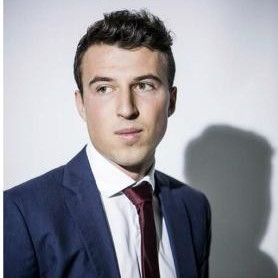
Thomas Aertgeerts
Thomas Aertgeerts is FOUNDER of Astro Accounting.
Insights & takeaways
Thomas Aertgeerts's thinking centers on a single diagnosis: traditional accountancy is not broken because of bad intentions but because of structural mismatch between the profession's promises and its actual delivery. His clearest formulation of this is "De realiteit is een monster van Frankenstein" 1, describing how a typical accounting firm stitches together 20-30 different software tools that promise integration but deliver a patchwork held together with duct tape. This diagnosis did not arrive fully formed. Astro started as a pure technology company selling software to accounting firms, but after two to three years Aertgeerts realized the firms themselves did not feel enough pain to change: "Wij moeten niet die boekhoudkantoren helpen, want die hebben op zich niet zo'n groot probleem. Nee, nee, wij moeten de klanten van boekhoudkantoren helpen, want die zijn allemaal mega ontevreden" 2. That pivot, from selling to firms to becoming a firm itself with a "technology DNA," is the origin story he returns to across both conversations 12.
A second recurring theme is his critique of how large accounting groups treat small clients. He describes a deliberate pricing strategy in which firms don't refuse doctors, consultants, or freelancers outright but quote them €450-600 a month so they either leave or overpay, a practice he calls both unethical and shortsighted: "Ik vind dat één niet ethisch, maar ik vind dat vooral ook economisch ongelooflijk dom" 1. His reasoning is that today's small client is tomorrow's large one, so pricing them out sacrifices future growth for short-term convenience. This same conviction that small entrepreneurs are underserved runs through his account of Astro's client-refusal strategy on the other side: rather than accepting everyone, Astro deliberately said no to very small sole proprietorships and larger KMOs to focus on a specific segment, only broadening once the technology matured. He frames this bluntly: "Hoe kunt je schalen door klanten te weigeren? Dat is wat we gedaan hebben" 2.
On expertise and specialization, Aertgeerts is emphatic that the traditional model asks the impossible of individual accountants. He argues no single person can master tax law, bookkeeping, business advice, financial ratios, and HR at once, pointing out that even within tax law each lawyer occupies a narrow niche: "Ene mens, hoe briljant dat je ook zijt, kan nooit in al die aspecten uitblinken" 1. His answer is that firms should specialize rather than claim to serve everyone from students to large enterprises, and that knowledge should be embedded in the organization through playbooks rather than trapped in individual heads, since people eventually leave no matter how good the environment is 1. This organizational-knowledge philosophy connects directly to his claims about talent and AI: because entry-level bookkeeping is heavily automated at Astro, junior staff do more complex work than accountants with three or four years of experience elsewhere, and AI has advanced to the point that, in his words, "Die AI is nu beter dan een boekhouder tussen 0 en 5 jaar ervaring" 2. New interns, he says, are now trained by studying the AI's reasoning rather than doing rote work, which he calls "the reversed world" 2.
Aertgeerts is candid about the gap between marketing and reality in accounting software generally. He jokes that the only thing he genuinely likes about competing software is the advertising: "Weet je wat ik echt goed vind aan die software? Dat zijn de reclames. Echt goede reclame. Weet je wat ik echt slecht vind? Al de rest" 2. Behind the joke is a serious claim: providers promise "no hands accounting" but only 20-30% of the work is truly automated, with the rest manually keyed in by junior bookkeepers or offshore labor, because OCR software can read an invoice but cannot make intelligent booking decisions 2. This is also the basis for his advice to entrepreneurs choosing an accountant: if a traditional firm promises real-time bookkeeping, treat it as a red flag, since traditional setups typically run at least three months behind, and simply having books current "on the spot" already gets a client 80% of the way there 1.
On AI more broadly, his view has sharpened into something close to a structural claim about capital and competition. Building technology used to require significant capital and teams; now, he argues, "Zeker AI is een game changer. Met zelfs met ene briljante developer kunt gij bij wijze van spreken de wereld veroveren" 1. He extends this into a rule of thumb for evaluating any dev investment: team size is irrelevant, what matters is what return each euro invested in technology yields, since a lean team can now do what was impossible even two or three years ago 2. He frames Astro's own model, blending software and human service so tightly that clients cannot tell whether AI or a person handled a task, as evidence that services and software companies are merging into a single category, one AI will only accelerate 2.
Running underneath all of this is a personal register about conviction and risk tolerance. Aertgeerts repeatedly signals no regret about leaving a legal career for entrepreneurship, first plainly ("We zijn nu zes jaar verder, nog geen minuut spijt van gehad" 1) and then more emphatically ("Ik heb nog op geen enkele moment, ook niet als het moeilijk ging, gedacht van was ik nog maar advocaat gebleven. Nul keren" 2). He notes the timing of his departure from corporate life with some irony, describing his last day in a "safe corporate context" as the first day of the COVID lockdown 2. He also frames entrepreneurship itself as totalizing responsibility, "Als je ondernemer zijt, alles is uw probleem. Alles, alles" 2, and counters that pressure with a mantra of composure, "Kalmte alleen kan u redden" 2, alongside a self-check he calls his twelve-month test: asking whether he would have signed up for today's position twelve months ago, as a defense against comparing himself to an unreachable ideal 2.
A final, concrete takeaway concerns mentorship and learning. Aertgeerts credits a switch from a corporate investor, who resisted the very ideas Astro was built on, to a serial-entrepreneur investor as a turning point, noting that one hour of conversation with the right person can compress three months of management work into immediate insight 12. This sits alongside his stated appetite for continuous learning, "Ik wil leren, leren, leren, leren, leren" 1, and his belief that in five years the accountant's job should contain zero compliance work and instead be built around eight advisory calls a day, turning what has been an introvert's profession into fundamentally a people business 2. Taken together, his positions form a consistent argument: the accounting industry's problems are structural and fixable through integration, specialization, embedded knowledge, and aggressive use of AI, not through asking individual professionals to be more heroic.
- Astro's founding pivot: instead of helping accounting firms digitalize (they didn't feel enough pain), serve the clients of those firms directly, because those clients are massively dissatisfied with their accountants.
- Astro is a 'service-as-a-software' hybrid: its own software platform and human service are so intertwined that the client no longer notices whether AI or a person handled something — a category AI will accelerate as services and software companies merge.
- Astro scaled by refusing clients: deliberately saying no to very small sole proprietorships and larger KMOs to focus on small companies (consultants, freelancers, doctors, lawyers), only expanding to startups/scale-ups once the technology was mature enough to preserve service quality.
- The accounting software market is a facade: providers promise 'no hands accounting' but only 20-30% is truly automated, with the rest manually keyed in by junior bookkeepers or offshore workers, because OCR-based software can read invoices but cannot make intelligent booking decisions.
- Astro's AI now outperforms accountants with 0-5 years of experience, to the point that new interns are trained by studying the AI's reasoning rather than doing low-level work — 'the reversed world'.
- The hybrid service+software model needs far less capital than pure SaaS because costs and revenue rise in parallel — you only hire accountants when new clients arrive — while every euro of accountancy revenue is reinvested in R&D.
- The trait he screens hardest for when hiring is how someone handles feedback, though it can only truly be tested under stress, not in interviews where everyone gives socially desirable answers.
- Co-founding with family works if you make agreements while things are going well ('put them in a drawer and hope dust gathers on them') and enforce a culture of 'parler vrai': saying hard things transparently and respectfully.
- One hour with their investor-mentor lets the founders progress three months faster, because he has already faced every operational problem in another company — knowledge you can't put a euro value on.
- His 12-month test: each year ask whether you'd have signed for today's position 12 months ago — it protects founders from constant dissatisfaction caused by comparing themselves to an unreachable ideal.
- In 5 years the accountant should do zero compliance work and instead have eight advisory calls a day, turning accountancy from an introvert's job into a people profession — with far fewer accountants serving far more clients.
- Team size for developers is irrelevant; the right question is what return each euro invested in technology yields, since AI now lets a lean dev team do what was impossible even two or three years ago.
- After 2-3 years building software for accounting and law firms, Astro realized the firms weren't the ones with the problem — the end clients were — so they pivoted from a pure technology company to being an accountancy firm themselves with a technology DNA.
- Large accounting groups deliberately 'price out' small clients: they don't refuse doctors or consultants, but quote €450-600/month so the client either leaves or overpays — a strategy Aertgeerts calls unethical and economically stupid since today's small clients become tomorrow's big ones.
- Expecting one accountant to master all of tax law, bookkeeping, business advice, financial ratios and HR is impossible — even within tax law each lawyer has a narrow niche — so accounting firms must specialize instead of claiming to serve everyone from students to large enterprises.
- A typical accounting firm needs 20-30 different software tools that promise seamless integration but underdeliver, producing a 'Frankenstein's monster' held together with duct tape; Astro's differentiator is one integrated platform for everything from VAT filing to advice to invoicing.
- Because most of the entry-level bookkeeping work is automated at Astro, juniors fresh out of school do more complex work than accountants with 3-4 years of experience elsewhere, and sit in client conversations from their first month — a talent-retention advantage in the war for talent.
- A red flag when choosing an accountant: if a traditional firm promises real-time bookkeeping, it's impossible — the honest answer is that traditional setups run at least three months behind, and simply having books up to date 'on the spot' gets you 80% of the way.
- Knowledge should live in the organization, not in individuals: Astro builds playbooks so any employee can answer basic optimization questions, because people will eventually leave regardless of how good the environment is.
- Switching from a corporate investor (an accounting firm that resisted the very ideas Astro stood for) to a serial entrepreneur investor was a top lesson: one hour of conversation with the right investor can fill three months of management implementation with ideas and inspiration.
- With AI, capital requirements for building technology have collapsed: even a single brilliant developer can, so to speak, conquer the world with far fewer resources than three to six years ago.
Career
Astro AccountingChief Executive OfficerJan 2023 – Present
- Brussels School of Competition (BSC)Senior LecturerAug 2021 – Present
University of Antwerp#27factorySteering Committee MemberAug 2021 – Present
- Aeco Legal TechCo-FounderJan 2020 – Present
- iStartCo-FounderNov 2021 – May 2023
- K lawLegal Innovation and Technology LawyerJan 2019 – Mar 2020
- Tiberghien LawyersAssociateOct 2016 – Dec 2018
- Stibbe#320factoryTax | Junior Associate | BrusselsMay 2015 – Sep 2016
- Stibbe#320factoryTax | Junior Associate | LuxembourgSep 2014 – May 2015
- Allen & Overy#138factoryTax | Summer InternAug 2013 – Sep 2013
- PwC#16factoryPersonal Tax | Summer InternAug 2012 – Sep 2012
KU Leuven#1school2018 - 2018
The London School of Economics and Political Science (LSE)#72schoolMaster of Laws (LL.M.), Taxation2013 - 2014
- Sint Pieters college Leuven2002 - 2008
From public career histories · 16 entries
Media & appearances
2- 1podcastBlackBird Business Events · 19 May 2026
Astro founder Thomas Aertgeerts (ex-tax lawyer, ex-KPMG Legal Innovation) explains how he's disrupting Belgian accountancy with a tech-first, integrated accounting platform focused on small entrepreneurs that big firms deliberately price out.
- 2podcastBen's Mentors · 28 Jan 2026
Thomas Aertgeerts explains how Astro Tax grew to 30+ people in 3 years by pivoting from selling software to accounting firms to becoming a hybrid 'service-as-a-software' digital accounting firm with a 70+ NPS, AI that outperforms junior accountants, and deliberate client refusal as a scaling strategy.