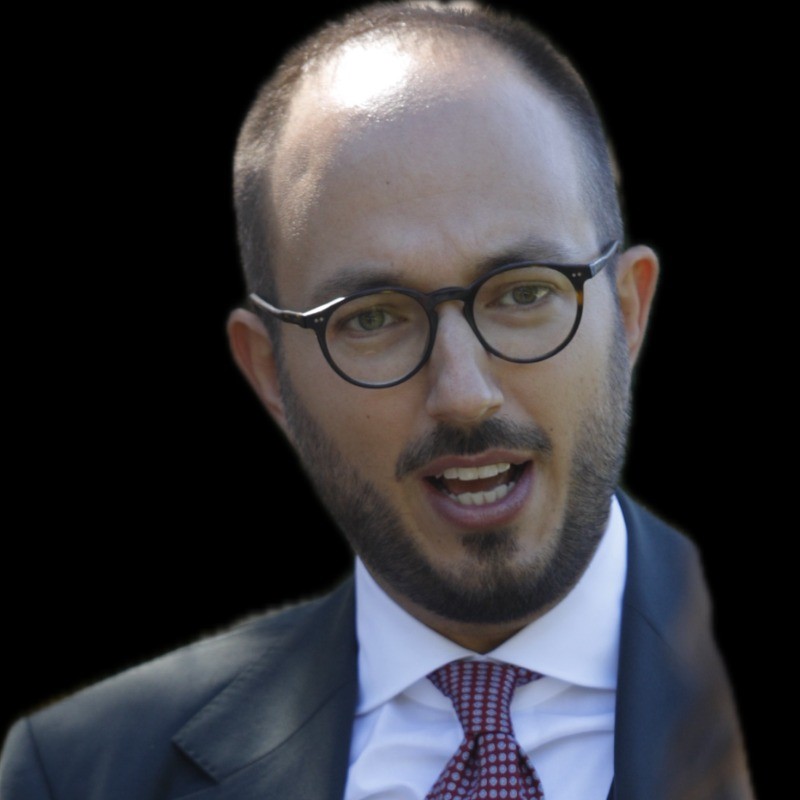
Andrea Balducci
Andrea is based in Flanders and founded OpsAIAgent to build AI-driven automation for revenue operations teams. He combines deep knowledge of RevOps with practical AI implementation.
As founder of OpsAIAgent, Andrea develops AI agents and automation workflows for revenue operations, helping B2B companies streamline their sales and operations processes.
Insights & takeaways
Andrea Balducci's core argument, repeated across nearly every post, is that the technical bottleneck in AI adoption disappeared and a human one took its place. He states it plainly: "Code generation is a commodity now" , and later extends the same logic to distribution, noting that the "smart take" of a year ago has already gone stale because "distribution got automated too" . What replaces both bottlenecks, in his view, is trust: "Trust is the only thing that didn't get cheaper" . This is not an abstract observation for him but something he has tested directly. Of the 12-plus automation projects he built for revenue teams over six months, only 3 survived six weeks of real adoption, and the pattern behind the failures was consistent: "I built them because I could, not because the team was ready to change how they worked" . The one that thrived, a meeting-prep agent pulling from LinkedIn, CRM and career-page scraping, worked because it required "zero behavior change" and slotted into a workflow that already existed .
That same meeting-prep agent recurs as his go-to proof point, but he is unusually candid about the limits of measuring its value. Asked for ROI, he admits, "I don't always have a clean answer" , and walks through why: 25 minutes saved per rep per day is easy to estimate and "nearly impossible to measure with precision," since he can't confirm whether reps used the time productively or whether the briefing actually changed outcomes . Rather than chase a false-precision number, he substitutes internal NPS and qualitative feedback, a practical concession that productivity gains from AI are real but resist clean quantification .
A second major theme is that AI does not fix organizational dysfunction, it exposes it. He is explicit that "AI won't fix broken RevOps. It will expose it faster" , recounting a personal failure: an agent he built to auto-enrich inbound leads was "flawless" while happily enriching accounts that had already churned, because the underlying data was trash . He generalizes this into a warning against the common advice to "just hook Claude up to your CRM" , and echoes a similar caution from a Salesforce panel he attended, quoting the speaker's line that "the data model is the foundation of the house" and that ungoverned agent autonomy on broken data turns a rep into "a liability rather than a rep" . This is a consistent, almost contrarian corrective to hype: the tooling works, but the surrounding data and process discipline is the actual constraint, and no model release changes that.
Balducci also tries to give structure to where AI-driven business models actually apply, distinguishing "Service as Software" from SaaS: SaaS "sells you a tool," while SaS "sells you the result," with the machine doing most of the work and humans checking the hard parts . He is careful to bound the claim rather than oversell it, stating outright that "this only works where the job is mostly rules, not taste" . This instinct to qualify sweeping claims shows up again when he pushes back on alarmist AI content. Discussing a meme suggesting revenue teams face the same "unemployed" endpoint often projected for coders, he calls that framing "selling you anxiety" and instead points to Elena Verna's observation that most people claiming AI "changed their life" are really doing "basic workflows" like summarizing Slack or answering emails . His consistent move is to deflate hype on both ends, neither utopian nor doomer, in favor of describing what is actually running at his clients.
At the same time, he engages seriously with more structural, provocative arguments about organizational change. Summarizing Tom Blomfield's talk, he relays the comparison of a company to "a Roman legion," with people as "the wiring between layers," and the proposed replacement, a recursive loop of sensor, policy, tool, quality-gate, and learning layers that lets "the company improve while everyone sleeps" . He flags the talk's most provocative claim, that "middle management is done," not because managers perform badly but because their core function of routing information up and down a hierarchy is "the exact job AI now does for free" . He reports this without fully endorsing or rejecting it, treating it as a serious structural possibility worth sitting with.
Across his posts, a practical throughline emerges: build for adoption, not for capability; measure with soft signals when hard ones are impossible; treat data and process gaps as the real project, not an inconvenience; and be skeptical of both hype and doom narratives. He roots this in firsthand practice, describing his upcoming keynote as showcasing "real use cases, already running at my clients," explicitly rejecting "generic prompts" and demos that "fall apart the second real data touches them" . Even his connection to place matters to how he frames this work, describing the density of founders and builders at WAT(beta) and OffTheRadar events in Brussels as generative of unplanned collaboration, "intros turn into projects, coffees turn into collaborations" , suggesting his thinking is shaped as much by proximity to practitioners as by the tools themselves.
Career
- SiSu RevOpsFractional Revenue Operations, AI, and AutomationApr 2024 – Present
- RevOps Co-opRevOps Co-op MemberMar 2022 – Nov 2023
- Business Operations NetworkMemberApr 2021 – Nov 2023
Sortlist#706factoryHead of Revenue OperationsMar 2020 – Dec 2023
- Cercle Solvay asbl#380factoryVice PrésidentMay 2013 – Jun 2014
- NMBS-SNCB#114factoryStudent Consultant (Intern)Sep 2013 – Feb 2014
- PrémamanInterpreterJan 2012 – Feb 2012
- Universidad Autónoma de Madrid#168school2013 - 2013
Solvay Brussels School of Economics and Management#6schoolMaster's Degree, Business Engineering2012 - 2014
- European School of Brussels (Uccle)High School, Specialization in Physics and Economics1995 - 2008
From public career histories · 14 entries
Media & appearances
1- 13podcastWe Are Sales · 3 years ago · 52:44 · 172 views
Andrea Balducci discusses his career progression from sales to VP of Salesforce to Revenue Operations at Shortlist, a B2B marketplace for service providers. He explains his philosophy of enabling business people in marketing, sales, and customer success through technology, data, processes, and automation, using the analogy of giving people "superpowers" to do their jobs better. He also describes how he approaches tool implementation by first identifying what tools his team already uses before building processes and implementing additional solutions if needed.