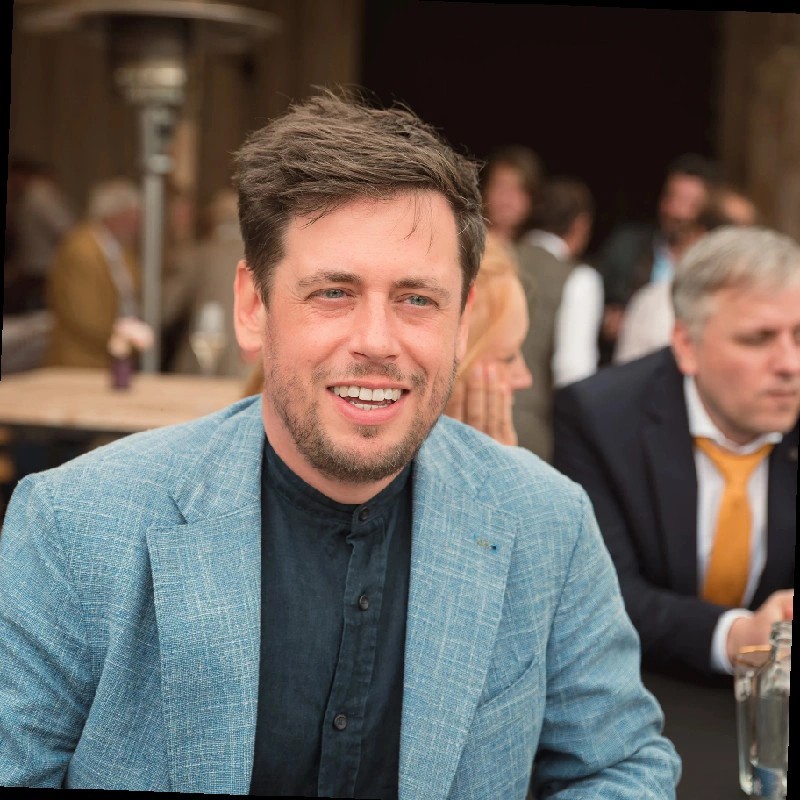
Bart Wolput
Bart Wolput is the founder and chief executive of Give a Day, based in Antwerp, and works in civic tech, SaaS and volunteering. He founded Give a Day in January 2016 and has been its managing director since April 2019. Since September 2020 he has also been a lecturer in volunteering and growth communication at AP Hogeschool Antwerpen.
Between August 2017 and March 2019 he was project manager for smart cities at Antwerp Management School. From April 2011 to June 2017 he worked at Tractebel as an expert in smart mobility and advanced traffic models, overlapping with his doctoral research in traffic engineering at KU Leuven from April 2011 to May 2016. He had earlier been a researcher in traffic at KU Leuven from 2009 to 2011 and a junior researcher there in 2008, and a junior researcher at ILVO in the first half of 2009. In 2014 he was a visiting researcher in traffic modelling at the University of California, Berkeley, and a visiting scholar at the UMass Amherst School of Public Health & Health Sciences.
He holds a doctorate in engineering science, mechanical engineering, from KU Leuven, where he also studied bio-engineering in chemistry, and an industrial engineering degree in food science from Katholieke Hogeschool Kempen.
Insights & takeaways
The through-line
Across these sources Bart Wolput returns again and again to one claim: willingness to volunteer is not the bottleneck, the hassle around it is. "Meer mensen dan ooit willen zich engageren, en toch daalt de tijd die vrijwilligers geven. Het probleem is niet de bereidheid. Het is de rompslomp eromheen." Everything else he posts, from cost-reimbursement rules to platform consolidation for municipalities to training for coordinators to a nationwide fair calendar , is aimed at stripping away that rompslomp so that the willingness people already have can actually turn into hours given. Over the period covered, this shifts from purely operational posts (fairs, reimbursement rules, platform launches) toward campaign-building and visibility work (Iedereen Vrijwilliger, corporate volunteering, media coverage), suggesting a move from fixing the plumbing to scaling the message once the plumbing exists.
On helping without the hassle
His core diagnosis is explicit: "Helpen zou eenvoudig moeten zijn. Te vaak is het dat niet." He frames his own blog and platform as evidence-based rather than theoretical: "Op onze blog delen we wat 100.000+ matches ons leren: wat werkt in vrijwilligerswerk, vrijwilligerscoördinatie en het engagement van bedrijven. Uit de praktijk, niet uit de theorie." The same logic drives his practical, rule-heavy posts, like the breakdown of what a volunteer may legally be paid, because getting this wrong is "een van de meest gemaakte fouten rond kostenvergoedingen" , and his consolidation of scattered volunteer-fair announcements into one overview because that information is "verspreid over tientallen aparte aankondigingen" .
On vrijwilligerscoördinatie als vak
Wolput insists that coordinating volunteers is a genuine profession, not an informal add-on task: "Vrijwilligerscoördinator is een vak. Er bestaat ook een opleiding voor!" He praises organizations and local governments that build structure rather than just talk about the issue, citing Sint-Katelijne-Waver's platform consolidation as "een mooi voorbeeld van een gemeente die vrijwilligerswerk structureel ondersteunt in plaats van er alleen over te communiceren" , and pointing to the postgraduate program's promise to teach people "slimmer werven, onboarden, coachen, waarderen en behouden" .
On snelheid en resultaat
When challenged publicly, Wolput defends a results-first, move-fast ethic rooted in a stated utilitarian outlook: "Ik ben dan ook een Benthamiaanse utilitarist en geen Kantiaan ;). Resultaat is het belangrijkste." He accepts that this approach produces errors but treats that as the cost of pace: "En dat doet ge niet op een trotinette. Maar op een TGV van trial and error. En dan mist ge al wel eens iets, maar maakt ge wel snelheid in impact." He also frames himself, half self-deprecatingly, as someone driven by urgency rather than polish: "een lomp naïef boerke van de Kempen, dat de wereld in brand ziet staan en daar iets aan wil doen" , while stating he readily owns mistakes: "Ben de eerste om een gemaakte fout toe te geven en te corrigeren."
On zichtbaarheid en campagnevoering
A recurring later theme is making volunteering visible and socially normal, not just logistically easier. The Vrijwilligerschallenge asks public figures to model the behavior: "Wat als je burgemeester een halve dag komt vrijwilligen, en dat verhaal zelf deelt?" He frames the Iedereen Vrijwilliger campaign as a collective effort behind the scenes as much as in front of the camera: "Achter elk sterk verhaal staan mensen die ervoor kiezen om het mee te vertellen." The same visibility goal is voiced through a partner's language on corporate engagement: "Vrijwilligerswerk zichtbaarder, toegankelijker en inclusiever maken."
From the stage
In the Corda X talk, Wolput describes Give a Day directly as "Tinder for volunteering," a matching platform between company employees and non-profits working on social challenges 16. Unlike the written posts, which mostly announce finished features, campaigns, or rules, here he frames the platform as still in active development and explicitly invites the audience's input on which features to build and how to get businesses to collaborate with non-profits 16.
Takeaways
- Before recruiting volunteers, fix friction first: the willingness exists, the barrier is administrative and logistical rompslomp .
- Know the 2026 Belgian rules before paying volunteers anything: no hourly wages, forfait maximums of €44,02/day and €1.760,83/year (raised forfait €3.233,91/year for sport, oppashulp, ziekenvervoer), or reële kosten with proof .
- Treat volunteer coordination as a trainable profession: the AP Hogeschool postgraduate program covers recruiting, onboarding, coaching, valuing and retaining volunteers .
- Consolidate scattered logistics into one place, whether that is a municipality's vacatures (Sint-Katelijne-Waver) or a national fair calendar spanning eight confirmed events from September 2026 to April 2027 .
- Use visible, public commitments (a mayor volunteering for half a day, a national campaign) to shift volunteering from private goodwill to normalized public behavior .
- Expect trial-and-error and occasional public friction as the tradeoff for moving fast toward impact, a tradeoff Wolput states as a personal, utilitarian choice .
Career
Roles
AP Hogeschool AntwerpenLector Vrijwilligerswerk en groeicommunicatieSep 2020 – Present
Give a DayManaging DirectorApr 2019 – Present
Antwerp Management School#143factoryProject Manager Smart CitiesAug 2017 – Mar 2019
- UMass Amherst School of Public Health & Health SciencesVisiting ScholarMay 2014 – May 2014
- University of California, Berkeley#501factoryVisiting Researcher Traffic modelingJan 2014 – Aug 2014
KU Leuven#1factoryPhD student researcher in traffic engineeringApr 2011 – May 2016
- Tractebel#203factoryExpert Smart Mobility and Advanced Traffic ModelsApr 2011 – Jun 2017
- ILVOJunior ResearcherJan 2009 – Jun 2009
From public career histories · 14 entries
Media & appearances
1- 16talkHasselt Zorgstad · 7y ago · 0:44 · 85 views
Bart Wolput discusses Give a Day, a platform that matches employees from companies with non-profit organizations working on social challenges, describing it as "Tinder for volunteering." He explains that they are currently developing this tool further and seeking input on what features should be included and how to encourage businesses to collaborate with non-profits so they can collectively make a difference.