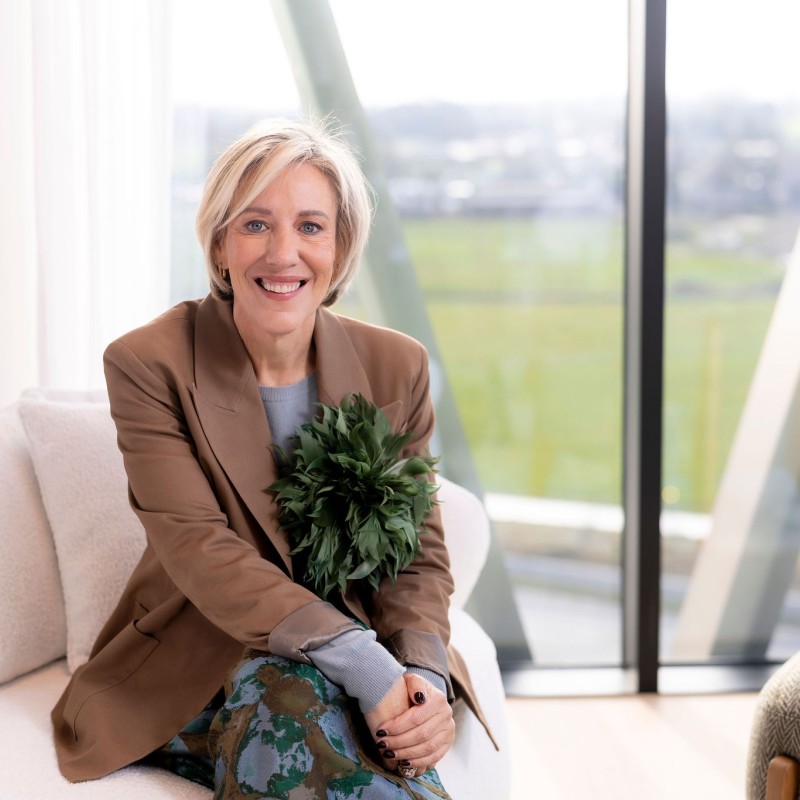
Conny Vandendriessche
Conny built House of HR into a major European HR services group. Based in Flanders, she is recognized as one of Belgium's most successful entrepreneurs, combining operational leadership with active investing and ecosystem engagement.
Through House of HR and COFORMACO, Conny oversees investment and entrepreneurial activities across HR, services, and related sectors. She is also an active voice in Belgian business and leadership circles.
Insights & takeaways
Conny Vandendriessche's thinking centers on language, culture, and control as the levers that turn a small staffing office into a European group. At Accent's founding she insisted on building what she calls a positive dictionary, swapping out negative words for constructive ones: 'problem' became 'challenge', 'personnel' became 'medewerkers' 2. Her reasoning is almost operational rather than sentimental: with hundreds of employees, if everyone comes home each evening reporting a problem, the whole organization sinks into gloom. As she puts it, "Als je één medewerker hebt die zegt probleem... en je hebt 100 medewerkers of 500 en die zeggen allemaal 'Ik heb een probleem', 's avonds ja dan ben je echt depri. Wij wensen dat niet, wij hadden een uitdaging." 2 This is not branding for its own sake but a deliberate attempt to manage collective energy at scale.
That same instinct for shaping culture from scratch runs through her hiring philosophy. Accent hired half its people straight out of school and avoided veterans of other staffing firms, on the theory that people already molded by a competitor's culture are hard to reshape into Accent's own DNA 2. Training was treated the same way: every employee went through two days a month of instruction, from soft skills to elevator pitches, so that nothing was left to chance and offices could be replicated one after another 2. She describes the growth that resulted almost matter-of-factly: "Wij verdubbelden onze omzet om de twee jaar." 2 Growth, in her account, wasn't chased through headquarters or infrastructure. Accent built no headquarters in its first ten years, funneling every euro into opening new offices region by region, expanding what she calls 'olievlek-gewijs', with the whole team moving along 2.
On finance, her positions are blunt and principled. She never signed a personal guarantee for bank financing, treating it as a line she would not cross even though banks had asked for it as standard practice for thirty years 2. Her practical advice to entrepreneurs is to open a credit line when business is good, even if it isn't needed, pay the reservation fee for peace of mind, and repay drawn amounts so the bank always sees headroom 2. Behind this sits a broader skepticism about how comfortable Belgian entrepreneurship has become: "We zijn hier super verwend. Hier heb je Vlaio, je hebt imec, je krijgt bijna het geld langs je oren gesmeten. Ik denk dat we te weinig honger hebben om grote bedrijven te bouwen." 2 She extends the same critique to sales culture, arguing that since covid, salespeople have drifted from hunters to farmers and that cold calling has all but disappeared: "Sedert covid zijn we die hunting mentaliteit kwijt geraakt. We zijn precies allemaal farmers." 2 For her, the thrill of the deal is explicitly in the resistance: "Het is echt leuk als een klant begint te zeggen met neen. Dat is de uitdaging om die om te turnen naar ja." 2 That appetite for pushback also shaped how the company was perceived. "Mensen noemden ons, in plaats van assertief, soms agressief commercieel." 2
Her relationship to authority and doubt recurs as a personal thread. She frames repeated moments of being told she would fail as formative: "Voor de tweede keer in mijn leven hoor ik een man zeggen van: het gaat helemaal mislukken met jou. Eerst mijn papa die zei: ik geloof niet in u." 2 And she is careful to give credit for the vision behind Accent to someone else while claiming the execution as her own: "Ik zeg altijd: hij droomde het en ik deed het." 2 This division between dreaming and doing seems to be how she understands her own role throughout the company's growth.
On governance and ownership, she pushed structural change rather than symbolic gestures. Under Naxicap she built an employee-ownership scheme where one in ten employees became shareholders through a separate vehicle, and required management at every acquired company to buy into 30% of their own business so they had real skin in the game 2. The founders themselves sought a private equity partner not primarily for capital but for discipline, needing what she calls a referee to keep two founders in balance 2. As an investor now, she is explicit about setting expectations downward, telling founders directly what not to expect from her, because she sees the recurring disappointment with business angels stemming from inflated hopes about their network: "Geld is er genoeg in de wereld. Het is vooral advies." 2
Letting go is where her thinking is most reflective. She describes physically moving to an office two kilometers away after handing over to an external CEO, and refusing to intervene when employees called to complain, redirecting them to the new CEO instead, because otherwise you undermine your successor 2. Her stated golden tip distills the whole philosophy: "De beste golden tip is loslaten, echt loslaten, en volledig vertrouwen." 2 She connects this directly to self-knowledge about timing, warning that founders who stay past 60 or 65 without building a second life outside the company find the eventual letting-go far more dramatic, and that recognizing when a company needs managers rather than entrepreneurs is a crucial, underrated skill 2.
Looking outward, she treats AI as a genuine break from prior waves of automation. Decades of optimization hit blue-collar work; now, for the first time, white-collar roles are exposed, and she expects the disruption to arrive faster than people expect: "Met artificiële intelligentie wordt voor de eerste keer de white collars aangevallen, de bediende. We gaan echt verschieten wat dat er op ons afkomt en het gaat zeer vlug." 2 House of HR's own internal chatbot, already replacing part of a twenty-person support desk, is offered as early evidence that this displacement, while slower than feared, has begun 2. She pairs this with an observation from her later investing work at We Are Jane, where sourcing female-run companies above one million euros in EBITDA proved harder than expected, screening around 150 companies a year for only one or two that reach deep due diligence 2 — a data point she treats as a structural gap rather than a talent gap.
- At Accent's founding they created a 'positive dictionary' replacing negative words: 'problem' became 'challenge', 'personnel' became 'medewerkers' — because hundreds of employees saying 'I have a problem' daily drags down the whole company's energy.
- Accent deliberately hired 50% straight from school and avoided people from other staffing firms, because industry veterans were already shaped by another company's culture and hard to mold to Accent's DNA.
- Accent trained every employee two days per month, covering everything from soft skills to elevator pitches — nothing was left to chance, enabling office-by-office replication.
- Open a credit line (straight loan) when business is good even if you don't need it — pay the reservation fee for peace of mind, and repay drawn amounts so the bank sees the line isn't exhausted.
- She never signed a personal guarantee for bank financing, as a matter of principle, and advises entrepreneurs never to do so — despite banks asking for it as standard for 30 years.
- Accent never built a headquarters in the first 10 years — all cash went into opening offices, expanding 'olievlek-gewijs' (oil-slick style) region by region with the whole team moving along.
- As an investor she explicitly tells founders what NOT to expect from her, because the recurring disappointment with business angels is inflated expectations about their network opening doors.
- The founders sought a private equity partner not for the money but because they needed to be challenged and needed a 'referee' to keep the two founders in balance.
- Under Naxicap she implemented employee ownership: 1 in 10 employees became shareholders via a separate vehicle; management of every acquired company had to buy in 30% of their own company to have skin in the game.
- When she handed over to an external CEO, she physically moved to an office 2 km away and refused to intervene when employees called her to complain, telling them to discuss it with the new CEO directly — otherwise you undermine the successor.
- Founders who stay past age 60-65 without building a second life find letting go dramatic — self-knowledge about when your talent runs out and the company needs managers instead of entrepreneurs is crucial.
- Since covid, sales people have shifted from hunters to farmers; cold calling is done far too little today, and easy government money makes people complacent.
- AI is attacking white-collar jobs for the first time, after decades of optimizing blue-collar work; House of HR runs an internal chatbot replacing part of its 20-person support desk, and job displacement is starting though slower than expected.
- We Are Jane found it surprisingly hard to source female-run companies above €1 million EBITDA — they screen ~150 companies per year and only one or two get deep due diligence.
Career
EnergyVisionBoard MemberJul 2025 – Present
- AlliABoard MemberJan 2023 – Present
- CoformacoFounder & Chair(wo)manJan 2023 – Present
- PIA GroupBoard MemberDec 2023 – Present
- Stella P.Board Member / MentorJan 2023 – Present
- Van MarckeAdvisory Board MemberSep 2023 – Present
- SOLCOM GmbHCo-OwnerFeb 2022 – Present
- TMICo-OwnerJan 2022 – Present
- Xior Student HousingBoard MemberSep 2022 – Present
- CohedronCo-Owner2021 – Present
- We Are JaneFounder / Managing PartnerJan 2018 – Present
- RedmoreCo-OwnerNov 2017 – Present
- Gritt nvCo-Owner2016 – Present
- TimePartner HoldingCo-OwnerOct 2016 – Present
- AbylsenCo-OwnerApr 2015 – Present
- ContinuCo-OwnerSep 2015 – Present
- Covebo UitzendgroepCo-OwnerJun 2015 – Present
Hello Customer#372factoryAngel InvestorJan 2015 – Present
- The House of HRCo-FounderJun 2012 – Present
- Accent Jobs#322factoryFounder / Co-OwnerApr 1995 – Present
- Stella P.Founder / Managing DirectorJan 2014 – Jan 2023
Harvard Business School#46schoolFamily Office Wealth ManagementMar 2023 - Mar 2023
- Guberna (Institution for board members)Guberna Director2015 - 2016
- Guberna (Institution for board members)Board Effectiveness2014 - 2015
Vlerick Business School#3school2005 - 2013
- Guberna (Institution for board members)Board Simulation2016
Stanford CalifWoman Entrepreneur Program2015
From public career histories · 27 entries
Media & appearances
1- 2podcastThe Harbour · 26 Sept 2024
Conny Vandendriessche (House of HR founder) recounts building Accent from one office to a European group — positive vocabulary, employee ownership, no personal guarantees, and knowing when to let go as CEO.