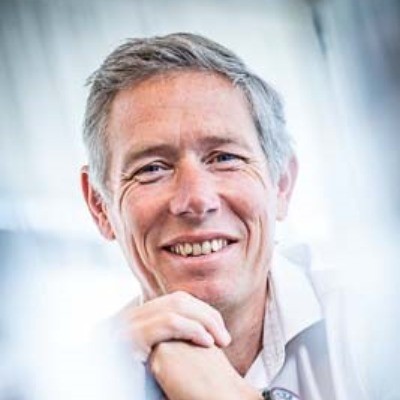
Kobe Verdonck
Kobe Verdonck is chief executive officer of SD Worx, a role he has held since September 2019. He is based in Antwerp.
Before joining SD Worx, he was executive chairman of Supremia from April to July 2019, and advised the Visma-Raet board between July 2018 and January 2019. He was CEO of Raet from May 2014 to July 2018.
Verdonck spent eight years at NGA Human Resources, joining in January 2006 as regional director for the Nordics, Austria and Switzerland, then serving as executive director for Europe and Latam from June 2007 and as executive vice president of global sales from May 2012 to April 2014. He had earlier worked at ARINSO International from April 1999, first as an international project manager and from July 2003 as managing director. He began his career as a programme manager at Mucoba Incofin in January 1997 and was a lawyer at Stibbe Simont Monahan Duhot from October 1998 to March 1999.
He studied law at Ghent University, spent an Erasmus exchange in European law at the Universidad de Cantabria, and took a master's in business administration at the Université catholique de Louvain.
Insights & takeaways
The through-line
Across Kobe Verdonck's posts, one preoccupation dominates: leadership is about building teams that do not need him, not about accumulating personal indispensability. He returns repeatedly to the idea that "sustainable business success starts with people" , and that strong organisations are built on trust, clear frameworks, and leaders who keep learning rather than leaders who keep doing. Over the period covered by these sources, this personal leadership philosophy runs in parallel with a steady stream of announcements about SD Worx's European growth and its adoption of AI in payroll and legal compliance, with Verdonck consistently framing technology as something that must be paired with "human oversight" and expertise rather than replace it .
On leadership and letting go
Verdonck's clearest and most repeated argument is that leadership is not about the leader. "Leadership is not about making yourself indispensable, it's about building teams that can make decisions, challenge each other and succeed without depending on one person" . He connects this to a common trap: "As leaders, we often get promoted because we were good at doing the work ourselves. The real challenge is learning to step back, create the right framework and give others the confidence to step forward" . He extends this to leadership teams as a whole, arguing that alignment on strategy is not enough: teams also need to "understand and value each other's strengths," since "some leaders connect people. Others create clarity, challenge thinking or drive execution" .
On never standing still
Learning is the second pillar of his thinking, tied closely to the first. He states plainly that "the best leaders never stop learning" and that "some of the most valuable insights come from conversations with people who challenge your thinking and bring a different perspective" . His summary takeaway from his own reflections is compact: "build great teams, create trust and never stop learning. The rest follows" .
On AI adding value, not replacing people
When discussing SD Worx's own technology investments, Verdonck frames AI strictly as an enhancement to human and payroll expertise rather than a substitute for it. On the multi-agent AI model in payroll, he says the aim is "faster processing, greater consistency and more proactive support," delivered "with strong governance and human oversight," concluding "this is AI that truly adds value" . The same framing appears with SD Worx Legal Watch, an AI-driven platform meant to turn "complex legal change into clear, reliable and actionable insights," built "by combining advanced AI with human legal expertise" so organisations can "stay compliant and focus on people and growth" .
From the stage
In interview and podcast appearances, Verdonck develops an extended sports analogy for leadership that does not appear in his written posts: he compares the CEO role to that of a sports coach or trainer, emphasizing that winning teams need clear frameworks and communication combined with freedom for team members "to make decisions on the spot," drawing parallels to how football teams operate tactically 11. He also discusses his own transition from being a player to becoming a coach as a key ingredient of team building, and advises leaders to follow their passion, build strong teams around them, and keep growing rather than standing still 11. Separately, in the Team SD Worx-Protime interview, he explains the company's decision to sponsor the SD Worx women's cycling team as rooted in shared values of "teamwork, diversity, and winning together," and mentions his personal enjoyment of cycling in the region and his intent to attend races alongside employees and customers 10.
Takeaways
- Build leadership teams around complementary strengths (connecting, clarifying, challenging, executing) rather than assuming strategic alignment alone is enough .
- Resist the instinct to stay indispensable; deliberately create frameworks that let others make decisions and challenge each other .
- Treat learning as an active practice: seek out people and conversations outside your own organisation that challenge your thinking .
- When deploying AI (e.g. in payroll or legal compliance), pair it explicitly with human oversight and expertise rather than positioning it as a replacement .
- Use sports-coaching principles in leadership: set clear frameworks and communication, then give team members freedom to decide in the moment 11.
- Recognize the player-to-coach transition as a distinct leadership skill worth reflecting on explicitly 11.
Career
Roles
SD Worx#350factoryChief Executive OfficerSep 2019 – Present
- SupremiaExecutive ChairmanApr 2019 – Jul 2019
VismaAdvisor to the Visma-Raet boardJul 2018 – Jan 2019
- RaetCEOMay 2014 – Jul 2018
- NGA Human ResourcesExecutive Vice President - Global SalesMay 2012 – Apr 2014
- NGA Human ResourcesExecutive Director Europe and LatamJun 2007 – Apr 2012
- NGA Human ResourcesRegional Director Nordics, Austria and SwitzerlandJan 2006 – Jun 2007
- ARINSO InternationalManaging DirectorJul 2003 – Dec 2005
- ARINSO InternationalInternational Project ManagerApr 1999 – Jun 2003
- Stibbe Simont Monahan DuhotLawyerOct 1998 – Mar 1999
- Mucoba IncofinProgram ManagerJan 1997 – Oct 1998
Education
- Universidad de CantabriaErasmus Exchange, European Law1995 - 1995
Université catholique de Louvain#4schoolMaster, Business Administration1995 - 1996
Ghent University#2schoolMaster, Law1990 - 1995
From public career histories · 14 entries
Media & appearances
3- 9podcastDiscours Met De Boys · 2y ago · 1:08:46 · 283 views
- 10interviewTeam SD Worx-Protime · 5y ago · 5:41 · 534 views
Kobe Verdonck explains that SD Worx is one of Europe's leading HR and payroll providers serving over 70,000 companies and 4.5 million employees. He describes the company's decision to sponsor the SD Worx women's cycling team as driven by shared values around teamwork, diversity, and winning together, and notes that he personally enjoys cycling in the region and looks forward to attending races with employees and customers.
- 11podcastSD Worx · 2w ago · 32:07 · 24 views
Kobe Verdonck discusses how he approaches leadership by comparing the CEO role to that of a sports coach or trainer. He emphasizes the importance of building winning teams by establishing clear frameworks and communication while giving team members freedom to make decisions on the spot, drawing parallels to how football teams operate tactically. He also reflects on key ingredients for team building, including the transition from being a player to becoming a coach, and advises leaders to follow their passion, build strong teams around them, and continue growing without standing still.