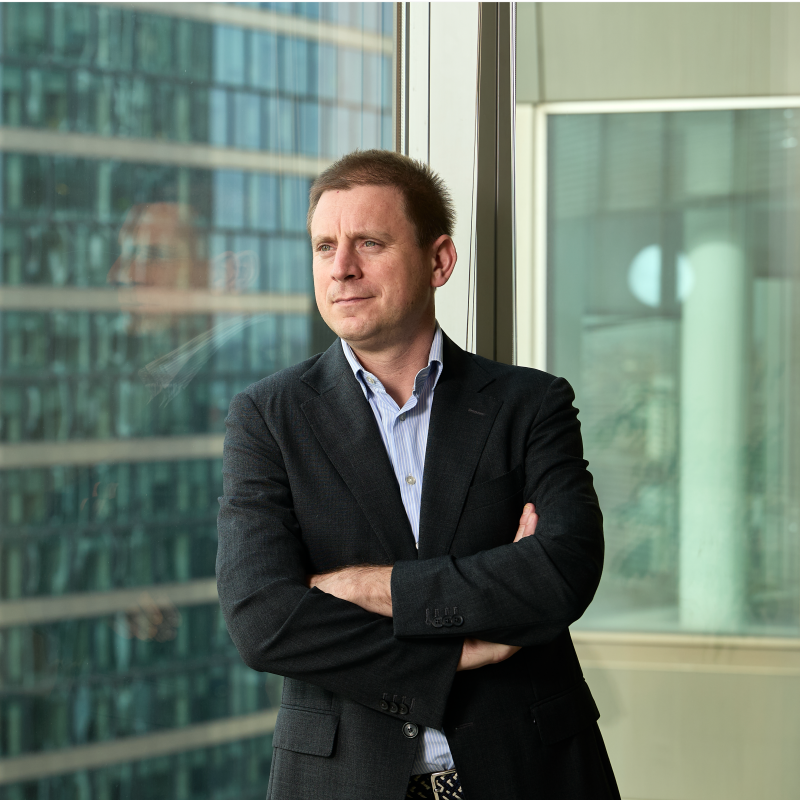
Laurent Hublet
Laurent Hublet co-founded BeCentral in 2017 and in February 2026 was designated as Brussels Minister for Economy, Employment, and Digital Economy in the government led by Boris Dilliès.
Laurent Hublet is an economist, philosopher, and Belgian politician born in Brussels in 1983. He holds degrees in commercial engineering and economics from Solvay Brussels School of Economics and Management, a degree in philosophy, and an MBA from Columbia Business School. He co-founded BeCentral, the digital campus at Brussels Central Station hosting 60 tech schools, startups, and NGOs, and served as its executive director until 2023. Prior to BeCentral, from 2014 to 2018 he was an advisor in the cabinet of Alexander De Croo, the minister in charge of the Digital Belgium project. In February 2026 he was designated to become Brussels Minister for Economy, Employment, and Digital Economy.
Insights & takeaways
The through-line
Across five months of governing Brussels, Laurent Hublet keeps returning to one idea: that entrepreneurial urgency, not caution, is what a city government needs. He frames his own move from business into politics as a deliberate risk, not an accident, and repeatedly measures his ministry's work against a promise he made himself and voters at the moment he took the oath: "y aller à fond" . That posture has not shifted since February; if anything it has hardened into a governing method, showing up in how he staffs institutions, funds transitions, and talks about AI and climate as tests of whether Brussels moves fast enough.
The other constant is that he treats economic and social policy as inseparable. Digital sovereignty, disability care, diversity labels and climate spending are all presented not as separate portfolios but as pieces of the same project: making Brussels work for the people who live there.
On entrepreneurial urgency and who leads
Hublet describes his own appointment as improbable and treats speed as a moral obligation once in office: "Je suis entrepreneur. Je ne m'attendais pas à devenir ministre" , followed immediately by "Nous n'avons pas une seconde à perdre. Nous n'avons pas le luxe de faire des mauvais choix" . That same logic drives his approach to appointments: he wants "des entrepreneurs prêts à mouiller le maillot" running Brussels's economic tools , and he insists that even administrative recruitment, such as the search for Actiris's new director general, be "ambitieuse et rigoureuse" through parallel French- and Dutch-speaking selection committees .
On digital and AI sovereignty
Hublet's framing of sovereignty is explicitly relational rather than defensive: "Digital Sovereignty is about partnerships & scale. About people & places" . After the G7-adjacent AI summit in Lille, he sharpened this into an urgency claim: "l'intelligence artificielle n'est plus un sujet d'avenir; c'est un enjeu immédiat de souveraineté, de développement socio-économique et de transformation de nos territoires" . He backs this with a stark local stake, noting that in Brussels "près de 80% des emplois s
Career
Roles
- Government of the Brussels-Capital RegionMinister for Economy, Employment & TechFeb 2026 – Present
Solvay Brussels School of Economics and Management (SBS-EM) - ULB#80factoryCo-academic director of the "Management & Philosophy" exec. programme2011 – Present
- Roland Berger#359factoryPartnerJun 2025 – Feb 2026
- RTBF#237factoryBoard Member & President of the Audit CommitteeDec 2024 – Sep 2025
- IAm BrusselsFounderOct 2023 – Feb 2024
BeCentral#354factoryCEOFeb 2018 – Oct 2023
- Belgian Federal Government - Cabinet of the Deputy Prime Minister Alexander De CrooAdvisor in charge of Digital BelgiumNov 2014 – Mar 2018
- Fabrice Grinda Angel InvestmentsPart-time investment analystOct 2011 – May 2012
- Boston Consulting Group (BCG)#22factoryProject LeaderNov 2010 – Nov 2014
- Boston Consulting Group (BCG)#22factoryConsultantJan 2009 – Oct 2010
- Boston Consulting Group (BCG)#22factoryAssociate2006 – 2008
Education
- Columbia Business School#63schoolMaster of Business Administration (M.B.A.), Business Administration and Management2011 - 2012
- Tecnológico de Monterrey#134schoolCertificate, International Business Certificate2005 - 2005
Université libre de Bruxelles#10schoolMaster, Philosophy2003 - 2007
- Paradis des Enfants1989 - 1995
From public career histories · 18 entries
Media & appearances
3- 10talkTEDx Talks · 3 years ago · 8:55 · 839 views
- 11interviewKobe van Reppelen · 3 years ago · 1:48:01 · 276 views
- 12otherLes Engagés - Mouvement participatif · 4 months ago · 15:07 · 279 views
Laurent Hublet discusses his background as a Brussels-born entrepreneur and co-founder of Bicentral, a digital campus located in Brussels Central Station, as well as his launch of IM Brussels, a citizen engagement initiative that consulted residents across Brussels's 19 communes about their concerns before sharing findings with political parties.