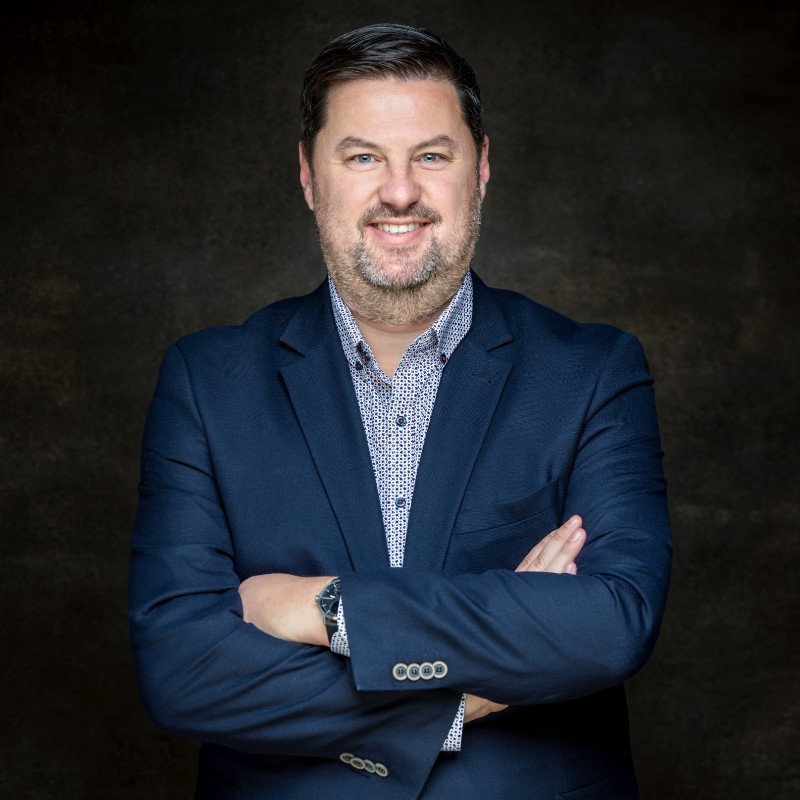
Robin Wauters
Robin Wauters is Editor-in-Chief of Tech.eu, co-founder of BeCentral, and a founding member of Syndicate One, making him one of the most connected ecosystem builders in Belgian tech.
Talks about
Robin is Editor-in-Chief of Tech.eu, the leading European tech journalism outlet covering startup funding, exits, and ecosystem news. He co-founded the platform and has used it to bring visibility to Belgian and European tech companies that would otherwise fly under the radar.
Beyond media, Robin co-founded BeCentral, the Brussels digital campus and talent hub. He also serves on the board of the European Startup Network, giving him reach across national ecosystems.
As a founding member of Syndicate One, Robin participates in deal flow and capital alongside Belgian founders and operators. His combination of media platform, institution building, and investor access makes him a central connector across the Brussels and pan-European tech scene.
Insights & takeaways
The through-line
Across nearly everything Robin Wauters says and does, one preoccupation recurs: Europe, and Belgium specifically, keeps underperforming its potential in tech, and the fix is structural rather than sentimental. In the podcast material this is explicit: "De cijfers tonen aan dat we slecht bezig zijn. We hebben eigenlijk als je kijkt 25 jaar lang de boot gemist. Switch to mobile, switch to cloud, software as a service, AI." 19 Over time the register shifts from commentary to construction. The 2015-2016 material shows him in an interviewer's chair, drawing out other people's views on entrepreneurship and investing 161718. By 2025-2026 he is the one building the infrastructure he used to write about and interview others on: co-running Syndicate One, restarting BeCentral, running the European Startup Network, and pushing policy campaigns like EU Inc . The underlying diagnosis stays constant, but the posture moves from observing the ecosystem's gaps to trying to close them personally.
On ambition and mindset
Wauters repeatedly frames Europe's problem as one of mindset before capital. His most direct call to action: "Wees meer ambitieus in heel België, maar ook in heel Europa. Denk gewoon groter. Denk sneller. Denk groter. Denk gewoon meer impact." 19 He locates the US-Europe gap not in resources but in appetite for risk: American founders "think a lot bigger, they go a lot faster, they don't mind breaking things and you just go sell things that aren't even there yet to develop them later. Europeans are typically more prudent." 20 This isn't abstract for him; he ties it to personal reckoning, noting "Ik besefte pas heel recent in how much [ __ ] we are." 19 The stakes he assigns to ambition are existential for companies too: chasing a small goal takes almost as much sacrifice as chasing a big one, so founders may as well aim big 19.
On investing discipline
On the mechanics of venture investing, Wauters is blunt about the learning curve and the group model he has built around it: "Ge moet 30 tot 50 investeringen doen voordat je het begint te leren." 19 He treats portfolio outcomes as unpredictable in advance, holding that a fund's return can hinge on a company nobody can identify at pre-seed, sometimes not until six or seven years later, which is why he argues for supporting portfolio companies equally rather than picking favorites early 19. His two screening questions for early-stage bets are whether the founder can sustain the grind for 10-15 years and whether the market is big enough to return a fund 19, and he's realistic about the toll that takes: "Je wordt bijna elke dag op uw gezicht geklopt, met wijze van spreken. Dus je moet het maar lang genoeg volhouden." 19
On the EU Inc campaign
A concrete policy fight recurs across his public posts: pushing for a genuine, unified European company structure. "The only way forward is a real #EUInc." He is explicit that half-measures defeat the purpose, warning against European Commission proposals getting "watered down; including calls to turn it into a Directive rather than a regulation" , insisting instead on "an EU-INC that is simple, fast, and works seamlessly across the Single Market" . The podcast material supplies the reasoning behind the campaign: European founders are effectively funneled into Delaware Incs because it's the global standard investors recognize, and that early choice pre-decides later options around US capital, exits, and IPOs 19 — which is the structural problem EU Inc is meant to solve.
On building the Belgian ecosystem
Wauters treats fragmentation as Belgium's core handicap and liquidity as its accelerant. He argues coordination should trump regional silos: "Belgium on a world scale is tiny, right? So why not combine these efforts, why not build more bridges between those organizations to really operate on a pan-Belgian level?" 20 He identifies exits, not capital or people, as the real flywheel: "The biggest catalyst for an ecosystem isn't necessarily capital or people, it's exits, right? It's liquidity." 20 This belief translates into hands-on projects: restarting BeCentral with a new team ("Great to be back... looking forward to co-writing the next chapter for BeCentral" ) built around the same intent as its founding: "Three founders who've built global companies from Brussels... assembled on one stage, talking honestly about ambition, scale and failure" . His Syndicate One hiring language for a Finance & Ops seat makes the ecosystem stakes explicit: "We didn't build S1 to run a fund. We built it because Belgian founders deserved an ecosystem that could back them all the way."
From the stage
The podcast appearances surface arguments and admissions that don't show up in his written posts. On storytelling, he argues it isn't about press coverage but about competitive advantage — attracting talent, convincing investors and winning customers — and that founders should learn it themselves rather than outsource it early 19. On failure, he contrasts Silicon Valley, where failed serial entrepreneurs still get funded, with Europe, where failure remains taboo and a negative signal, something Syndicate One tries to counter 19. He also floats quantum computing as a genuine greenfield opportunity for Europe, since "50-60 years of IT dominance doesn't guarantee leadership there," with 100+ qubit machines expected around 2030-2031 19. On policy mechanics, he details how European pension funds allocate only 0.07% to venture capital and how Italy's mandate to raise that to 0.1% spooked local funds fearing market distortion, illustrating why capital unlocking has to be phased 20. And on hiring and culture, he says culture can't be bought with ping-pong tables — it's baked into founders' personalities, so for key roles you have to test who people are as humans outside work settings 19.
Takeaways
- Before angel investing or backing a fund, expect to need "30 tot 50 investeringen" before the pattern-recognition kicks in — which is the rationale behind pooling capital in a group like Syndicate One 19.
- When screening early-stage founders, weigh two things above the product: can they sustain the grind for 10-15 years, and is the market big enough to return a fund 19.
- Don't wait for EU Inc to become a "Directive" compromise — push for a regulation that works uniformly across the Single Market, since a fragmented version won't deliver the intended impact .
- Treat storytelling as core company-building work, not PR: it drives talent, investor, and customer decisions, and founders should learn to do it themselves early on 19.
- If you're building ecosystem infrastructure in Belgium, look for pan-regional coordination rather than separate Flemish/Walloon efforts, since fragmentation is a named structural weakness 20.
- Watch for exits, not capital inflow, as the real signal of ecosystem health — liquidity, not funding volume, creates the next generation of founders and angels 20.
- US and European companies start with the same equipment and capital, but the mindset differs from day one: US founders think bigger, go faster, don't mind breaking things and sell things that don't exist yet, while Europeans do the right things just slower — and that mindset must be instilled in children.
- The biggest catalyst for a startup ecosystem is not capital or people but exits: liquidity creates a new generation of entrepreneurs, operators and angel investors that accelerates the flywheel, as is happening in Ghent now.
- Belgium's core structural problem is that innovation budgets and support structures are dispersed across Flemish and Walloon organizations that don't coordinate; a federal commissioner for startups with power over the autonomous regions would help, instead of local ministers of innovation.
- Belgian tax debates are almost never about entrepreneurs who will create the wealth of the next 5-20 years but about existing wealth holders; entrepreneurs must be included in policy conversations even though they don't agree among themselves on how they should be taxed.
- You cannot copy the Stanford spin-off model to Europe; local constraints matter — European university endowments spend more money investing in US funds than in European ones, so fixing that would be a starting point.
- European pension funds allocate only 0.07% to venture capital; Italy's mandate to move to 0.1% in Italian funds spooked local funds fearing market distortion, showing capital unlocking must be phased — the Capital Markets Union discussion addresses this at EU level.
- Angel investing alone almost guarantees losing your money; you need 30-50 investments before you learn, so pooling capital and decision-making in a group like Syndicate One reduces risk and increases impact.
- You can't predict which of 10 investments will be the outlier fund-returner — sometimes you only know 6-7 years after pre-seed — so you must support all portfolio companies equally.
- The two decisive early-stage signals are: can the founder genuinely sustain the grind in this market for 10-15 years, and is the market big enough to return a fund.
- The number one startup killer is failing to reach product-market fit fast enough to become financially self-sustaining; number two is co-founder misalignment on vision and strategy that surfaces under stress or scale.
- Innovation isn't only product: your business model, pricing or go-to-market can be the innovation that creates the difference.
- Storytelling isn't about getting in the paper — it attracts talent, convinces investors, and wins customers and partners; a worse product with better marketing often beats a better product with none, and founders should learn it themselves rather than outsource it early.
- Europe missed 25 years of platform shifts (mobile, cloud, SaaS, AI infrastructure); it contributes talent, science and IP but the value creation on European-developed technology happens in the US, and cloud dominance compounds into dominance in other sectors via power laws.
- European founders are effectively forced into Delaware Incs because it's the global standard investors understand, which pre-decides later choices about US capital, exits and IPOs — the problem EU Inc aims to fix with a standard European entity.
- Quantum computing is greenfield: 50-60 years of IT dominance doesn't guarantee leadership there, so Europe can still compete in both hardware and software; quantum computers with 100+ qubits are expected around 2030-2031.
- Belgium has no shortage of early-stage capital — the real gaps are growth capital for scale-ups, commercializing university research into spin-offs, and political attention for the next generation of founders.
- In Silicon Valley failed serial entrepreneurs still get funded; in Europe failure remains a taboo and a negative signal, a mindset Syndicate One tries to counter.
- Culture is baked into the founders' personality and can't be bought with ping-pong tables; when hiring for key roles, test who people are as humans outside work settings.
Education
- Bachelor, Communication & Marketing, Katholieke Hogeschool Mechelen (2000 - 2003)
Career
Roles
- EU–INCCo-driverJul 2025 – Present
- European Startup NetworkCOO & Board MemberJan 2025 – Present
- EWORVenture ScoutApr 2025 – Present
Sirris#164factoryScale-up Expert - co-driving Scaleup FlandersAug 2025 – Present
- Temple StudiosStrategic AdvisorJul 2025 – Present
- ProfoundoFounderAug 2024 – Present
- Syndicate One#543factoryHead of Ecosystem & founding memberJan 2022 – Present
BeCentral#354factoryCo-founderFeb 2017 – Present
- PULSE FoundationExecutive AdvisorOct 2024 – May 2025
- EIC Scaling ClubBuilding a stronger European deep tech communityJun 2023 – Jun 2024
- Startup Europe LensCo-founder and PresidentJan 2020 – Oct 2023
- World Economic Forum#254factoryDigital Leaders of Europe (Member)Apr 2020 – Oct 2023
- Tech.euFounder & CEOOct 2013 – Jun 2024
- The Next WebEuropean EditorFeb 2012 – Jul 2013
- MoiStartup Advisor and InvestorApr 2008 – Feb 2022
- Talking HeadsCo-founderDec 2008 – Aug 2010
- TechCrunchEditorOct 2008 – Feb 2012
- Virtualization.comManaging EditorJan 2008 – Jul 2013
- EdentityOwnerApr 2007 – Feb 2012
- Plugg (Conference)OrganizerSep 2007 – Mar 2010
Education
- InvestorNet / Gate2GrowthCertificate of Attendance, Masterclass: How to raise Venture Capital2007 - 2007
- 360° AcademyCertificate of Completion, Integrated marketing & communication strategy2006 - 2006
- Katholieke Hogeschool Mechelen#38schoolBachelor, Communication & marketing2000 - 2003
Vrije Universiteit Brussel#7school
From public career histories · 24 entries
Media & appearances
5- 19podcastBen's Mentors · 17 Dec 2025
Robin Wauters (Tech.eu founder, Syndicate One investor, European Startup Network CEO) explains how Europe missed 25 years of tech waves, why founders must master storytelling, and pushes for an 'EU Inc' standard entity to stop startups defaulting to Delaware.
- 20podcastSuperNova · 21 Mar 2025
Pulse Foundation's Emmanuelle Ghislain and Robin Wauters dissect Europe's and Belgium's entrepreneurial bottlenecks — fear of failure, university tech transfer, fragmented regional policy, tax and pension-fund capital — and propose concrete fixes from project-based learning to a federal startup commissioner.
- 16interviewSlush · 10y ago · 19:33 · 59 views
Robin Wauters serves as an interviewer in this fireside chat and facilitates a discussion with Yossi Vardi about startup investing and entrepreneurship. The conversation covers topics including common mistakes investors make (focusing too much on ideas rather than founder qualities), the importance of assessing entrepreneurs' motivation and drive, and Vardi's perspective on what makes Israeli entrepreneurs successful.
- 17interview4YFN · 10y ago · 26:11 · 1,133 views
- 18interview4YFN · 10y ago · 26:56 · 513 views