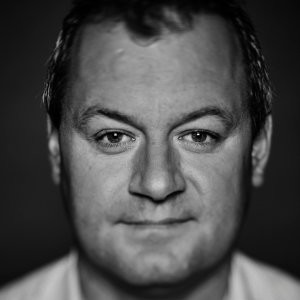
Steven Krekels
Steven Krekels is Chief Executive Officer of Senhive.
Insights & takeaways
Steven Krekels speaks from direct operational experience, and the throughline in everything he says is that the drone threat is already here, hugely underestimated, and moving faster than institutions can regulate it. His central statistic sets the tone: only 10-15% of drone flights his sensors detect worldwide broadcast the legally required remote ID, and around Belgian airports 90-95% of flights are simply unauthorized 12. He is careful, though, not to turn this into alarmism about malicious actors alone. His taxonomy of "de Clueless, de Careless en de Criminals" 12 is the clearest distillation of his worldview: most illegal flights come from people who don't know the rules (often new drone owners after Christmas) or know them but ignore them, and only a minority are genuinely criminal. This framing lets him hold two things at once, that the sky above us is essentially unpoliced, and that the fix is mostly about awareness and infrastructure rather than fear.
That said, he does not downplay the criminal and geopolitical end of the spectrum. He describes drones landing on rooftops with routers to execute man-in-the-middle attacks, sitting for days on solar panels to eavesdrop, and jamming a logistics center's scanners before a ransom demand: "Vervelend hè? Zoveel bitcoins op die rekening en we zullen hem afzetten" 12. He extends this into a broader hybrid-warfare argument, floating the idea that "een aantal landen en niet alleen Rusland ons gebruikt om hier en daar wat dingen aan te testen" 2, and drawing a pointed line from everyday consumer technology to state surveillance: "Al de BYD die rondrijden, dat zijn ogen en oren van China in ons socio-economisch weefsel" 12. At the same time he is a debunker of hype where the evidence doesn't hold up, explicitly doubting that the Copenhagen airport closure was actually drone-related and comparing the media-driven spike in "sightings" to a UFO wave 12. This combination, taking the threat seriously while refusing to inflate unconfirmed incidents, is one of his most consistent traits across both conversations.
Krekels is also emphatic about the physical security blind spot his industry addresses. Companies pour resources into badges, facial recognition and guards, he says, while ignoring the airspace above their own buildings: "vergeet uw derde dimensie niet, want je kan bij bedrijven binnengaan en passen en gezichtserkenning en fysische bewaking en al wat dat je wilt" 12. This is not abstract for him, it's the gap Senhive's technology is built to close, including detecting a pilot's position rather than just the drone itself, since legally only defense and police may neutralize a drone while private security, such as at the Port of Antwerp, cannot act on the aircraft directly 12.
The Paris Olympics engagement stands out as his proof point for how fast the company had to move under real pressure. The French gendarmerie approached Senhive only 2.5 months before the opening ceremony because the domestic solution wasn't working, "Die hebben letterlijk 2,5 maand voor de opening van de Olympische Spelen gezegd: we hebben jullie nodig" 1, and in that window Senhive built a mobile version of its system and deployed 20 units, intercepting roughly 800 illegal drones. He treats this less as a triumphant anecdote than as evidence of a shift in market perception: "Drie, vier jaar geleden hadden we het gevoel dat we wat in de woestijn aan het roepen waren en nu is dat gevoel volledig verdwenen" 12. It also reflects a broader pattern in how he describes Senhive's growth: the company originally built wildfire detection technology and pivoted toward drone detection simply because that's where customer attention went, and it now scales globally not through direct sales but through a network of local resellers and integrators, which is how it ended up protecting Central Park in New York and pursuing opportunities in Japan 1.
On the battlefield, Krekels is precise about both the current limits and the trajectory of the technology. He notes that drones in Ukraine remain human-controlled carriers of cameras or explosives, not autonomous weapons, yet the front line there is roughly 20-30 km wide simply because that is the operational range of drones 12. He uses Operation Spiderweb as his touchstone example of innovation speed: an Estonian startup built a drone expected to last six months operationally, and Russia neutralized it in three, forcing an entirely new version 12. Those drones also used AI-based landmark positioning, comparing live camera images against stored maps to navigate GPS-denied environments, which he treats as a preview of where the technology is heading 1. His summary of the underlying economics is blunt and memorable: "Een drone van een paar honderd vernietigt een vliegtuig van een paar miljoen" 1.
Looking forward, Krekels resists the more utopian visions of drone logistics. He doesn't see door-to-door delivery by 2030 as realistic, since a van serving an entire street remains more efficient, but he does see dedicated corridors emerging, such as above the Albert Canal for urgent packages, or air taxis operating over water 1. This measured, infrastructure-first thinking mirrors his broader philosophy about pace and adaptation: "Het tempo van innovatie in dat wereldje is zo hoog dat je moet er continu mee bezig zijn om dat te kunnen volgen" 1, paired with his recognition that innovation is never a clean win, "Dat lost een probleem op en dat creëert weer een nieuw probleem" 1.
Finally, Krekels connects all of this to a concern about how people learn and think in an AI-saturated world. He observes that access to raw knowledge has exploded while genuine understanding has fallen behind it, "Kennis is heel toegankelijk, maar het begrip en het begrijpen van die kennis, dat is gedisconnecteerd geraakt met die kennis" 2, and argues that education's priority now has to be teaching critical thinking rather than information itself 1. Taken together, his recurring message is that speed, adaptability and unglamorous awareness, knowing the rules, watching the third dimension, following the pace of innovation, matter more than any single dramatic threat, and that institutions, companies and individuals are all still catching up to a sky that is already far busier and more contested than most people assume.
- Only 10-15% of drone flights detected by Senhive's sensors worldwide broadcast their remote ID as legally required; at Belgian airports 90-95% of flights are unauthorized, though most are innocent 'clueless' or 'careless' users.
- Drone users fall into three categories — clueless (don't know the rules, peaking after Christmas gifts), careless (know but ignore rules), and criminals (actively evade detection).
- Senhive pivoted from wildfire detection via satellites to drone detection because customers' attention shifted; the company followed the market demand rather than its original product.
- The French gendarmerie called Senhive only 2.5 months before the Paris Olympics opening because the French solution wasn't fully working; Senhive built a mobile detection unit in that window and delivered 20 units.
- Legally only defense and police may neutralize drones; private actors like port security may not, which is why Senhive also detects the pilot's position so security can approach the pilot instead of downing the drone.
- Drones are actively used in cybercrime: landing on rooftops with routers for man-in-the-middle attacks, sitting on roofs for days with solar panels to eavesdrop, and jamming a logistics center's scanners followed by a bitcoin ransom demand.
- Media attention creates a UFO-like effect: people start seeing drones everywhere; Krekels has seen no confirmation that the Copenhagen airport incident actually involved drones.
- The innovation tempo in drone warfare is extreme: the Estonian startup behind Ukraine's operation Spiderweb thought its product would last six months, but Russia neutralized it in three, forcing a new drone version — continuous adaptation is mandatory.
- The current battlefield in Ukraine is roughly 20-30 km wide because that is the operational range of drones; drones remain human-controlled carriers of cameras or bombs, not autonomous weapons — yet.
- Operation Spiderweb drones used AI landmark-based positioning — comparing camera images against stored maps — to navigate GPS-denied environments.
- By 2030 drone delivery won't be door-to-door (a van serving a whole street stays more efficient) but dedicated corridors, e.g. above the Albert Canal for urgent packages or air taxis over water, are realistic.
- Knowledge has become highly accessible through AI but understanding has become disconnected from it; education must prioritize teaching critical thinking.
- Rather than direct customer sales, Senhive (20 people) scales globally through a network of resellers and integrators who know local situations, which is how it landed Central Park in New York and prospects in Japan.
- Only 10-15% of drone flights observed by Senhive's worldwide sensors broadcast the mandatory remote ID; around Belgian airports 90-95% of flights are unauthorized, though most are innocent 'clueless' or 'careless' pilots.
- Illegal drone users fall into three categories — clueless (e.g. Christmas gift pilots unaware of rules), careless (know the rules but skip them), and criminals who actively avoid detection.
- The French gendarmerie called Senhive only 2.5 months before the Paris Olympics because the French solution wasn't working; Senhive built a mobile version of its system in that window and deployed 20 mobile units alongside fixed installations.
- Legally only defense and police may neutralize drones; private security like the Port of Antwerp cannot, which is why Senhive also detects the pilot's position so guards can approach the pilot instead of downing the drone.
- Drones are used in cybercrime: cases include a drone with a router landing on a roof to execute a man-in-the-middle network attack, solar-panel-equipped drones surveilling rooftops for days, and a jammer drone that shut down a logistics center followed by a bitcoin ransom demand — some of these happened in Belgium/Europe.
- Krekels doubts the Copenhagen airport closure was actually caused by drones — media saturation makes people see drones everywhere, like the UFO wave — and he had no confirmation the sightings were more than human observations.
- Ukraine's Operation Spiderweb shows the extreme innovation tempo of drone warfare: a startup near Tallinn built a drone expected to be useful for six months, Russia neutralized it within three, forcing a new version in another six months.
- The current battlefield in Ukraine is roughly 20-30 km wide because that is the operational range of drones; drones remain human-controlled carriers of cameras or payloads, though AI-based landmark positioning was used in GPS-denied environments during Spiderweb.
- Future drone logistics will happen in dedicated corridors (e.g. a proposed corridor above the Albert Canal for urgent packages) rather than per-package home delivery, which remains less efficient than a van serving a whole street.
- Companies invest in physical security and access control but forget the third dimension: a drone can bypass badges and facial recognition to reach the top floor where executives print confidential documents.
Career
SenhiveCEOMay 2025 – Present
- (Oog voor) DetailBoard MemberJun 2022 – Present
VITO#61factoryValorisation Director Environmental IntelligenceJan 2024 – May 2025
- Agrolink FlandersBoard MemberOct 2021 – May 2025
PasswerkAdvisory Board MemberJan 2021 – Feb 2026
- UKSEDS - UK Students for the Exploration and Development of SpaceMentorJan 2021 – Jan 2022
- Vlaamse Ruimtevaartindustrie vzwBoard MemberJan 2015 – May 2025
Newtec#142factoryDirector IP Software Business Line - Managing Director Newtec Communications GmbHFeb 2011 – Oct 2014
- Addestino Innovation Management#599factoryProject & Innovation Management ConsultantSep 2007 – Jul 2008
- Thales Alenia Space Antwerp#388factoryTeamleader & Real Time Embedded SW EngineerAug 2001 – Aug 2007
- Lucent TechnologiesFirst EngineerFeb 1997 – Jun 2001
- Royal Higher Institute for Defence19th session Higher Studies for Security and Defence, Security and DefenceSep 2024 - Jun 2025
KU Leuven#1schoolPost Academic, Computer ScienceSep 1995 - Jun 1996
- Sint-Jan Berchmanscollege Westmalle1984 - 1990
From public career histories · 18 entries
Media & appearances
2- 1podcastVirtual · 01 Oct 2025
Senhive CEO Steven Krekels explains how his Hasselt-based drone detection company intercepted 800 illegal drones at the Paris Olympics, why 90-95% of drone flights are unauthorized, and how drones are used for cyberattacks, hybrid warfare and battlefield innovation in Ukraine.
- 2podcastVirtual · 01 Oct 2025
Senhive CEO Steven Krekels explains how his Flemish drone-detection company intercepted 800 illegal drones at the Paris Olympics and why airports, ports and companies are increasingly vulnerable to clueless, careless and criminal drone use.