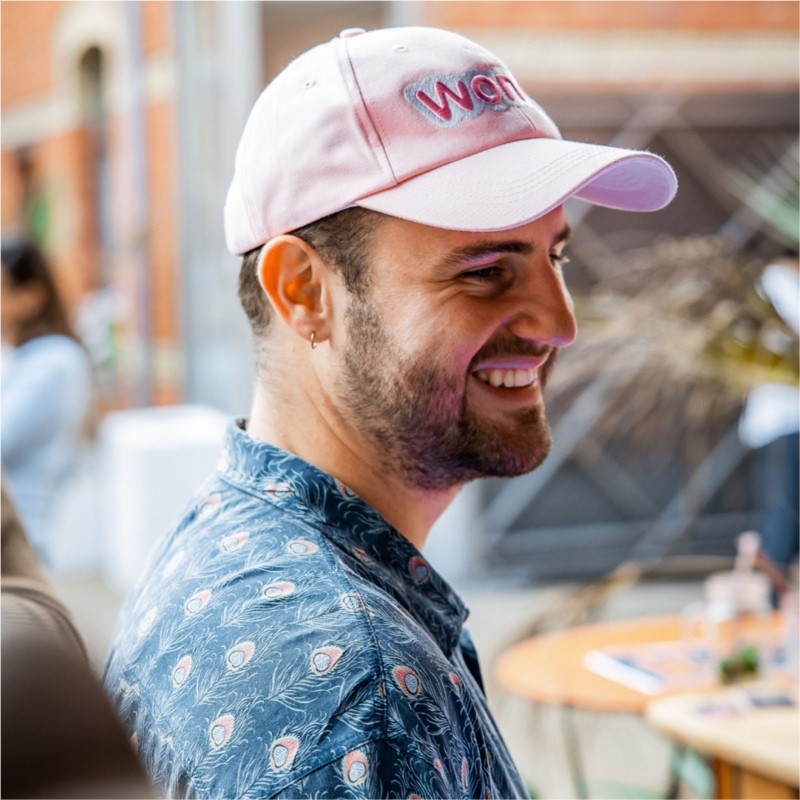
Tibbe Verschaffel
Tibbe Verschaffel founded Planet B in Ghent, building a portfolio of sustainable consumer goods brands including WONDR (laundry and cleaning products) and KLAAAR. The company focuses on reducing plastic waste and carbon footprint in everyday household product categories.
Verschaffel was included in the Forbes 30 Under 30 list, recognizing his impact in the sustainability and consumer goods space at a young age. Planet-b represents the growing intersection of Belgian Entrepreneurship and sustainable FMCG, a category seeing increasing retailer and consumer adoption.
Insights & takeaways
Tibbe Verschaffel's public voice centers on a single conviction: that plastic, and specifically microplastic, has quietly moved from an environmental problem to a health problem, and that nobody with capital wants to prove it. He frames Planet B's blood-testing research as filling a gap the market refuses to fund: "Geen enkel bedrijf wil dit funden want het is tegen hun eigen winkel, wie gebruikt er nu geen wegwerpplastic?" . When the results came in, showing 96% of tested Belgians carrying microplastics in their blood, he described it as personal and alarming rather than abstract, noting he tested his own sample and found particles in it . He is explicit that this is uncomfortable territory: "het is activistisch, het is negatief, het is iets dat we liever negeren," and he leans on an old line from a friend, "Een steen heeft zich nog nooit verlegd door ernaar te roepen," to justify acting instead of waiting for institutions to move . The same impatience shows up in his talk framing: microplastics were "ooit een milieu- of oceaanprobleem, nu is het een gezondheidsprobleem," and he draws the analogy to asbestos and PFAS being underestimated for years .
That research obsession is inseparable from his business philosophy: he wants Planet B to look like a company with nothing to hide. He rejects the "house of brands" model used by Unilever, P&G or Henkel, where a scandal can be quarantined inside one brand while the rest of the portfolio stays clean. Planet B deliberately uses "endorsed branding" instead, tying WONDR care and POWR.care visibly to the parent so that "elke euro omzet = impact" and the group can't hide behind its sub-brands . In the BRAUZZ merger conversation this becomes an explicit critique of the "big boys," who he says "hebben wel 99% van de markt met vervuilende producten" while smaller sustainable challengers fight each other over the remaining sliver; his answer is to team up rather than compete, on the logic that "Alleen ga je snel, samen kom je ver" and "Onze missie is gewoon groter dan onze ego's" 13. He is candid that the staged online "beef" with BRAUZZ was a deliberate marketing tactic, engineered so the audience would arrive at the merger idea themselves, and he treats that kind of stunt as ordinary craft rather than something to apologize for, since in his view "Business blijft de grootste competitiesport die er bestaat" and "Een idee is eigenlijk niks waard. Execution is everything" 13.
On the actual commercial mechanics, his position has stayed consistent across sources: sustainability is never the sales pitch. "Wij verkopen geen duurzaamheid... we gaan een shampoobar verkopen van Wondr omdat het veel beter is voor jouw haar," he says, citing research that consumers decide on price first, personal benefit second, and sustainability only third 14. That same logic drives his structural critique of packaging and recycling economics: virgin plastic, aluminum or cardboard is almost always cheaper than recycled material, so as long as everyone is chasing margin percentages the cheapest option wins by default, which is why he wants EU rules to go further and mandate "alle verpakking die op de markt komt 100% gerecycleerd" . He makes a parallel point about aluminum versus plastic recycling: Belgium's supposedly strong 50% plastic recycling rate only exists because it is subsidized by taxes, whereas aluminum recycling actually has a business model behind it because it saves 95% of the energy of virgin production, which is why Wondr's refill system is built around aluminum rather than glass or plastic 1314.
He is equally direct about supply chains and channel choice. Selling through the traditional long retail chain forces everyone to take a cut, which forces ultra-cheap production, which in his framing "altijd means sacrificing health and sustainability"; cutting out that middle layer is what frees up margin to make genuinely healthy, plastic-free products 13. That thinking extends to his stated long-term ambition to move away from being "vastgeroest zijn in de supermarkten van deze wereld" and build toward direct-to-consumer sales and flagship stores, explicitly comparing the move to how "Nike wegtrekt uit de Foot Lockers" 14. The 10-year plan he lays out is concrete and specific: strengthen the current brands, raise funding to acquire other sustainable brands into the Planet B family, run a crowdfunding round so consumers own shares, and aim for an IPO, because he wants "een bedrijf van de consumenten voor de consumenten" 14. He calls this goal "overambitieuze" without backing away from it, and elsewhere admits to a certain useful delusion about it: "Ik ben wel een beetje crazy in the coconut, denk ik, en de juiste naïviteit erbij om te denken dat ik de wereld wel echt kan verbeteren" 14.
Running underneath the strategy talk is a recurring belief that ordinary purchasing decisions are political acts. "Jouw aankoop is een stem," he tells his Love Tomorrow audience, arguing that companies and industry only change when consumer buying habits change first . He makes the same argument in interview form: "Wij geloven heel hard dat de consument de catalysator is voor de verandering," and connects mass small-scale consumer choices to eventual political pressure, since politicians follow public sentiment 14. This is also where his more personal, almost sentimental register shows up, as when a stranger's message about switching from an Ecover bottle to a POWR refill "letterlijk tranen in de ogen" gave him, prompting the internal mantra "everything is content" and a new behind-the-scenes format called "Life on Planet B" . He treats these small consumer conversions and the big blood-test campaign as two sides of the same project: proving the health case with hard data on one hand, and making the sustainable option the cheap, obvious, benefit-driven choice on the other.
On execution and leadership, he is unusually blunt about testing discipline and self-knowledge. His operating principle is "Test it small en scale it when it works," including deliberately charging even a token price for samples so that only real prospects respond, rather than trusting gut feeling 14. He credits his team explicitly for covering his own weaknesses, saying "de mensen rondom mij zijn daar miljoenen keren beter in en zonder hen zou ik niks zijn," and frames self-awareness and setting ego aside as a core entrepreneurial skill 14. He also pushes back on easy category claims when they're wrong, even about his own competitors' shared category: responding to a critical Test-Aankoop
- Planet B's 10-year plan: strengthen current brands until 2026, then raise funding to acquire strategic sustainable brands into the Planet B family, launch a crowdfunding so consumers own shares, and target an IPO within 10 years to become 'a company of the consumers, for the consumers'.
- Sustainability doesn't sell: studies show consumers buy on (1) price, (2) what's in it for me, (3) sustainability — so Wondr and Klaaar market product benefits (better for your hair, cheaper per wash) with sustainability as DNA, not the sales argument.
- FMCG giants optimize margins over health, e.g. using cheap, aggressive SLS in shampoo that causes dandruff — then selling a natural anti-dandruff product; they seek the legal limits of ingredients to maximize profit.
- Owning the product IP through in-house development (with contract labs) means Planet B is not dependent on any single production partner — he identifies this as the company's core strength.
- The flagship stores only need to break even: their real value is street-level brand building for Wondr and Planet B, since the low-priced products are a volume game.
- Instead of funding a full marketing mix across the Netherlands, Planet B will saturate one city (he dreams of Utrecht) with the whole mix to create an 'all over the place' network effect before expanding.
- For starting entrepreneurs the priority is sales, not marketing: your time costs nothing, nobody sells your story better than the founder, and every euro earned should be reinvested — while negotiating payment terms because cash is king.
- Retail creates a brutal working-capital gap: Planet B pays suppliers before pickup while retailers like Delhaize pay on 70-day terms, so raised funding largely goes into R&D, stock/working capital and marketing.
- Glass is not automatically greener than plastic (high energy to produce and recycle); aluminum is infinitely recyclable with a real business model behind it, so Wondr is building a refill system with aluminum refills in a premium glass jar.
- Making a sample 100% free attracts discount hunters who never buy; charging even €1 filters for real prospects — hence 'test it small, scale it when it works' instead of trusting gut feeling alone.
- Consumers are the catalyst for change: mass adoption of small sustainable choices creates political support, since politicians follow the voice of the people.
- Each Planet B brand should eventually get its own brand CEO who drives the brand, spots opportunities and connects the right people, as done with Kiko (healthy kids' cookies).
- The staged 'beef' worked because it let the audience articulate the message themselves: people spontaneously said the two startups should collaborate, which was exactly the merger announcement they wanted to land.
- Big FMCG groups hide which brands they own so that if one brand gets a scandal they can kill it quietly while the other 2999 brands stay safe; Planet B does the opposite by putting the parent brand front and center with radical transparency.
- The long supermarket supply chain forces everyone to take margin, which forces ultra-cheap production, which always means sacrificing health and sustainability; cutting out the middle chain frees margin to invest in healthy, plastic-free products.
- Consumer priority order in studies is: 1) price, 2) what's in it for me, 3) sustainability — so making sustainable products price-competitive is the only way to make the sustainable choice the logical one.
- Selling Wondr exclusively through pharmacies is a deliberate brand-building move: pharmacists strictly validate ingredient health, so 600-700 pharmacies stocking the product signals it's genuinely healthy, not just sustainable.
- Plastic recycling has no business model: Belgium leads at 50% only because it's subsidised by taxes, versus 13% in Europe and 9% worldwide; recycled aluminium by contrast uses 95% less energy and gets recycled because it's profitable.
Career
- POWR.careMede-oprichterFeb 2026 – Present
WONDR careMede-oprichterMar 2021 – Present
Planet BFounderSep 2018 – Present
- Klaaar™Mede-oprichterNov 2023 – Feb 2026
- Planet B showHostJan 2021 – Jul 2023
- Pop-up bar The VillageOrganisatorJul 2017 – Aug 2019
- KetteiVoorzitterSep 2011 – Sep 2025
Ghent University#2schoolPostgraduate Degree, Innovative entrepreneurship2019 - 2020
- Sint-Lodewijkscollege#57schoolWetenschappen 8u wiskunde2007 - 2013
From public career histories · 10 entries
Media & appearances
5- 13podcastBen's Mentors · 04 Jun 2025
Planet B (Wondr, Klaaar, Bambooze) and BRAUZZ founders Tibbe Verschaffel and Lowie Vercraeye explain the fake online 'beef' that announced their merger, and how joining forces is their strategy to disrupt the 12 polluting FMCG multinationals with plastic-free, direct-to-consumer products.
- 14podcastBen's Mentors · 15 May 2024
Tibbe Verschaffel, founder-CEO of Planet B (Wondr, Klaaar, Bambooze), explains his 10-year plan to build a sustainable FMCG challenger to Unilever/Nestlé, aiming for D2C, brand acquisitions and an IPO, while sharing lessons on sales, marketing mix and testing small.
- podcastIntentif Team · 11 months ago · 30:58 · 15 views
Tibbe Verschaffel discusses his early entrepreneurial ventures starting at age 13, including selling Christmas trees and later founding a kickbox club at 16. He explains how Planet B was founded in 2018 as a response to the phrase "there is no planet B," with the goal of creating harmony between people, animals, and the planet through product development, marketing, and sales across 37 team members, primarily manufacturing in Belgium. He advises entrepreneurs to collaborate rather than work individually, arguing that cooperation is Belgium's competitive advantage in business.
- podcast#teamretail podcast · 1 year ago · 1:01:04 · 91 views
- podcastWill · 1 year ago · 9:55 · 18 views
Tibbe Verschaffel discusses how Planet B uses social media as a cost-efficient marketing tool to tell their story about redefining the fast-moving consumer goods industry and inspire people to adopt healthy, plastic-free products. He explains his personal approach to social media as a natural sharer who documents both wins and failures, and describes a controversial viral campaign that generated job applications despite the backlash. He also emphasizes the importance of TikTok as a platform for reaching large audiences and encourages others to try social media without fear of judgment.