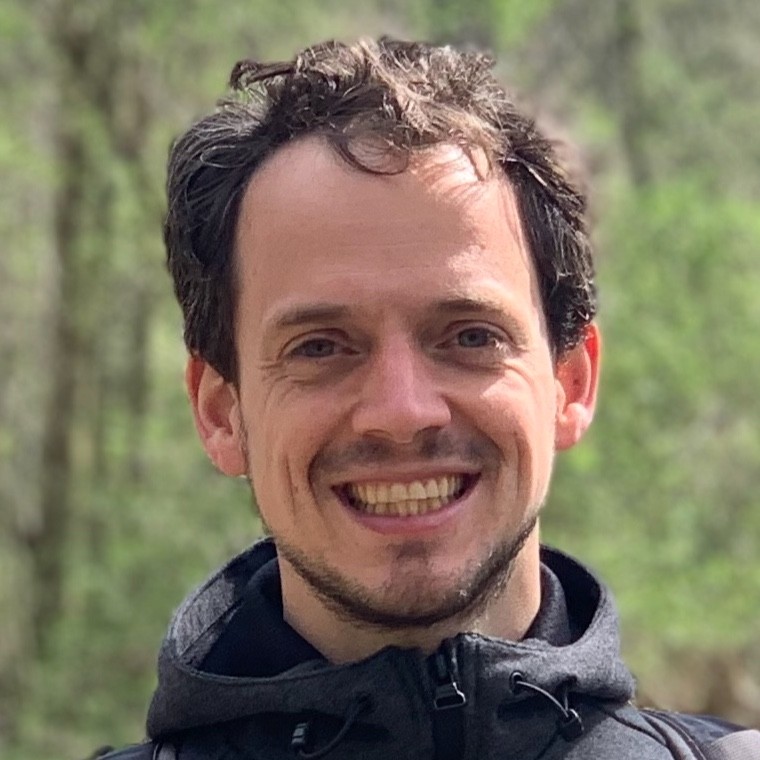
Xavier Damman
Talks about
Xavier Damman is a computer science engineer and entrepreneur based in Brussels. He first built Storify in Silicon Valley, which was acquired, before returning to Brussels where he co-founded Open Collective, a platform enabling groups to manage fundraising and finances transparently without needing their own legal entity or accountants. He was named a MIT Technology Review Innovator Under 35 (Belgium) in 2016. He has also been involved in community and civic tech projects in Brussels including Commons Hub Brussels, Citizen Wallet, DAO Brussels, and Citizen Spring.
Insights & takeaways
Xavier Damman's throughline is that the internet solved the problem of creating commons but never solved the problem of funding them, and everything he talks about traces back to that gap. He is explicit about it: the internet made it "trivially easy to create digital commons (open source projects, communities), but there is still no internet-native way for a community to receive money" 2. Open Collective exists to close that gap, and he frames it in almost civic terms rather than startup terms — "complete, don't compete. That's really what I want to do with Open Collective" 2. He wants people to see this as a legitimate successor to prior eras of cultural energy: garage bands in the MTV era, startups in the TechCrunch era, and now communities and cooperatives as "the new startup for the 21st century" 2. His advice to would-be founders is not to wait for a better plan — "definitely start today, don't wait" 2 — because the form itself, not just the idea, is what needs adopting.
A second consistent theme is distrust of top-down control and a preference for permissionless action. "You don't need to have anyone's permission to do what's the right thing to do" 2 is stated flatly, and it maps onto his critique of how funding and accountability currently work: "Today we are in this crazy situation where the people who are paid with our money are asking us to do work for them. That's upside down" 2. This is not abstract populism for him — it's a specific argument about fiscal hosting and reporting overhead, where Open Collective is meant to work "like WordPress for organizations," letting fiscal hosts share one legal entity, accounting and reporting so communities can focus on their actual mission instead of bureaucratic overhead 2. He extends the same logic to government: rather than subsidies, he wants states to create "islands of sanity" where organizations operating fully in open source and open data are simply exempt from filing reports, since the data is already public 2. He goes further and argues every government subsidy should default to being on the blockchain, on the reasoning that it's public money and that transparent recipients will naturally out-compete opaque ones for future project calls 2 — transparency as a competitive advantage rather than a compliance burden.
He's also candid about the technical maturity of his own vision. He calls the current Open Collective a "Toyota Prius" — a hybrid piggybacking on existing bureaucratic infrastructure — and describes the endpoint as a fully "electric" web3-native version where blockchain lets a community get a bank account in a few clicks without users ever needing to know blockchain is involved 2. This is a rare moment of a founder being explicit that the shipped product is a compromise version of the idea, not the idea itself. He backs this up with an evidentiary instinct rather than ideology: he points to the fact that over 5,000 local currencies run in Europe even though "the technology barely works," treating that persistence as a signal of latent demand and "a great place to start a technology project" 2 — in other words, look for where people are already forcing a broken tool to work, because that tells you where the real need is.
On the craft of building things, his stories are personal and specific rather than generic startup wisdom. He says things only started working for him in Silicon Valley once he stopped pitching and started listening, and that a weekend hack built around what people actually needed got picked up by TechCrunch overnight and opened his network and eventual co-founder 2. He pairs this with an explicit willingness to discard sunk work: don't be afraid to throw away months of work and start over "like an artist crumpling a sketch," since the learnings are never lost — Storify's product, he says, only took off after he scrapped the first version and started a new repo 2. This connects to his broader claim that "it takes time to become an overnight success" 2 and that hitting a nerve isn't about grinding harder but about tapping into what the world actually needs: "once you really tap into what the world really needs, it doesn't take long to hit a nerve" 2.
He's also unusually direct about the structural misalignments built into startup financing. He argues that cap table composition matters because of asymmetry of interests: a billionaire investor treats a few-million-dollar exit like casino chips worth re-rolling, while for a young founder the same outcome is life-changing, meaning the two parties are structurally not on the same side even when they appear to be partners 2. This is consistent with his instinct to build Open Collective around fiscal hosting and shared community infrastructure rather than around the venture-backed equity model — he's not just critiquing VC incentives abstractly, he's proposing an alternative organizational form as the fix.
Underlying all of this is a stated theory of personal change: "humans are great at adapting to an environment but bad at changing within one" 2, and since you become "the average of the five people you spend the most time with," the way to change yourself is to change your environment rather than trying to will yourself into a different behavior 2. He applies this same logic when he doesn't know what to work on next — instead of trying to force an answer, he designs the environment (places, people, ingredients) so the solution can emerge on its own 2, which is also why he says he trusts "the ecosystem, the environment, the community, that the answer will come," adding that once you've experienced that, "you are unstoppable" 2. It's a philosophy that treats naivety and fearlessness as necessary founder traits — "you need to be naive to be an entrepreneur, and to be fearless, to believe so much into something" 2 — while also being pragmatic about jurisdiction and friction: comparing life back in Belgium to a decade in the US, he notes plainly that "the amount of time I need to spend on bureaucracy compared to the US, it's night and day" 2. Even a small, practical gesture like offering free coworking space during a heatwave gets framed in the same vocabulary of shared resources — "that's what the commons are all about. Sharing resources" — showing that for Damman the commons isn't just an organizational theory but a daily practice.
- Things only started working in Silicon Valley when he stopped pitching and started listening — a weekend hack (Listimonkey) built around what people actually needed got featured on TechCrunch overnight and unlocked his network and co-founder.
- Don't be afraid to throw away months of work and restart from scratch like an artist crumpling a sketch — the learnings are never lost, and Storify's product only took off after he scrapped the initial product and started a new repo.
- Cap table composition matters because of asymmetry of interests: a billionaire investor treats a few-million-dollar exit like casino chips worth re-rolling, while for a young founder it is life-changing — their incentives are structurally misaligned.
- The internet made it trivially easy to create digital commons (open source projects, communities), but there is still no internet-native way for a community to receive money — that gap is the founding problem behind Open Collective.
- Open Collective works like WordPress for organizations: fiscal hosts share one legal entity, accounting and reporting so communities can focus on their actual mission instead of overhead.
- The current Open Collective is a 'Toyota Prius' hybrid piggybacking on existing bureaucracies; the fully 'electric' web3-native version uses the blockchain so a community gets a bank account in a few clicks — without users needing to know blockchain is involved.
- The 'new cool thing' after garage bands (MTV era) and startups (TechCrunch era) is starting a community or cooperative — a different animal than a startup, requiring both yang (attracting resources) and yin (caring for the community) energy.
- When people run local currencies at scale even though the technology barely works (5,000+ in Europe), that's a strong signal of latent demand and a great place to start a technology project.
- The best way governments can support citizen initiatives is not subsidies but getting out of the way — creating 'islands of sanity' where organizations that operate fully in open source and open data are exempt from filing reports, since all the data is already public.
- Every government subsidy should be on the blockchain by default: it's public money, and recipients with a track record of financial transparency will naturally win more project calls because they represent lower risk.
- Humans are great at adapting to an environment but bad at changing within one — you are the average of the five people you spend the most time with, so to change yourself, change your environment.
- If you don't know what to work on next, don't try to jump straight to the answer; instead design your environment (places, people, ingredients) so the solution can emerge.
Career
Roles
- Commons Hub BrusselsStewardJun 2024 – Present
- Open CollectiveStewardOct 2024 – Present
- Citizen WalletCore contributorApr 2023 – Present
- DAO BrusselsContributorOct 2021 – Present
- Citizen SpringCitizenMar 2019 – Present
- Regens UniteCore contributorMar 2022 – Dec 2024
- All for Climate DAOContributorSep 2021 – Dec 2024
- Open CollectiveCofounder & PresidentJun 2018 – Nov 2020
- Open CollectiveCofounder & CEOJan 2016 – May 2018
- Open CollectiveFounder & CEOMay 2015 – Jan 2016
- World Economic Forum#254factoryMember of the Social Media Global Agenda CouncilOct 2014 – Oct 2016
- LivefyreGeneral Manager of StorifySep 2013 – Feb 2015
- Storify.comCEODec 2011 – Sep 2013
- StorifyCofounderDec 2009 – Sep 2013
- Belgacom Skynet (Belgacom Group)Video Product manager2008 – 2009
- PublitweetFounderApr 2008 – Dec 2009
- Altran#17factoryConsultantOct 2007 – Apr 2009
Euroclear#45factoryWeb Content ManagerNov 2007 – Sep 2008
- Dynasite.beFounder and CTOJul 2002 – Sep 2005
- TRIBALFounder and CEOJul 1999 – Jun 2007
Education
- Universidad Politécnica de Madrid#130schoolIngeniero en informatica, Computer Science2006 - 2007
Université catholique de Louvain#4schoolMaster's degree, Entrepreneurship (CPME)2004 - 2007
- Faculté des Sciences Appliquées, UCLCivil Engineer, Computer Science2002 - 2007
From public career histories · 23 entries
Media & appearances
1- 2podcastSuperNova · 21 Mar 2025
Xavier Damman (Storify, Open Collective) recounts his Silicon Valley journey and argues for a system change based on open-source organizations, fiscal hosting, local currencies and community-driven 'commons' as the new startup model.