
Overview
AARDEX Group offers optimization services for drug development through effective monitoring of patient non-compliance in clinical trials. The company operates in the medical equipment manufacturing sector.
Key people
In the news
- Medication adherence is not a single behaviour, yet most of the theories we use to study it treat it as one. A new systematic review in Patient Preference and Adherence (Alfian et al., 2026), co-authored by AARDEX Group’s CEO Bernard Vrijens, Ph.D., examined how theoretical frameworks are used in empirical adherence research. The authors mapped each framework against the three phases of the ABC taxonomy: initiation, implementation and discontinuation. 🧭 Methods #PubMed and #Scopus were searched with no restriction on publication

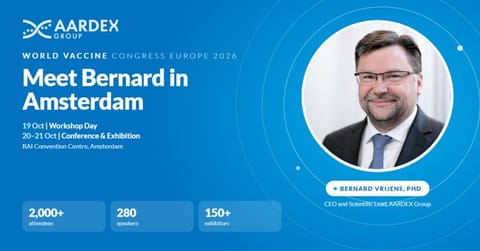
- Amsterdam, RAI, three days, 2,000+ people who think about vaccines for a living. Our CEO and Scientific Lead, Bernard Vrijens, Ph.D. is at The World Vaccine Congress Europe this week. If you spot him in the halls, say hello. He’s always up for a good conversation. Until 21 October at RAI Amsterdam. #WVCEurope #WorldVaccineCongress #AARDEX
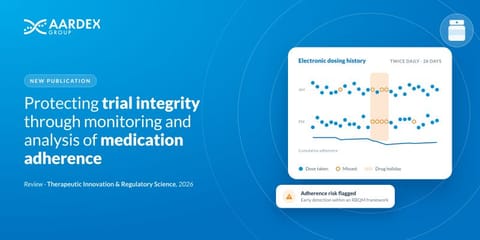
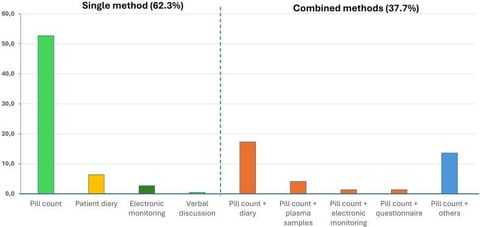
- When you know patients actually took the drug, you can trust what your trial is telling you. Pill counts and patient diaries can’t give you that certainty. Electronic dosing data can. Our CEO Bernard Vrijens, Ph.D. co-authored a new review in Therapeutic Innovation & Regulatory Science with Bruce B., Els Goetghebeur, Richard Zink, Rakhi Kilaru and Wallstrom, G.. Their argument: treat adherence as a trial risk from day one, measure it objectively and plan it into the estimand under ICH E9(R1). There’s a practical upside too: trials
- Just published in Pharmacological Reviews! “Medication adherence: An overlooked critical determinant of pharmacological effectiveness”. A new open-access review by Michel Burnier, Michel Azizi, @Pankaj Gupta, Przemyslaw Kardas, Marie P. Schneider and our CEO & co-founder Bernard Vrijens, Ph.D. Vrijens. The prescribed dose is only a surrogate for the dose actually taken. Yet adherence is still treated as an operational detail rather than a pharmacological variable. A few points that stood out: 🔹 In trials that failed their
- Thank you to the Guideflow team for recognizing the importance of reliable, objective medication adherence data in clinical trials. For us, it's particularly encouraging to see the value of measurement quality highlighted because understanding how patients actually take their medication is essential for generating reliable clinical evidence. We're proud to continue supporting pharmaceutical companies, universities, biotech organizations and CROs with our MEMS® ecosystem and MEMS Adherence Software. 🔗 Read the full comparison:

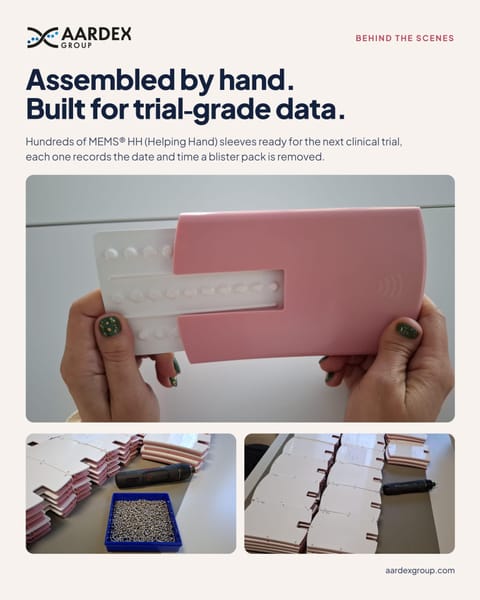
- In a clinical trial, knowing whether participants actually took their medication is everything. Pill counts and self-reports are often off, sometimes by a lot. And when adherence data is wrong, the trial results can be too. Helping Hand is our answer to that. The participant slides their usual blister pack into the sleeve, and that's it. Every time the blister is pulled out, the date and time are recorded automatically. No extra steps, no diaries, nothing new to learn. ✏️ What researchers get: - Adherence data that's 97% accurate,
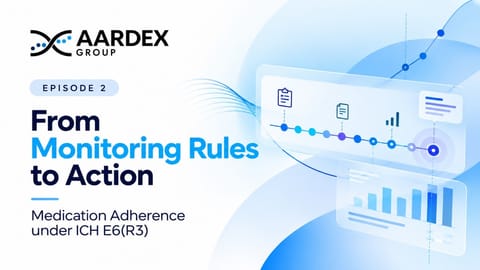
- In our latest Episode 1, we asked whether medication non-adherence should be managed as a Critical-to-Quality factor and how that decision translates into a defined monitoring strategy. But defining the strategy is only the beginning. What happens next? How do we turn monitoring rules into action during the trial? 🎥 In Episode 2, we move from assessment to operationalisation and look at how adherence monitoring can be translated into practical actions while remaining aligned with ICH E6(R3), GCP and Quality by Design
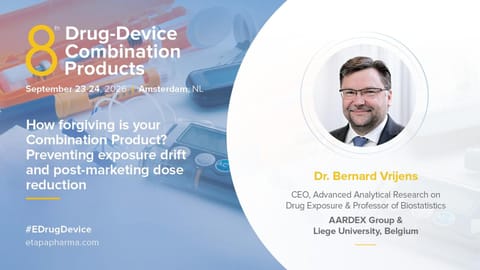
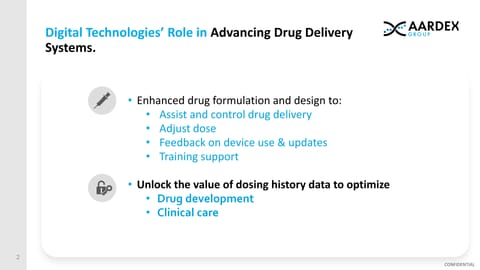
- We were really pleased to see how much interest Bernard Vrijens, Ph.D. presentation generated yesterday at the 8th Drug-Device Combination Products conference. Bernard received a lot of questions after the session, possibly the most we’ve seen after one of our recent presentations, so we thought it would be useful to share the slides openly here as well. The presentation looks at product forgiveness, exposure drift and what happens when real-world dosing starts to deviate from the intended regimen. If you have any additional

Alumni
 Bernard VrijensGeneral Director→Invited Professor at University of Liège
Something wrong or missing? Send an update. Fixed within 24 hours.