
Overview
Weave is a spatial biology software platform that aligns spatial and molecular data to explore cellular neighborhoods and understand disease mechanisms. The platform enables analysis of multicellular context and tissue architecture by fusing spatial, molecular, and metadata into a unified analytical framework with end-to-end analysis workflows and visualization tools.
Key people


In the news
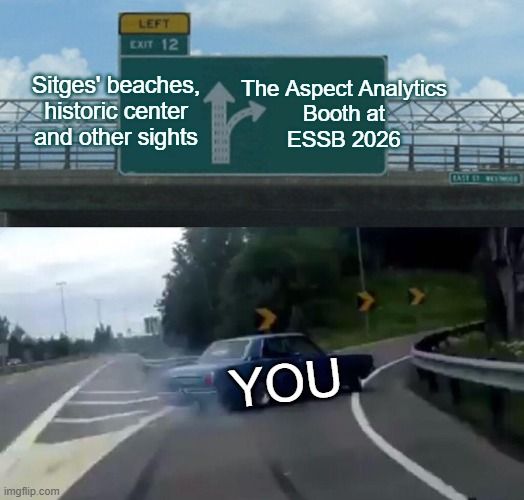
- Not long to go until #ESSB2026 kicks off Sitges! Aspect Analytics is proud to exhibit this year - team members Alice Ly and Wanqiu Zhang are ready to meet you at booth 19. Book your time for a demonstration about how #Weave now! #spatialbiology #spatialmultiomics #spatialtranscriptomics #spatialproteomics #spatialmetabolomics #histology #cancerresearch #autoimmunedisease #bioinformatics #ai4smox
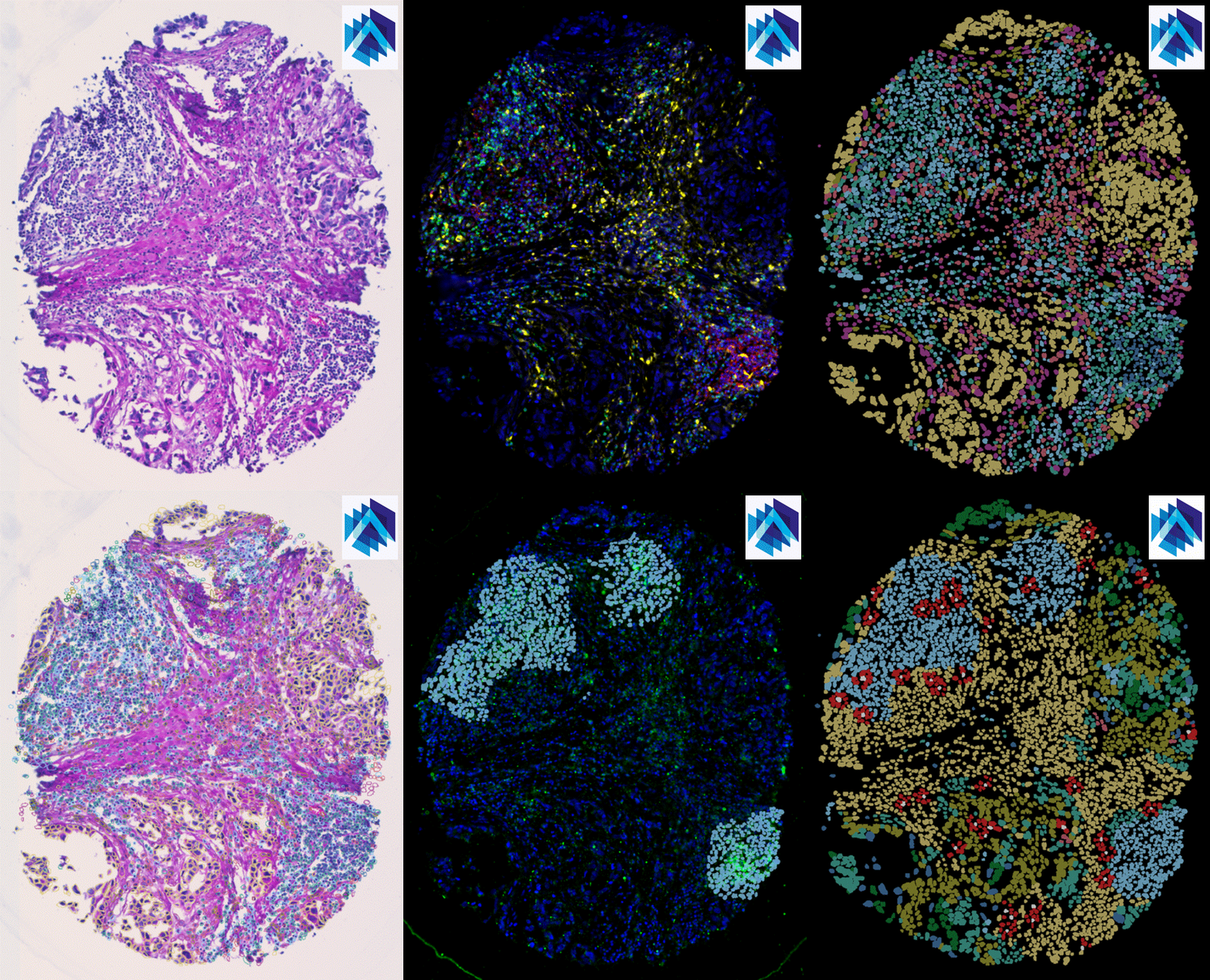
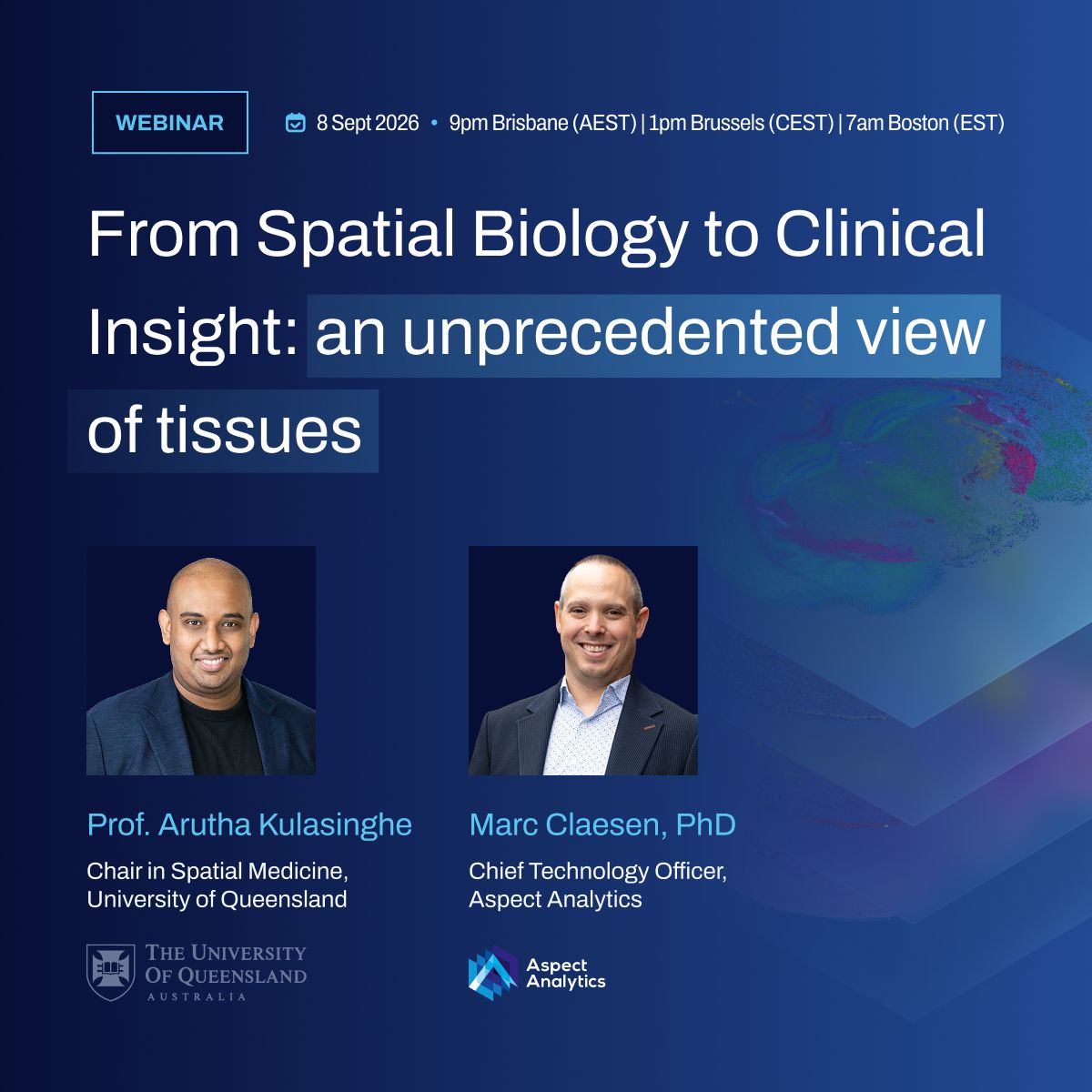
- Missed our live webinar? It’s now available on‑demand! See Prof. Arutha Kulasinghe and Marc Claesen discuss spatial biology's promise, the analytical bottleneck it faces, and how Weave helps researchers to get from spatially-resolved data to biologically-resolved insight. Learn about: ✅ Arutha’s take on where spatial biology is headed and where it can be useful ✅ How Weave integrates modalities & decodes cellular neighbourhoods at scale from Marc ✅ A real case study from Arutha’s lab where immune insights into triple negative breast
- Just over two weeks until #ESSB2026 and we are proud to be co-authors of three posters at this year’s meeting! ➡️ Investigation of cellular neighbourhoods and immune checkpoint inhibition in triple-negative breast cancer Presented by Wanqiu Zhang P066, poster session 1, Sept 28th ➡️ Spatial Multi-Omic Investigation of Lupus Nephritis Indicates Influence of Cellular Composition on Pathological Features” Presented by Alice Ly P082, poster session 2, Sept 29th ➡️ Integrated Spatial Multiomic Mapping of Tumor-Immune Niches
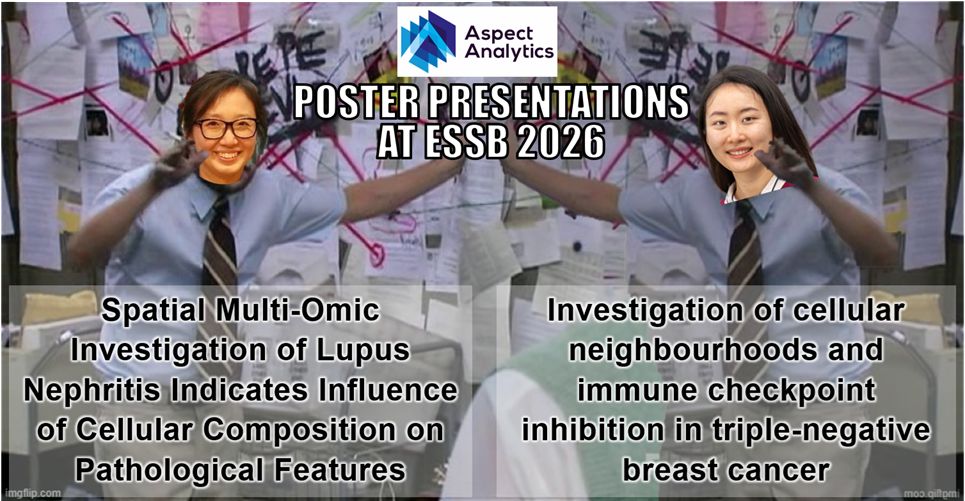
- Just over two weeks until #ESSB2026 and we are proud to be co-authors on three posters at this year’s meeting! ➡️ Investigation of cellular neighbourhoods and immune checkpoint inhibition in triple-negative breast cancer Presented by Wanqiu Zhang P066, poster session 1, Sept 28th ➡️ Spatial Multi-Omic Investigation of Lupus Nephritis Indicates Influence of Cellular Composition on Pathological Features” Presented by Alice Ly P082, poster session 2, Sept 29th ➡️ Integrated Spatial Multiomic Mapping of Tumor-Immune Niches
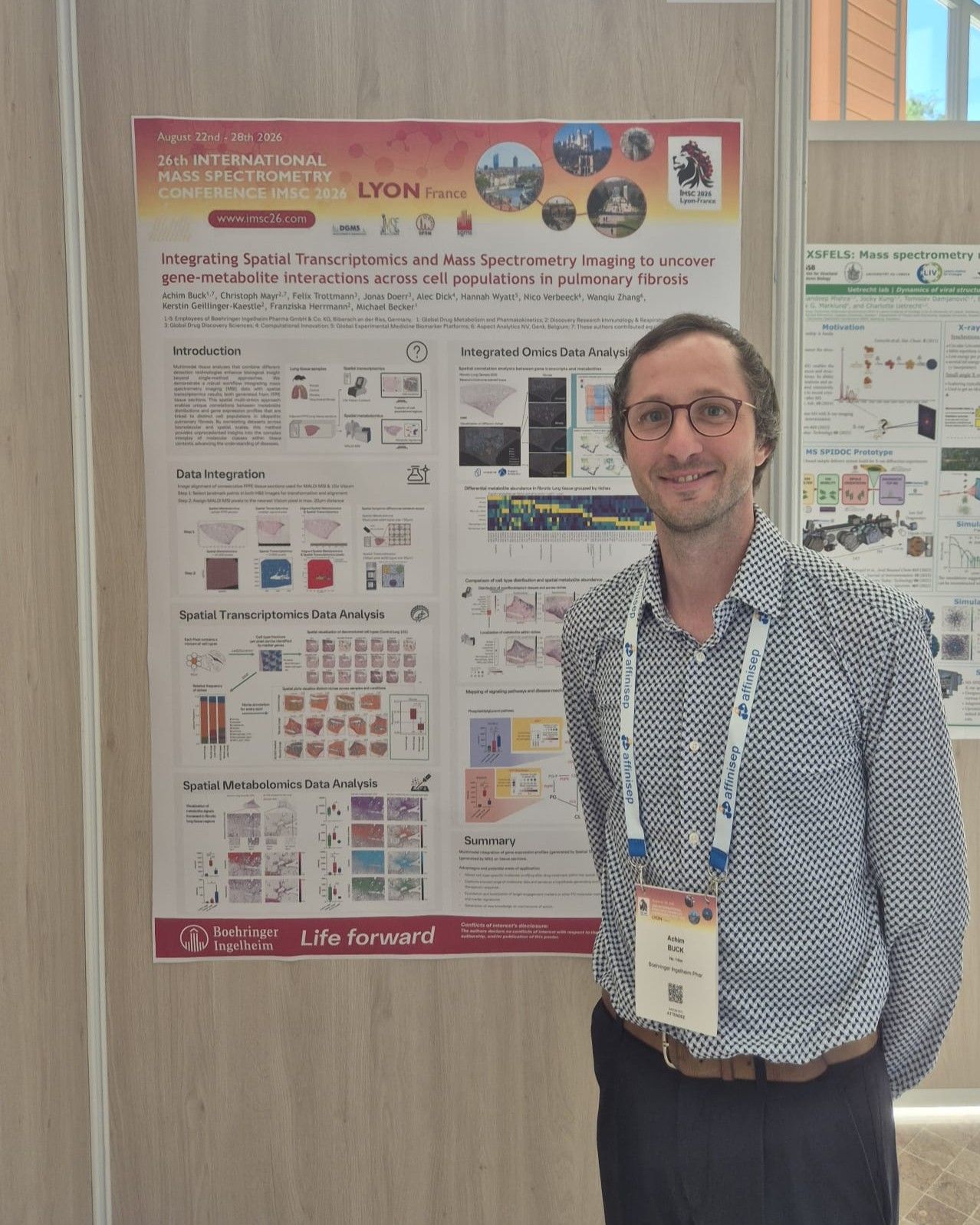
- The power of #spatialmultiomics is being able to access the bigger biological story, and it's changing how #pharma researchers understand disease and build the next generation of treatments. At #IMSC2026, Achim Buck (Boehringer Ingelheim) presented a study combining #massspecimaging-based #spatialmetabolomics with #spatialtranscriptomics and histology from idiopathic pulmonary fibrosis models. Together, these modalities revealed unique correlations between metabolite distributions and gene expression linked to distinct
- There's still time to grab a seat and join the 100+ scientists who have already registered for tomorrow's webinar Here's what you'll leave with: a clearer picture of where spatial biology is headed, a first look at how Weave decodes tumor immune microenvironments at cohort scale, and direct access to Prof. Arutha Kulasinghe and Marc Claesen, PhD, during the live Q&A. And tell us in the comments: in Spatial Biology, what’s your biggest bottleneck? - To generate the multiomics data? - To integrate it? - To trust the conclusions and
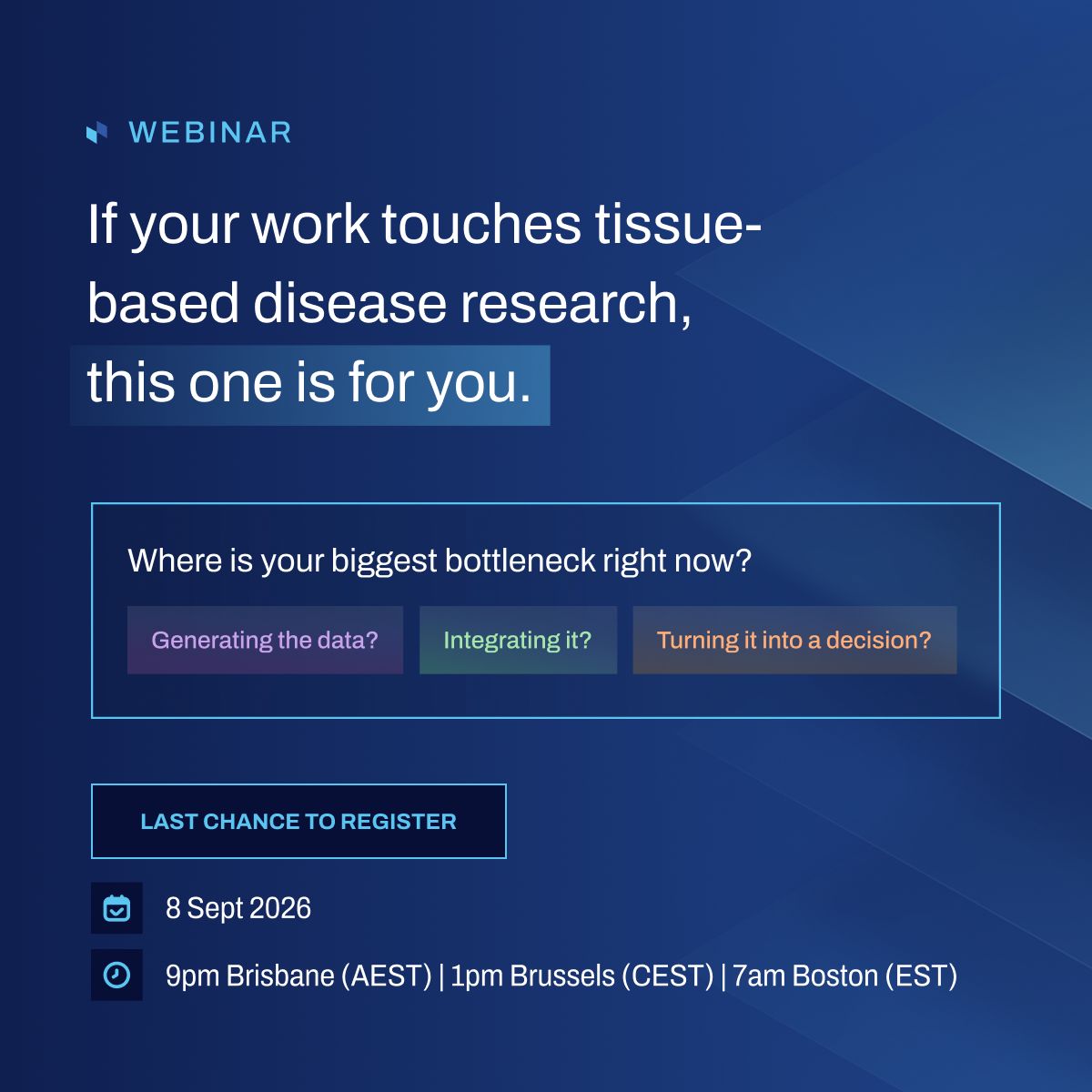
- Did you already register for our next-week webinar “From Spatial Biology to Clinical Insight: an unprecedented view of tissues”? Here's what you'll walk away with: 1️. Where spatial biology is headed, from identifying the location of cells to multi-omic atlases 2. How Weave integrates modalities & decodes cellular neighbourhoods at scale 3. A real case study on triple-negative breast cancer tumor immune insights and spatial multiomics data Register Now: https://lnkd.in/eAG4q7up Date: 8 Sept 2026 | 1 pm Brussels (CEST) | 7 am
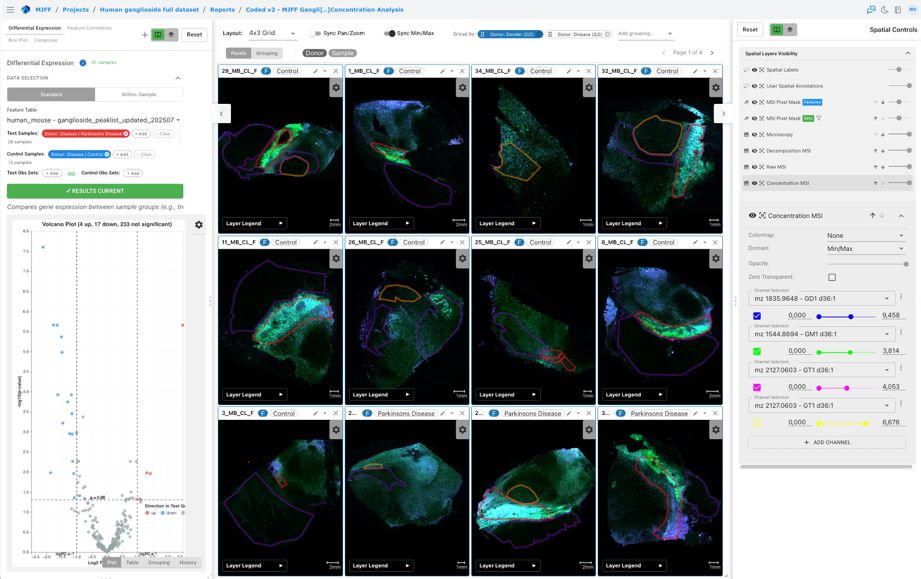
- Spatial multi-omics gives us a deeper view of the molecular changes driving disease, but it also generates huge, multi-platform datasets. You need software built to scale. 𝗪𝗲𝗮𝘃𝗲 𝗶𝘀 𝘁𝗵𝗮𝘁 𝘀𝗼𝗹𝘂𝘁𝗶𝗼𝗻. In our #IMSC2026 poster with University of Wollongong University of Sydney Merck and Lipidomics Consulting, our team mapped brain ganglioside phenotypes across 42 human tissue sections (14 control, 28 Parkinson's Disease) using quantitative mass spec imaging. With Weave, we: ✅ Co-registered MSI data with Luxol Fast Blue

Something wrong or missing? Send an update. Fixed within 24 hours.