
Overview
BEiNG-WISE (Behavioral Next Generation in Wireless Networks for Cyber Security) is a collaborative research coordination network operating through working groups on cybersecurity, cybercrime, security approaches, human factors, and legal aspects in wireless systems. The initiative addresses security challenges in the always-connected world driven by Machine Learning, AI, and emerging wireless technologies.
In the news
- We are pleased to announce a new joint publication from our network: “Human–AI Interaction in Cybersecurity: A Theoretical Study on Cognitive Bias and Decision Reliability.” Authored by Dolantina Hyka, Elva Leka, PhD, Luis Lamani, Marija Milošević Stokić, and Ali Hassan Sodhro Erasmus Mundus Fellow, CAS PIFI Fellow, the article has been published in the International Journal of Innovative Technology and Interdisciplinary Sciences. Tultech Journals The study examines human–AI decision-making in Security Operations Centers
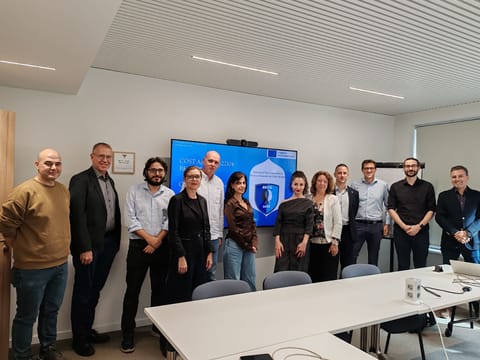
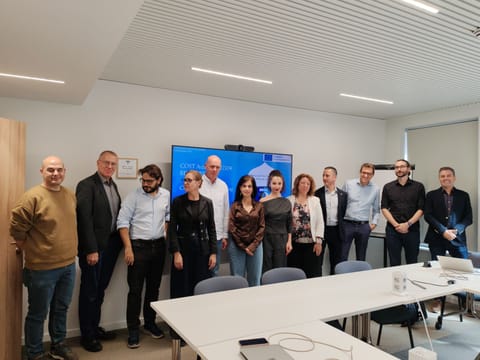
- A productive BEiNG WISE Core Group meeting in Brussels 🇧🇪 It was good to come together in person with the Core Group of COST Action CA22104 BEiNG WISE to reflect on where we are and, more importantly, to shape the final year of the Action. Loscrì Valeria Iraklis Symeonidis, Ph.D. Mauro Conti Martin G. virginie Deniau Davide Andreoletti Vesna Dimitrova Isabella Corradini Hartmut Aden Marcel Moritz Salko Kovačić Sonay Caner-Yıldırım Mohamad Gharib Ivan Chorbev Our discussions focused on some of the key upcoming outputs and
- We are pleased to share a new joint publication from our network, recently published in the Journal of Lightwave Technology (Early Access)! The paper, titled "A Cooperative Jamming Scheme using mirrors against Eavesdropping in Underwater Optical Communication," addresses the critical and largely unexplored challenge of ensuring secure optical wireless communication in underwater environments. Key highlights from the research: 🔹 Proposes a novel physical-layer jamming scheme utilizing multi-mirror reflection and cooperative
- We are pleased to announce a new joint publication from our network: “AI and Blockchain for Secure 6G Wireless Communications: Challenges, Opportunities, and Research Directions.” Authored by Evangelia Konstantopoulou, Gurjot Singh Gaba, and Nicolas Sklavos, this work is featured as Chapter 7 in Elsevier’s newly released book, AI and Blockchain for Wireless Communications: Resilient Together (Eds. Ferheen Ayaz, Zhengguo Sheng). The chapter provides a comprehensive roadmap for leveraging AI and blockchain to build secure, resilient,
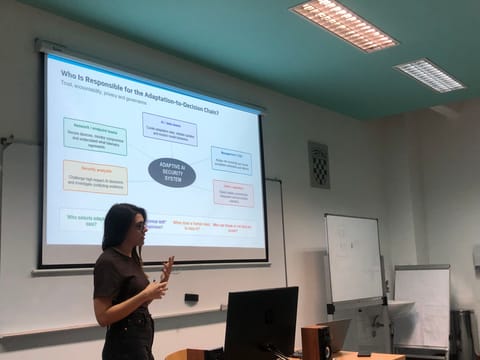
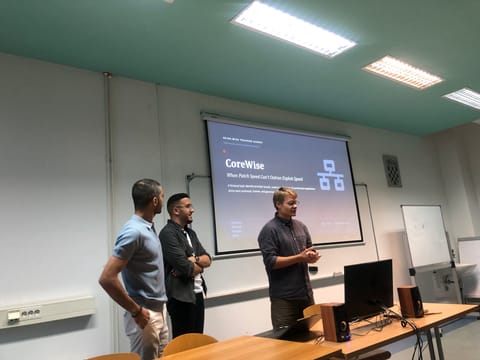
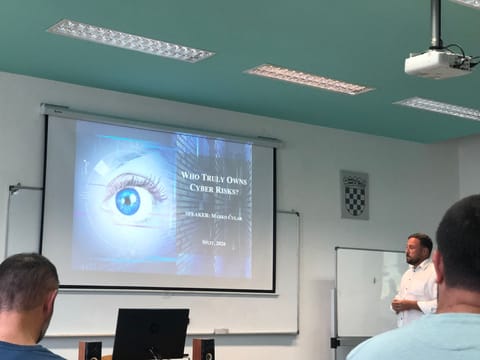
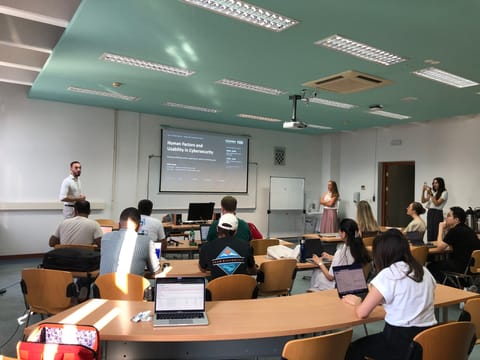
- The 5th BEiNG-WISE Training School in Split has officially concluded with a final day dedicated to trainee group presentations. Day 5 provided an opportunity for participants to apply the interdisciplinary knowledge gained throughout the week to concrete cybersecurity challenges. Working in groups, the trainees presented integrated responses covering the technical, human, and governance aspects of various scenarios: 🔹 Group 1: Adaptive AI Security System – Exploring how to identify attacker interference in AI security systems
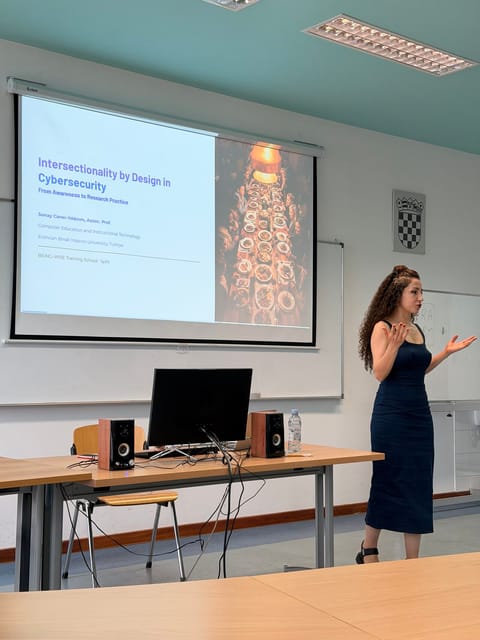
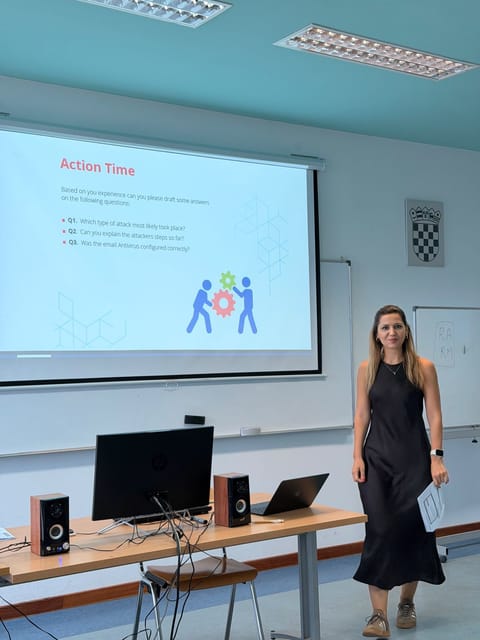
- Day 4 of the 5th BEiNG-WISE Training School in Split brought a dynamic mix of inclusive design, interactive incident investigation, and forward-looking threat analysis. Day 4 Highlights: 🔹 Intersectionality by Design: Sonay Caner-Yıldırım opened the day by exploring how intersectional factors can be meaningfully integrated into cybersecurity research. The session provided practical guidance on transitioning from awareness of overlapping exclusions to making concrete, gender-sensitive research decisions regarding methods, data,
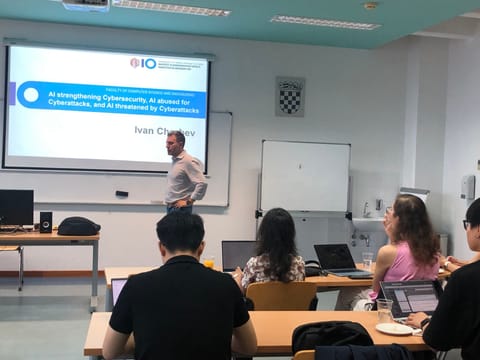
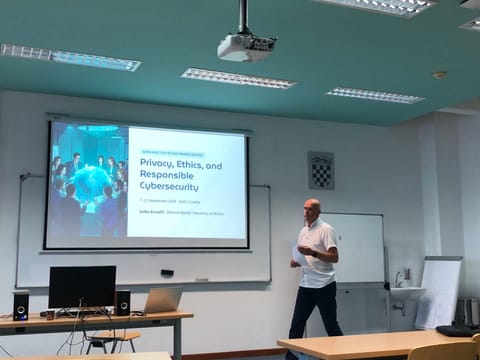
- Day 3 of the 5th BEiNG-WISE Training School in Split focused on the intersection of artificial intelligence, ethics, and regulatory frameworks in cybersecurity. Day 3 Highlights: 🔹 AI and Data-Driven Approaches: Ivan Chorbev discussed the application of artificial intelligence and machine learning for threat detection, anomaly detection, and incident response. The session also addressed the limitations, risks, and trust issues associated with AI-based solutions, emphasizing the necessity for transparency, robustness, and
- Day 2 of the 5th BEiNG-WISE Training School at Faculty of Economics, Business and Tourism - University of Split provided an in-depth look at two critical pillars of modern cybersecurity: the human element and the protection of high-impact environments. Day 2 Highlights: 🔹 Human Factors and Usability: Led by Mislav Kovač, the morning sessions examined the role of human behavior in security incidents. The discussions covered how users and decision-makers interact with security technologies, addressing key issues like social

Something wrong or missing? Send an update. Fixed within 24 hours.