
Key people

In the news
- November takes us from Barcelona to Helsinki. → Smart City Expo World Congress, Barcelona | 3–5 Nov → Slush, Helsinki | 18–19 Nov Two very different events. One message for both: nature-based climate adaptation only works if the nature keeps working. We treat it as the critical infrastructure it is, from the investment case to the years after. Want to meet? Get in touch with Nora Van Cauwenbergh or Julien Moreau
- Valletta didn't need another climate plan. It needed one that counted health. Heat, noise, polluted air and too little green space don't just shape a city. They shape who gets sick. With Barcelona Institute for Global Health (ISGlobal) and Malta's Environment & Resources Authority, we built a way to put both on one map, and to price the difference. ✅ Up to 2–4°C less heat stress in high-risk zones ✅ Better access to green space for 32% of residents ✅ A return on investment of more than 4:1 All from scenarios shaped with the
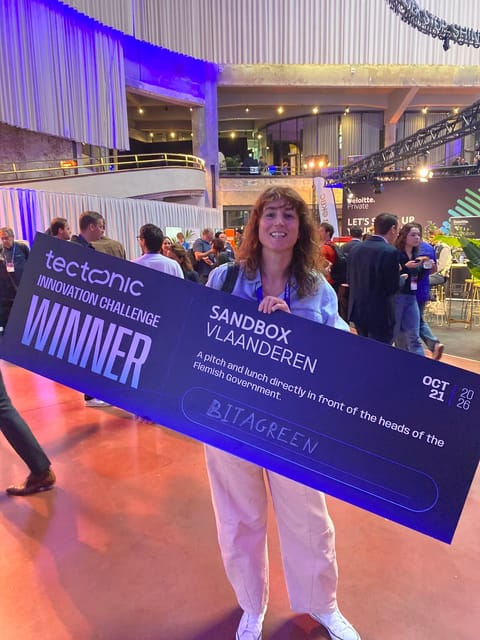
- Flanders, as many governments, isn't short on climate data. It's short on ways for people to use it. Buildings, flood risk, air quality, noise maps. The open geodata is already there. Most citizens never touch it. That was the challenge at Tectonic in Ghent. Our answer won. → Ask the map a question in plain language → See what climate risk means for your home → Find out what you can actually do about it Tech for good isn't about having the newest AI. It's about putting deep expertise and good judgement behind it, so it helps the
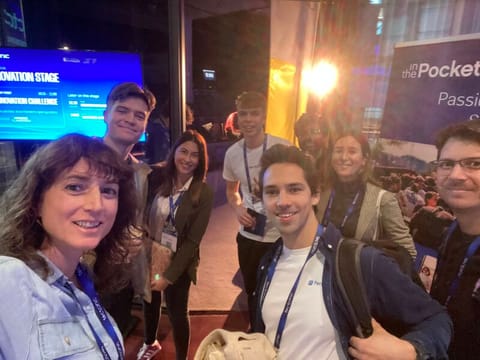
- Being in Silicon Valley is a dream for a lot of startups. But I’m European at heart, so last week I went to the version we have in Ghent: Tectonic. And… not to brag… we took home a prize! 🏆 BitaGreen won one of the two innovation challenges.The challenge was about Flanders’ open geodata. There’s so much of it (buildings, flood risk, air quality, noise maps and a lot more) but citizens hardly use it. So how can AI help? We proposed an assistant where you can just ask the map a question in plain language. And then we went further.
- Proving that climate adaptation pays off isn’t the hard part. Working out who pays for it is. Cities know what works against heavier rain and hotter summers: → urban trees → green roofs → rain gardens → permeable pavements. The benefits are real. But they land with residents, property owners, insurers and the health sector. Not in the city’s budget. So green plans stay ambitious on paper and unfunded in practice. Over the past months, we worked with the stad Leuven and the University of Antwerp on “Resilient Leuven 2050”, an
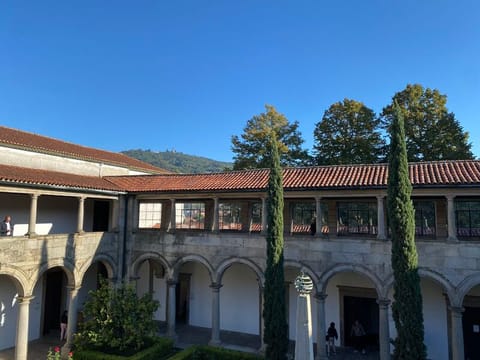
- Last week we took VISTA out of the office and into the streets of Guimarães. Guimarães is where Portugal was born, and this year it’s the European Green Capital. It’s also the first city to deploy VISTA as a paid pilot through SPACE4Cities, a pre-commercial procurement programme where VISTA was selected after three rounds of competition. We develop VISTA with the support of TreeSense and Climate Scale. A green city comes with hard questions: → With more than 9,000 trees to manage, which do you protect first in a drought? → How do
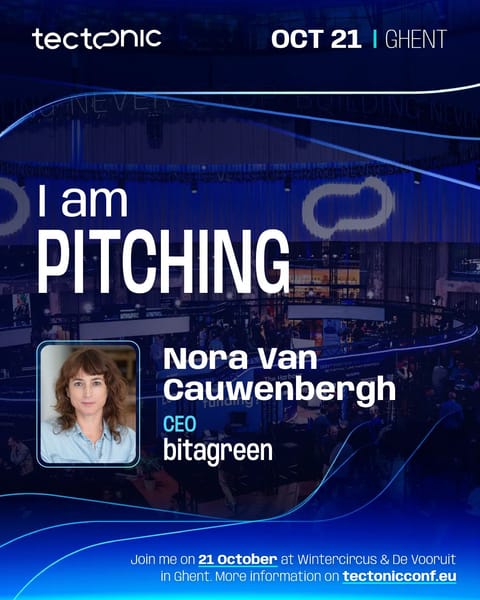
- BitaGreen has been selected for the Sandbox Flanders Innovation Challenge at Tectonic. 📣 On Wednesday 21 October, we're pitching at Wintercircus Ghent. Our proposal: Geopunt for resilience action. Climate risk data is public. Knowing what it means for your own street isn't. We want to close that gap, so citizens can understand the spaces they live in and become actors of change in them. → Urban climate resilience → Nature-based solutions → ML-driven optimisation → Adaptation finance We're proud to share the stage with
- Urban trees aren’t hard to value because their benefits are unclear. They’re hard to value because we don’t know enough about how they grow. New research from Ali Eslami (the first publication from his PhD at the Department of Water and Climate, VUB, within the 100KTREEs Project) takes that on directly. The problem it starts from: two cities, two tree inventories, almost nothing in common. Different fields, different levels of detail, different years. Before you can say what a tree will deliver, you need a consistent way to

Something wrong or missing? Send an update. Fixed within 24 hours.