
Overview
Founded in 2022 in Antwerp by Stijn Gysemans, Vitalie Schiopu, Laurent Moyersoen, and Ruben Pelckmans, ClimateCamp was initially focused on helping companies in the food and beverage sector measure and reduce their carbon footprint. The platform has since expanded to serve food manufacturers and packaging businesses more broadly, reflecting the widening scope of EU sustainability reporting obligations.
Scope 3 emissions, which cover indirect emissions embedded in a company's supply chain, are typically the largest component of a corporate carbon footprint and the hardest to measure. They require engaging hundreds of suppliers to collect activity data. ClimateCamp uses AI to automate supplier data collection and emissions calculations, reducing a process that typically requires significant manual effort.
The company has over 800 companies sharing data on its platform, with a target of 2,000 by year-end. In its seed round, ClimateCamp raised EUR 3.5M led by Expon Capital, with additional backing from VLAIO, Luxembourg's Ministry of the Economy, KBC, PMV, and Birdhouse Ventures. CSRD and other EU sustainability reporting mandates are creating structural tailwinds for the category.
Funding & milestones
1 events found for ClimateCamp · 2025
SeedVenture / equityDetails€3.5M
Reported amount €3,500,000
Source not attached to this recordDeal record
Recorded history so far. Original currencies are preserved; amounts in different currencies are not added together. Debt, grants, acquisitions and listings are separate event types. Undated events appear last.
Profile narrative
- Seed, EUR 3.5M: Expon Capital (lead), VLAIO, Luxembourg Ministry of the Economy, KBC, PMV, Birdhouse Ventures
Key people
In the news
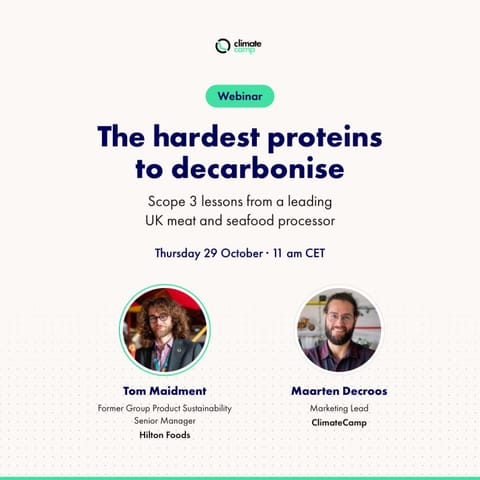
- Beef, lamb and seafood are among the hardest proteins in the food system to decarbonise. 🥩 Livestock emissions come from enteric methane, feed and manure, spread across thousands of farms. Seafood’s footprint varies with every vessel, gear type and fish stock, and until recently there was no reliable way to measure it. So how do you cut Scope 3 emissions when margins are razor-thin and decarbonisation takes more than renewables and electrification? How do you prove the ROI to retailers, and get farmers to invest in new practices
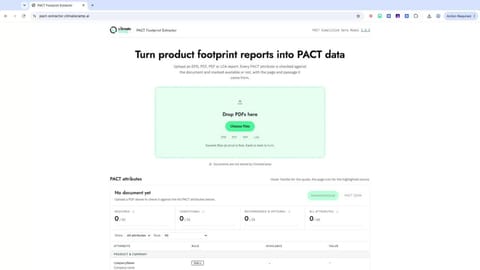
- Nobody got into sustainability to spend their time copying numbers out of PDFs. Yet here we are, scrolling through a bunch of EPD's, PCFs and LCAs, hunting for a value hiding somewhere around page 30. So we built a free tool that does most of the work for you. 👇 📌 https://lnkd.in/eUZ_7kBj The PACT Footprint Extractor reads your suppliers product reports, pulls out the product data and checks it against the #PACT framework. It gives you an overview of what’s there and what's missing, with page references so you can double-check
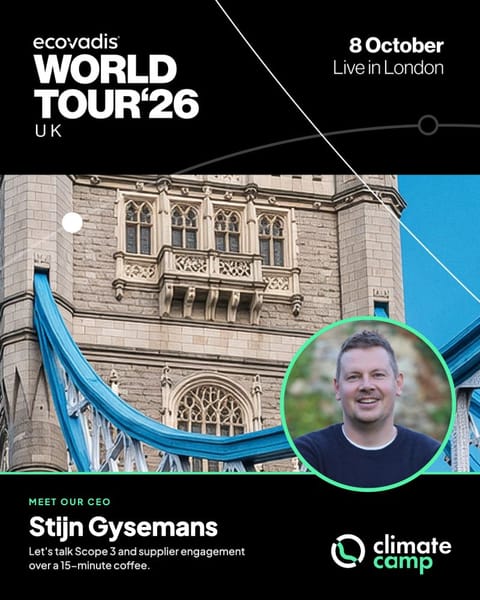
- Tomorrow our CEO Stijn Gysemans 💚🌍🤝 will attend the EcoVadis World Tour '26 in London at One Great George Street. Are you going too? If you're in procurement or sustainability, he'd love to talk Scope 3 decarbonization with you: → Moving from industry averages to real supplier emissions data → Making supplier progress actually show up in your Scope 3 → Modelling how value chain reduction measures impact your footprint Send him a message on LinkedIn or drop a ☕ below, and the coffee's on us! #Scope3 #SupplierEngagement #EcoVadis
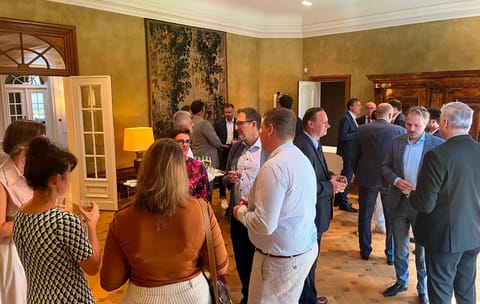
- Yesterday we brought multiple construction companies together at the Residence of the Luxembourg Ambassador to talk about #Scope3. It doesn't happen often that you get key people from companies who make up each other's Scope 3, or who share the same suppliers. Reducing it is as much about getting the right people in a room as it is about technology or data. We shaped our guest list deliberately around construction, because the sector is arguably more exposed to Scope 3 than most 🚧 - The value chain is a complex web of
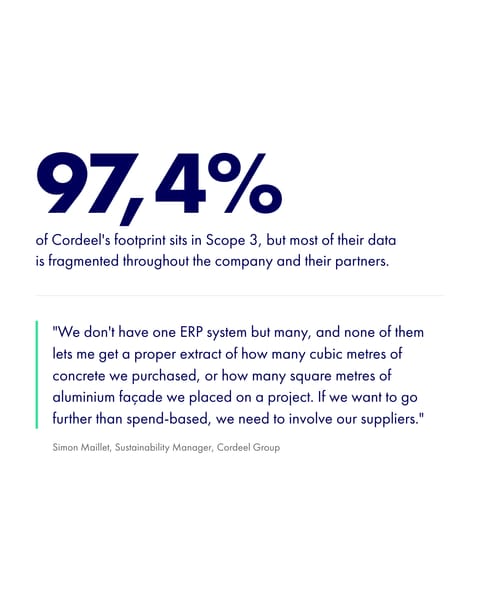
- Setting a #Scope3 target without a precise inventory is just wishful thinking. That's why Simon Maillet, sustainability manager at Cordeel Group, refused to set one for 2 years. With 97.4% of their footprint in purchased materials, using spend-based estimates were just too inaccurate to base targets on. He first tried fixing the data himself: "I sent emails to around 25 companies asking for their footprint. The feedback was really low, and with a small team, it's really hard to reach out to 100 suppliers effectively." So Cordeel
- Only 41% of suppliers reply to a carbon data request. And that's not even taking into account the quality of the data. So what does your supplier response rate look like? From our experience, it's not the supplier's fault, nor malice on their part. Most of the time they really do try. However they are swarmed with dozens of requests, some vague, some hugely detailed, often for a product that's only a fraction of their revenue. To help you improve that process, we summarised 5 easy-to-implement tips from our experience engaging
- The biggest lever we can give sustainability teams and their suppliers is time. Cutting the hours they spend on supplier data, without losing the quality or the insights underneath. That's why we built the ClimateCamp Extraction agent. 🤖 Supplier engagement is really about two things: reducing uncertainty, and increasing cooperation. However the process starts the same way every year: processing sustainability reports, PCFs, LCAs, or other relevant documentation And it's a problem at every size. Our biggest customers have
- Last week, ClimateCamp and ResultX were selected as one of the top 3 solutions in a pitching contest for a challenge set by Algemene Bouw Maes nv via Scaleup Flanders. 🎉 Our co-founder Ruben Pelckmans took the stage alongside Andries Paesen from ResultX during Love Tomorrow. Together they pitched a solution for predictive, decision-driven carbon intelligence in construction: transforming CO₂ data beyond reporting into a live parameter for pricing, planning and material decisions. The challenge, set by Algemene Bouw Maes nv, is a


Related profiles
Something wrong or missing? Send an update. Fixed within 24 hours.