
Overview
Codux empowers service teams to deliver exceptional, proactive value by moving from reactive firefighting to strategic impact. The company combines deep business experience and process expertise to help service departments leverage powerful tools effectively and prove their impact on customer loyalty and growth.
In the news
- Choose your own adventure" is fun when you're trying to rescue the princess from the dragon and save the kingdom. Not so much when you're trying to return a shipment. Unfortunately, most contact pages still feel like a CYOA experience. You get an email address, phone number, chat widget, web form… and you’re not sure which one you should pick. Most organizations do this because they think offering more choices equals better service. But when you don't steer people, they just pick the loudest option. Or worse, they email and call at
- 𝘑𝘶𝘴𝘵 𝘰𝘯𝘦 𝘮𝘰𝘳𝘦 𝘤𝘩𝘢𝘯𝘯𝘦𝘭. 𝘛𝘩𝘦𝘯 𝘦𝘷𝘦𝘳𝘺𝘵𝘩𝘪𝘯𝘨 𝘸𝘪𝘭𝘭 𝘣𝘦 𝘧𝘪𝘯𝘦. 𝘙𝘪𝘨𝘩𝘵?” Nope. Don't just add channels without thinking! If there's an increase in contact volume, most customer service departments tend to open another channel. A live chat widget here, a WhatsApp integration there, and who knows, a fax machine if you're dealing with really old-school customers. It feels like you're being more accessible, but in reality, adding channels without a clear strategy usually does more harm than good.

- Even if you've left school years ago, some reflexes are hard to get rid of! During our workshops, we ask participants to grade themselves on a service transformation assessment. It's a grid with 5 pillars on a 1-to-5 scale, and we sometimes see those school instincts kick back in: “𝘐 𝘸𝘢𝘯𝘵 𝘴𝘵𝘳𝘢𝘪𝘨𝘩𝘵 5𝘴 𝘢𝘤𝘳𝘰𝘴𝘴 𝘵𝘩𝘦 𝘣𝘰𝘢𝘳𝘥.” It’s a natural reflex for some, but in customer service, trying to get top marks across the board is a trap. If you try to build an agentic self-service portal, a conversational AI search

- If you're just managing your tickets, you're doing it wrong. Most customer service teams are stuck in a reactive cycle: you wait for the phone to ring and try to close tickets as fast as possible. Others try to get organized, but end up building processes that only make sense internally. So, how do you actually build a proactive service organization? First, figure out where you’re currently at. Is your service delivery reactive, structured, or proactive? Do you model your processes and way of working around yourself, or your

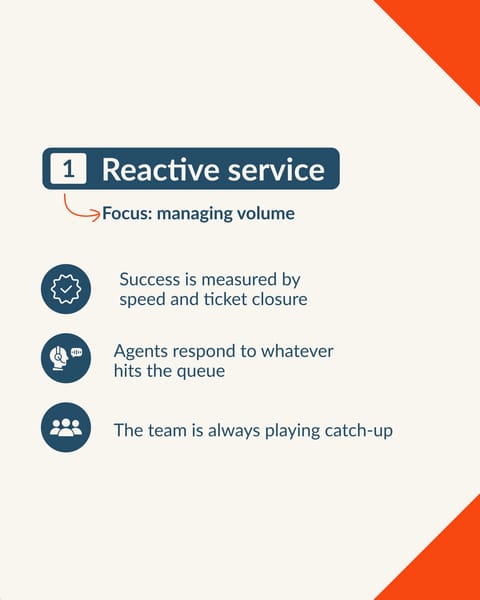
- Does your service team have time to anticipate customer issues, or are they just surviving? There are the three levels of maturity for service organizations: reactive, structured and agentic. Depending on the level you’re at, the experience for both your agents and customers will be different. 1️⃣ Most contact centers start in 𝗿𝗲𝗮𝗰𝘁𝗶𝘃𝗲 𝗺𝗼𝗱𝗲: you open up phone lines and inboxes, wait for tickets to pile in, and measure success by how fast agents can close them. 2️⃣ The next step is setting up 𝗮 𝘀𝘁𝗿𝘂𝗰𝘁𝘂𝗿𝗲𝗱
- Looking for a quick win for your customer service? Make sure it won't turn into a quick loss. For example, a Dutch delivery company wanted to go the extra mile for their customers, so they built an AI bot to handle customer questions. Since it seemed like a minor project, they just hooked it up to their knowledge base, and put it live on their website. But things started going downhill fast. Because they rushed the bot out without involving the actual customer service team, it started hallucinating, giving out wrong information, and

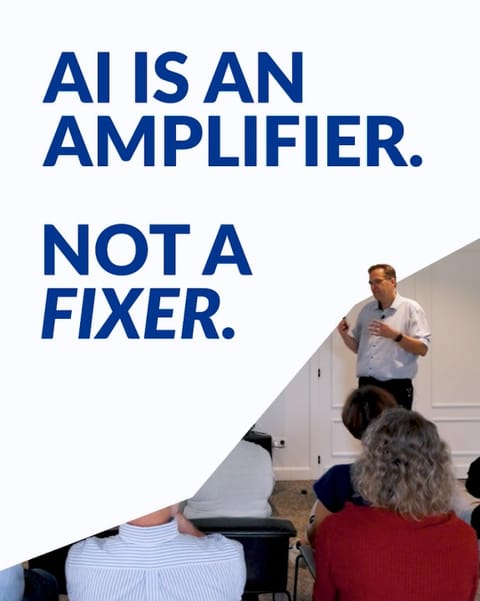
- Thinking of using an AI bot to clean up your customer service? Don't. AI is an amplifier, not a fixer. If your operations are already messy, you won’t fix the problem. You’ll just automate the chaos that’s already there. That’s because AI can’t fix things like bad data, broken routing, or confusing channels. It simply takes whatever setup you have today and makes it faster. So sure, if your foundation is solid, AI will make it better. But if it isn’t, you just end up frustrating more customers, much faster. Before you invest in
- Pick the right tool for the job. You don't need an expert for everything! Depending on their issue, customers have different needs. Treat a complex technical issue like a quick password reset, and you’ll probably frustrate your customer. Throw a human agent at every simple question, and you’ll burn through their motivation, along with your budget. So, before you start tweaking channels and buying new tools, the first thing you should do when trying to improve your customer service is to step back and look at your service model. → The




Something wrong or missing? Send an update. Fixed within 24 hours.