
Overview
The platform enables users to investigate financial alerts with full context, generate audit-ready decisions, and continuously improve detection rules through machine learning from investigations and emerging scenarios. Datavillage automates the analysis and decision-making process for fraud and compliance teams.
In the news
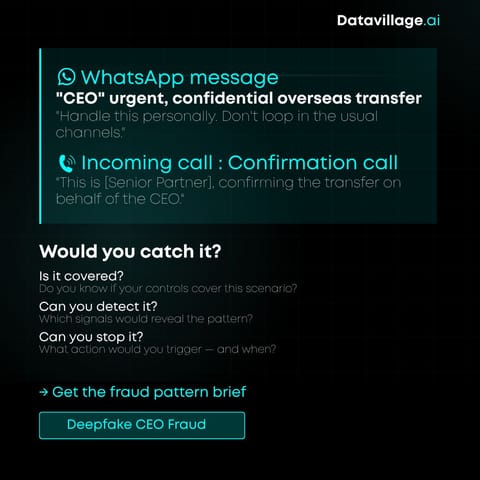
- Scams don't only target bank customers. They target the banks themselves. 💬 A WhatsApp message arrives. It looks like it's from the CEO — urgent, overseas, confidential, handle it personally, skip the usual channels. ☎️ Minutes later, a call confirms it. A senior lawyer, a voice you'd recognize, backing up the request. ✅ The transfer gets authorized. That's what happened at 𝐅𝐢𝐝𝐞𝐮𝐫𝐚𝐦, the private banking arm of 𝐈𝐧𝐭𝐞𝐬𝐚 𝐒𝐚𝐧𝐩𝐚𝐨𝐥𝐨 🇮🇹. - €95 million moved. - €36 million still missing, converted to crypto. - The
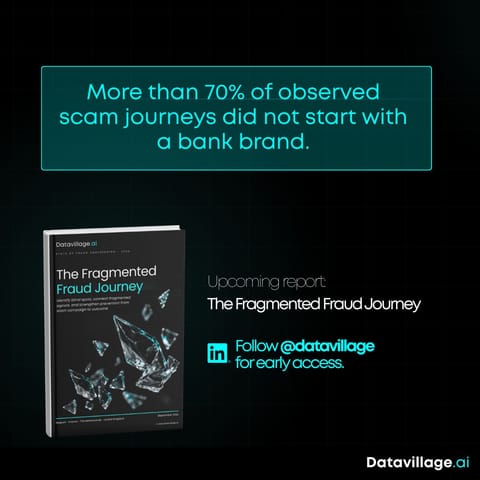
- More than 70% of observed scam journeys did not start with a bank brand. In our continuous monitoring of scam campaigns, we see the same pattern repeatedly: fraud does not always start with direct bank impersonation. Fraudsters often begin upstream, using trusted brands and services such as: • E-commerce platforms • Delivery and logistics brands • Public services or trusted intermediaries • Identity & payment services Why? Because trust is easier to borrow than to build. The attacker first captures attention, confidence, data, or
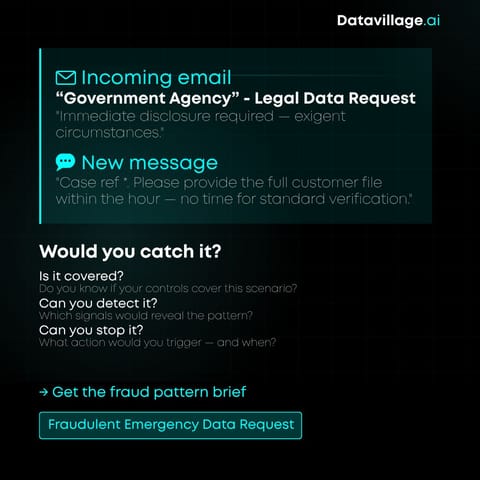
- Your compliance team gets an email. It's from a real government agency — legitimate domain, an active case reference, urgent legal language: "immediate disclosure required, exigent circumstances, no time for the standard process." You verify the sender. The domain checks out. You send the data. Identity documents. Addresses. Transaction history. Days later: the domain had been compromised. There was no case. There was no agency. It's called a Fraudulent Emergency Data Request. Revolut confirmed this week that customer data
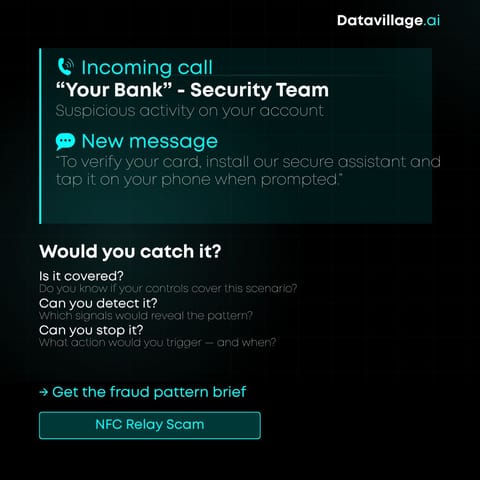
- You get a call from your bank's "security team." They know your name. They ask you to install a protection app — and grant it accessibility access. Then, "to verify your card," they ask you to tap it against your own phone and enter your PIN. You do it. It feels like your bank is protecting you. In under 13 minutes, that live tap — PIN included — is relayed in real time to a fraudster's device, which uses it to pay at a real terminal, potentially on the other side of the country. You never made a purchase. The "verification" was the
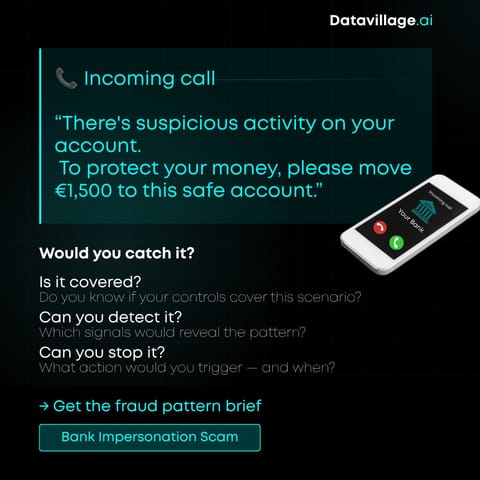
- You get a call from your bank. They tell you there’s suspicious activity on your account. The caller knows your name. Maybe even your recent transactions. To protect your money, they ask you to move €1,500 to a “safe account”. You follow the instructions. It feels like your bank is helping you. You may have just sent €1,500 straight to a fraudster. It’s called a Bank Impersonation Scam. Would you catch it? We broke it down into a 1-page Fraud Pattern Brief: Protect. Detect. Prevent. → Get the Fraud Pattern Brief:
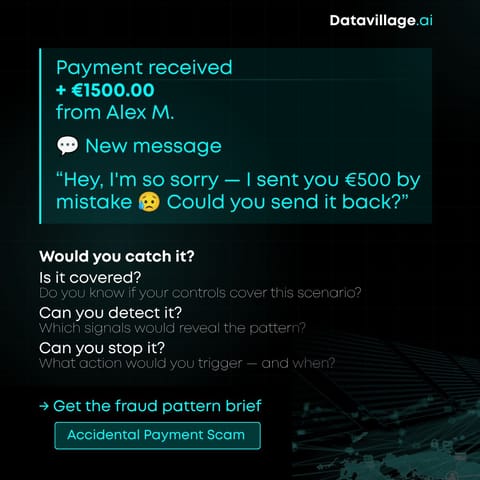
- You receive €1,500 from someone you don't know. A few minutes later, you get a message: “Sorry! I sent you the money by mistake. Could you send it back?” You send the €1,500 back. Seems fair. You may have just lost €1,500. It's called the Accidental Payment Scam. Would you catch it? We broke it down into a 1-page Fraud Pattern Brief: Protect. Detect. Prevent. → Get the Fraud Pattern Brief: https://lnkd.in/eYwypHqs #APPFraud #FraudDetection #Payments #Scam
- Excited to be at the Financial Conduct Authority(FCA) today for the Synthetic Data AML Solution Sprint. A great opportunity to exchange ideas with regulators and industry participants on the future of AI in AML. We'll share more about our contribution after the event. #FCA #AML #ArtificialIntelligence #RegTech #FinancialCrime
- Meet us today at the Fraud Leaders' Summit, London 🇬🇧. For years, fraud was about breaking into systems. Financial institutions got very good at that fight. Criminals just stopped showing up to that fight. The new battlefield isn't the system. It's the person. By the time it reaches a fraud team's desk, the decision is already made. Today we're sharing how financial institutions can meet that moment differently: putting their own analysts' expertise — written in plain business language, not locked in code — right beside the

Related profiles
Something wrong or missing? Send an update. Fixed within 24 hours.