
Overview
Fluxive is a Belgian partner offering Wi-Fi installation, IT services, webdesign, digital marketing, and security solutions under one roof. Based in Ninove, the company targets hotels, restaurants, and growing businesses, providing 24/7 Wi-Fi support and professional infrastructure without dead zones.
In the news
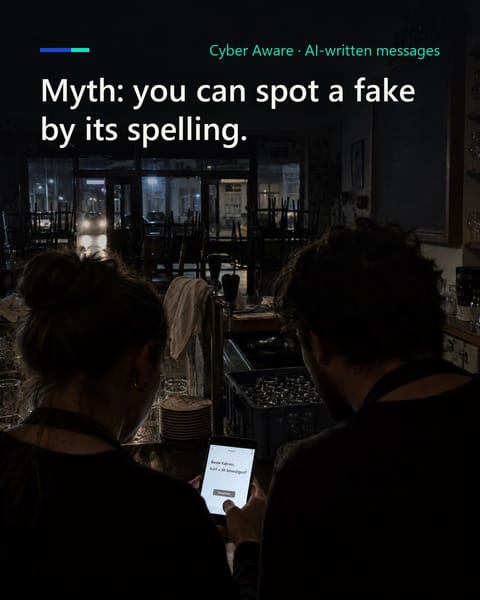
- Myth: you can spot a phishing message by its spelling. Fact: Safeonweb says that test is no longer enough. Its 2026 phishing trends overview says AI lowers the threshold for producing flawless, convincing and personalised messages, and that checking for spelling mistakes is not sufficient to unmask a scam. Two other findings on the same page explain why awareness training built around "look for the mistakes" now fails. Multi-channel phishing is rising: a call, sometimes combined with an email, and in some cases fraudsters
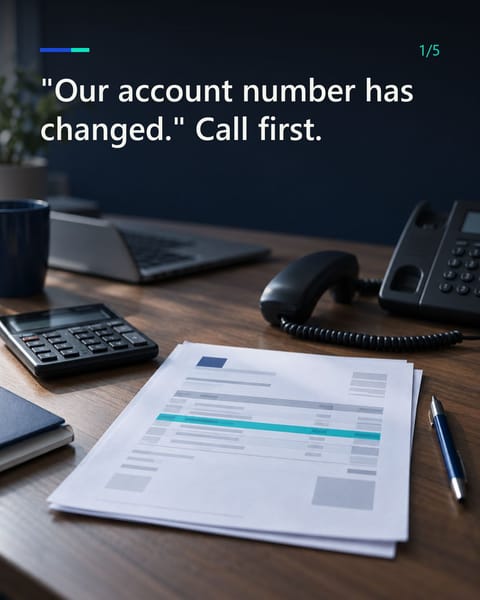
- Please note, our bank account number has changed." If a supplier you know sends you that line, call them before you pay. Here's how this fraud works. Criminals get into a supplier's mailbox, or set up an address that looks almost identical. They send an invoice that's correct except for one thing: the account number. Because the email often sits inside an existing conversation, it barely stands out. What to agree on in your company: • never change a supplier's account number based on an email alone • call the supplier on a number
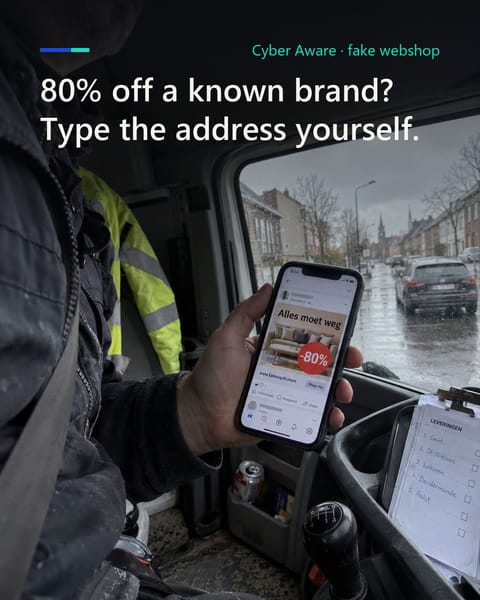
- Safeonweb warned in May 2026 about fake social media advertisements impersonating well-known Belgian clothing and fashion brands. They promise discounts of up to 80% and lead to counterfeit webshops or to pages that harvest personal and card details. In its July 2026 trends overview it added that AI tools now make it possible to copy these advertisements very convincingly. Safeonweb lists four signs, and all four are visible before you click: an unusually large discount, a known brand pointing to an unknown site, pressure
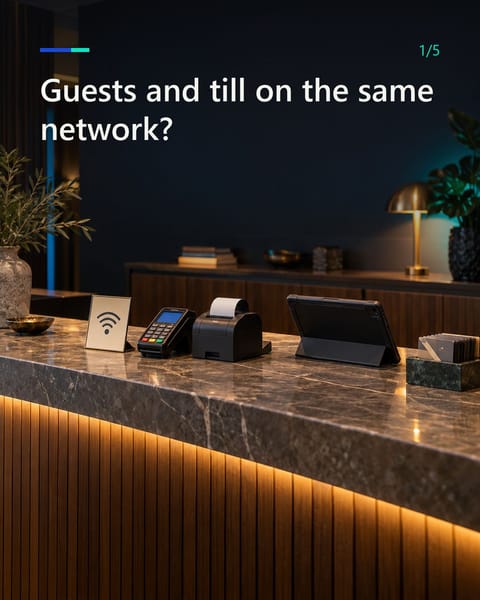
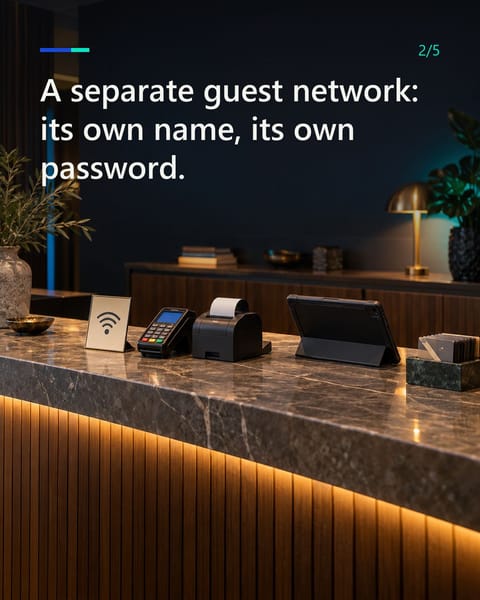
- Are your guests on the same Wi-Fi network as your till, your printer and the computer at reception? Then a guest's device can, in principle, reach the other devices on that network. A phone with malware on it doesn't make that distinction. A separate guest network keeps the two apart. Check these points: • its own network name and its own password for guests • guests can't reach each other or your own devices; in the settings this is often called "client isolation" • staff devices, such as housekeeping tablets and the
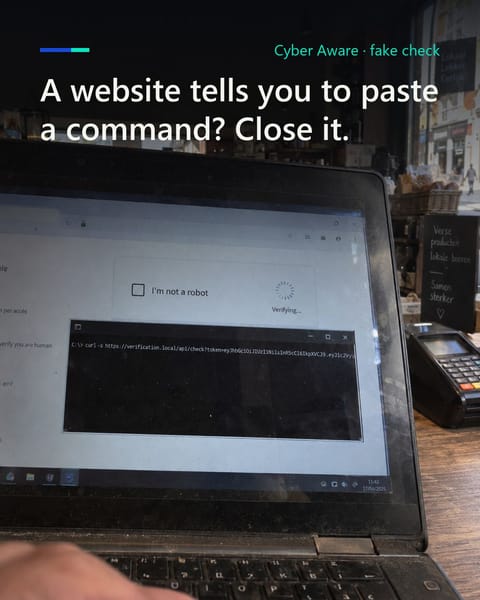
- A page shows what looks like an ordinary "verify you are human" box. It then tells the visitor to open Windows Terminal or PowerShell and paste a command that is already on their clipboard. Microsoft Threat Intelligence published an analysis of this campaign, which it calls TerminalFix, on 28 August 2026. It describes a fake Cloudflare Turnstile overlay on compromised websites, with the logo, a "Verify you are human" checkbox and a spinner, and a PowerShell command silently copied to the clipboard. Earlier versions used the Run
- In 2023, two New York lawyers filed a court brief that cited six court cases that did not exist. ChatGPT had made them up. On 22 June 2023, the judge in Mata v. Avianca fined the lawyers and their firm $5,000. The lesson isn't "don't use AI". It's that AI sounds just as confident when it's wrong as when it's right. ChatGPT, Gemini and Claude are strong at writing, rewriting, summarising and translating. They're weak at anything that needs facts you didn't give them: • your prices, terms and opening hours • recent changes in rules or
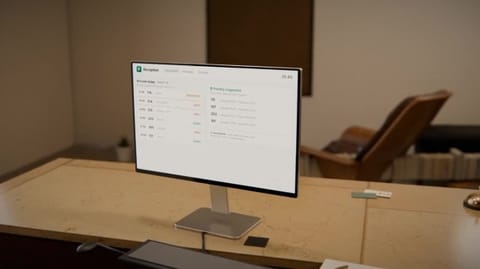
- Is room 214 ready for the 14:00 guest? In most hotels you only find out by phoning upstairs. A paper checklist doesn't show what's really done. With Fluxive Housekeeping, every task ends with a photo. Fleur, the AI assistant in the app, takes a first look. That first look is private to the cleaner. Then the manager inspects and decides. Reception sees right away which rooms are ready. Fleur advises. You decide. Curious how this works in your hotel? Book a 30-minute demo: https://lnkd.in/eKTVhGku #hotels #housekeeping #hospitality
- This week's posts in one list: five Belgian warnings, all published by Safeonweb in the last four months, and one number to call. 1. A caller asking you to install an app, then hold your bank card to your phone (Safeonweb, 18 September). 2. A Teams message from "the director" with a payment instruction (Safeonweb, 7 September). 3. A collection email threatening seizure of your account today (Safeonweb, 16 September). 4. An email asking you to scan a QR code to confirm bank details (Safeonweb, 10 July). 5. A WhatsApp to your


Something wrong or missing? Send an update. Fixed within 24 hours.