
Overview
GeoPostcodes offers a single world postal code database aggregated from 1,500 authoritative sources. The database features unified structure with standardized fields and is kept up-to-date through robust data engineering.
Key people

In the news
- DB Schenker sped up their postal code validation by 300x. 🌍 Manual postal code validation at a small scale. A shipment needs a destination checked, so someone opens a search tool and confirms the postal code. This approach doesn't scale when your network spans the world. 💬 William Chao, Product Owner of Geographic Information Services (GIS) at DB Schenker, put it plainly: "We validated postal codes manually, using search tools, which was too time-consuming." They decided to rely on #GeoPostcodes datasets to streamline their
- Geo-Quiz Time! Can you guess the country? ⛪ The world’s smallest independent state. 🇮🇹 Fully enclosed within a major European capital. 🏛 Home to globally recognized cultural and religious landmarks. 📮 Uses the unique single postal code 00120. 🗺 A compact walled territory with high global relevance. Your guess? #GeoPostcodes #LocationIntelligence
- Next week I'll be at Big Data & AI Paris. Whether it's in AI or for data quality at large the old saying still goes: garbage in ... garbage out. In other words: you AI agent can't solve data quality issues related to location if it does not have a good grasp of "where is where". That's where GeoPostcodes can help; we maintain a comprehensive view of the world that can be easily ingested by AI. If you're going and want to talk location data, data pipelines, or just how you're putting AI to work on messy geographic data, reach out.

- Every new market brings its own address format complexity. Three inconsistencies surface first: ▪️ Postal codes with different formats and update cycles ◽ Administrative divisions that shift, or sit at different levels by market ▪️ City definitions that vary between countries 🧠 MSC, DB Schenker, C.H. Robinson, and Infios each met this friction during international growth. They resolved it the same way: one standardized source of location data, set once and embedded across systems. 🗣️ Expanding this year? Check out our data

- Self-hosted house number data for 50 countries. Validate whether a specific house number exists on a given street, at input or in bulk. With GeoPostcodes, every country is standardized under the same structure. 🔏 It's self-hosted, so the data runs within your own systems, ensuring full control over performance and security. #LocationIntelligence #HouseNumbers #LocationData
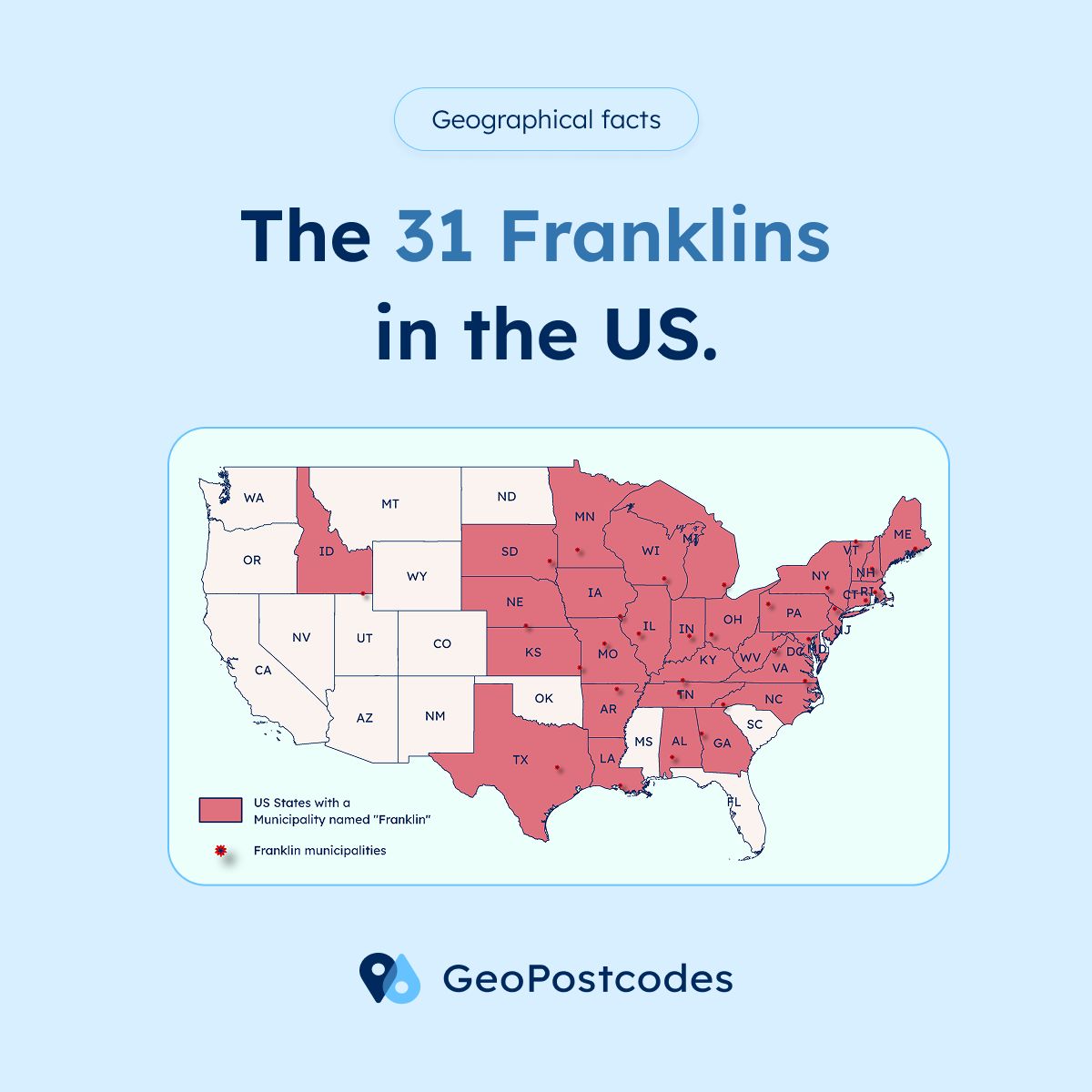
- A city name is NOT a location. The 31 Franklins in the US prove it. On top of that, a "city" in Germany is not the same unit as a "city" in Brazil. A suburb in one country shares a name with a capital district in another. The downstream consequences are reporting misalignments, routing failures, and territory maps that don't hold. That's what our Cities Database is built to solve. Four million cities and towns, each assigned a precise classification: OECD metropole, capital, primary city, suburb, or locality. #LocationData
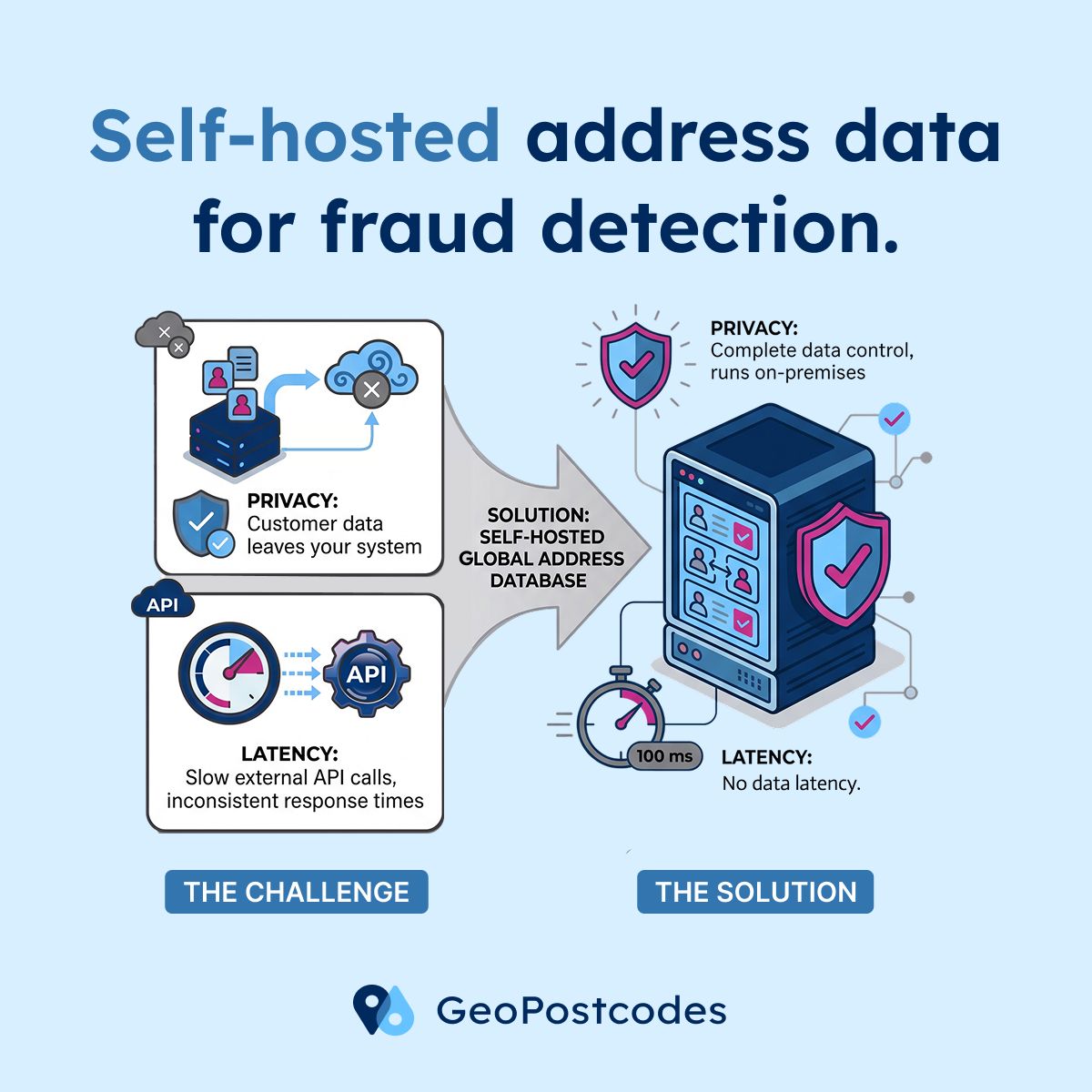
- A fraud-prevention platform tested multiple address-validation providers, then walked away from all of them to self-host their address data. Their original policy: build the location data behind their fraud models in-house, never rent it from an external provider. Two reasons drove it, and they'll sound familiar if you've weighed the same trade yourself. 1️⃣ Privacy: customer data can't leave their systems; all data needs to run on-premises. 2️⃣ Latency: a 100-millisecond response time, at 99.99 percent uptime. No API call gets
- Geo-quiz time! Can you guess the country? ⛰ Mountain ranges and deep valleys shape its interior. 🏞 Lakes and varied terrain create striking natural views. 🌄 A small Balkan nation with diverse landscapes. 📮 Uses 4-digit postal codes across all regions. 🏛 Towns reflect a long mix of cultural influences. ✨ What’s your guess?

Something wrong or missing? Send an update. Fixed within 24 hours.