
Overview
Hapbit supports both SMEs and large corporations with expertise in IT alignment, governance, and vendor-agnostic collaboration. The company's services include NIS2 compliance, ISO 27001 certification, data protection, incident response, and security awareness training. Their client portfolio includes BMW, McDonald's, City of Gent, and Toshiba.
In the news
- Je belangrijkste applicatie valt uit. IT onderzoekt de oorzaak. Maar wie beslist hoe het werk ondertussen doorgaat? Dat is een ander vraagstuk dan technisch herstel. Neem dit fictieve scenario: bestellingen zijn tijdelijk niet beschikbaar. De leverancier onderzoekt het probleem, maar kan nog geen hersteltijd geven. Klanten blijven bellen. Een korte bespreking met IT, operatie en een beslissingsbevoegde kan drie keuzes zichtbaar maken: • Doorgaan of onderbreken? Welke werkzaamheden kunnen veilig verder, en wanneer wordt
- Alleen even nalezen” vraagt niet automatisch om bewerkrechten. Je stuurt een document naar een collega, leverancier of externe partner. De link werkt. Maar past de toegang ook bij wat die persoon moet doen? Een kleine controle vóór het verzenden: • Wie? Kies specifieke personen wanneer het document voor een afgebakende groep bedoeld is. • Wat? Alleen lezen, feedback geven of werkelijk aanpassen? Geef bewerkrechten wanneer die nodig zijn, niet uit gewoonte. • Welke toegang bestaat al? Controleer bij ‘Toegang beheren’ wie het document
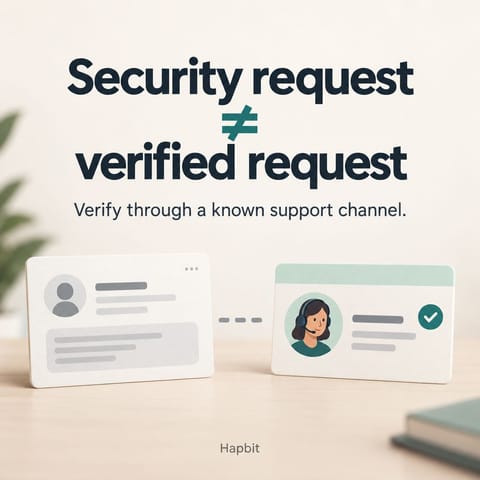
- Please update your security settings” can be the opening line of an attack. In research published on 9 September, Microsoft describes attackers impersonating IT helpdesks and using supposed passkey or sign-in updates to create urgency. The important distinction: this is not evidence that passkeys have been broken. The security upgrade is the pretext used to steer people into granting access. For organisations, that changes the practical question. Not only: “Which authentication technology should we deploy?” Also: “How does a
- Finding an album by its cover feels different from remembering its exact title. That small difference has a name: recognition rather than recall. It also makes a useful little Saturday experiment. Imagine opening a recipe halfway through cooking. One version says: “Add the remaining ingredients.” Another says: “Add the tomatoes, beans and stock.” Same dish. Less mental backtracking. Business software can make the same choice. A screen can ask someone to remember what “REQ-042” means—or show the request’s name and context alongside

- Everyone logged into the new tool. That doesn’t tell you whether it helped them. Before expanding a software pilot, give the review meeting a simple scorecard: Completion Can people finish the intended task? Define the start and finish clearly. Opening an application isn’t the same as submitting a complete request. Effort What does finishing require? Include time spent correcting information, asking for help and working outside the tool—not just time on screen. Quality Is the result usable by the next person? A submitted request that
- Een wettelijke meldtermijn van 24 uur begint niet wanneer een incident netjes gedocumenteerd is. Ze begint wanneer de fabrikant er kennis van krijgt. Sinds 11 september gelden onder de Cyber Resilience Act de meldplichten voor fabrikanten van producten met digitale elementen. Bij een actief uitgebuite kwetsbaarheid of ernstig incident volgt eerst een vroege waarschuwing, daarna verdere rapportering. Dat maakt dit geen formulierprobleem, maar een probleem van bewijs en besluitvorming. Kun je achteraf aantonen: – wanneer het eerste
- De demo werkt.” Mooi. Maar kan je team er maandag ook mee aan de slag? Dat verschil krijgt bewust aandacht in SALCCI, de aanpak die we bij Hapbit bouwen om softwareontwikkeling met AI te begeleiden. Een concreet voorbeeld uit ons eigen werk: bij het SALCCI Control Center maken we onderscheid tussen een demonstratie, een lokaal werkende versie en een volledig verbonden toepassing. Die laatste is nog in ontwikkeling. Dat lijkt een detail in de documentatie. Voor iemand die beslist om software te gebruiken, is het een wezenlijk
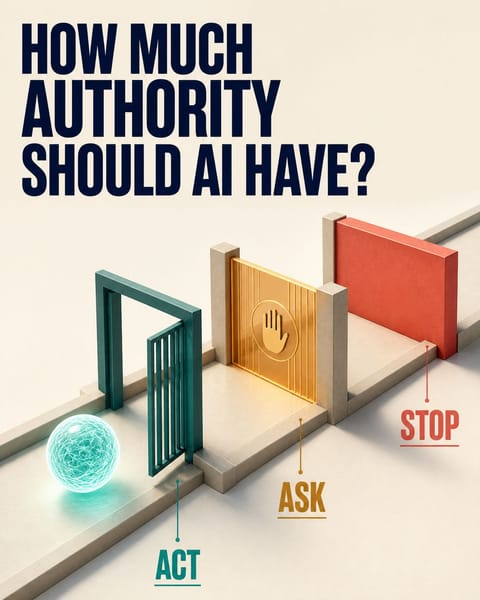
- The most important AI question is changing. It is no longer only: “Can the system do this?” It is also: “What is it allowed to do without asking?” That distinction matters as AI moves from drafting text to using tools, accessing systems and completing multi-step work. A capable agent can still be badly deployed. A harmless-looking task becomes consequential when a system can send, change, approve or publish. Before adding another AI feature, define three boundaries: — what the system may do autonomously; — what always requires

Something wrong or missing? Send an update. Fixed within 24 hours.