
Overview
Hyperadvancer provides healthcare innovation services including 10-day virtual hackathons, AI advisory, and digital health strategy. The founder brings 30+ years of healthcare experience, having launched seven companies from hackathons and organized over 300 events. The firm offers knowledge transfer and capability building rather than creating client dependencies.
In the news
- Walk into any hospital ward and you will find clinicians juggling half a dozen digital systems, each guarding its own slice of a patient's story. An MRI sits in a radiology archive, blood results in a lab database, medication notes in an ageing record, lifestyle metrics in a phone that never pairs with anything else. A 2024 study by the European Hospital and Healthcare Federation put a number on that fragmentation: roughly EUR 2.5 million a year in manual reconciliation for a single 500-bed hospital. The Model Context Protocol is
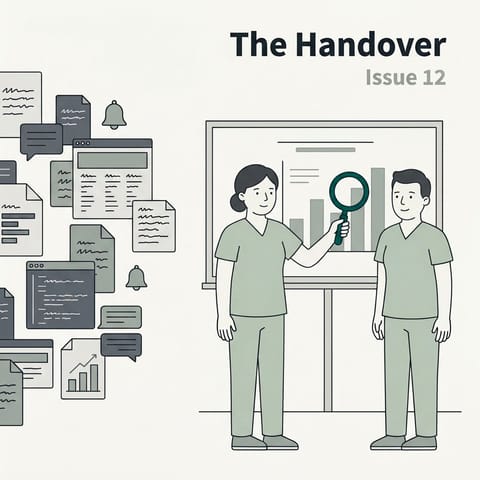
- The Handover #12 is out: human oversight is not a safety net. No issue last week, so this one covers a fortnight. The top signal: a meta-analysis in npj Digital Medicine of 46 reports on how clinicians respond to wrong automated advice. Clinicians were far more often right when the advice was right than when it was wrong, and in four real-world ECG studies about a quarter of erroneous interpretations went uncorrected. The authors' conclusion: oversight should be evaluated as an error-interception capability, not assumed. Also
- Conference budgets for 2027 are being set now, and more than 50 longevity events for next year are already on our calendar. The first decision most teams face is not which event. It is which circuit: Europe or the United States. It looks like a geography question. It is really a question about what you want to walk out with. Europe's longevity circuit is research-driven and policy-aware. If your team needs the latest science on the mechanisms of ageing, or a clear read on where regulation is heading, that is where those
- Tesla did not start with an affordable car. It started with the Roadster, an expensive one for people who could pay, and that revenue funded the Model S and Model 3. The cheap product arrived second, on purpose. Preventive healthcare keeps trying to skip that order. A premium preventive programme looks like that first stage, but the play only works if the early margin is reinvested into making the service cheap for everyone else. In most programmes it is not. The premium tier becomes the business rather than the runway to
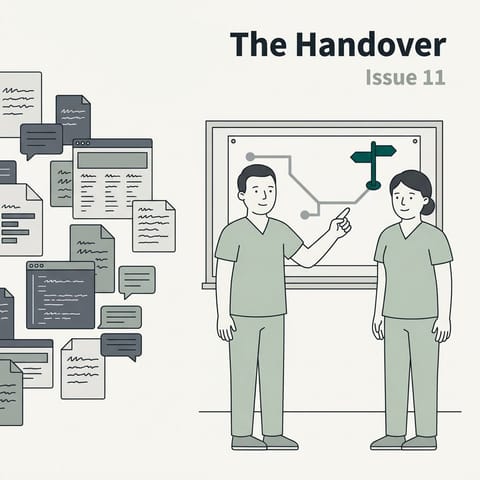
- The Handover #11 is out: a Centre for AI and Digital Health. This week's top signal: on 14 October the MHRA published its 2030 Strategy, and AI runs through it. It commits to a Centre for AI and Digital Health to make regulatory expectations clearer for developers of AI-driven devices and medicines, a modern, adaptive regulatory framework for AI as a medical device, an AI Medicines Development Action Plan in 2027 and an AI-enabled Clinical Trial Protocol Checker. It is a strategy rather than guidance: nothing in it is a document
- Who actually speaks at a longevity summit? Not who most people expect. We track 4,700+ speakers across 550+ longevity events, and the pattern is consistent: corporate and industry voices outnumber academic speakers. A typical summit runs two to three days with around 15 speakers. The larger multi-track events carry 50+, with clinicians, investors, policymakers and patient advocates filling out the roster. Harvard Medical School and Stanford are the most common institutional affiliations. But speakers from biotech, medtech and
- 108 things clinicians shipped in nine weeks. We classified every one of them, and the result is not the AI doctor. Over August and September the Clinicians That Code pipeline caught 108 concrete artefacts built by clinicians: apps, libraries, simulators, practice systems, analysis code. We classified each by hand on 32 columns: what it is, who built it, where, how it is deployed, whether it touches patient data, whether AI sits inside it, what evidence exists. Three findings stand out. Clinicians build for their own shift.
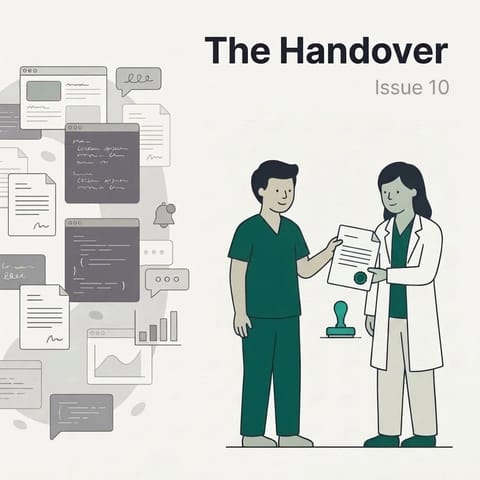
- The Handover #10 is out: the 44 recommendations, accepted. This week's top signal: the UK government confirmed it will accept all 44 recommendations of the National Commission into the Regulation of AI in Healthcare, published 10 September, and set out how they will be delivered across the UK. Alongside the response, the MHRA opened applications for the third phase of AI Airlock, its regulatory sandbox for AI-enabled medical devices, focused on post-market surveillance: assessing and monitoring devices throughout their working

Related profiles
Something wrong or missing? Send an update. Fixed within 24 hours.