
Overview
Founded in 2014, Kpler started as an LNG-focused intelligence service and has grown into a global platform that tracks physical trade flows across crude oil, refined products, LPG, chemicals, dry bulk, agriculture, metals, and power markets. The product layer combines real-time vessel tracking, proprietary supply and demand models, sanctions and risk tooling, and operational software for chartering and trading desks.
The company is headquartered in Brussels with additional offices in Paris, London, Singapore, Houston, New York, Dubai, Tokyo, Vienna, Cape Town, Athens, and Rostock. LinkedIn lists the company at 501 to 1,000 employees, while Kpler's own about page references more than 750 staff across more than 35 nationalities. Kpler has expanded through a sustained acquisition track including additions in defense intelligence, supply and demand analytics, metals and minerals, agriculture, refineries, and most recently financial flows and arbitrage tools.
In April 2026, De Tijd reported that Kpler was exploring a partial sale at a valuation around EUR 5 billion, which would put it among the most valuable Belgian-headquartered software businesses. The company sits in the Brussels Data & Analytics cluster alongside Collibra and operates one of the few Belgium-rooted platforms with global category leadership in commodities and maritime intelligence.
Kpler is a Brussels-based real-time trade intelligence platform serving energy, commodities, maritime, and financial market clients with Data & Analytics-driven SaaS & Enterprise Software tools.
Links
- Website: https://www.kpler.com
- LinkedIn: https://linkedin.com/company/kpler
Key people

In the news
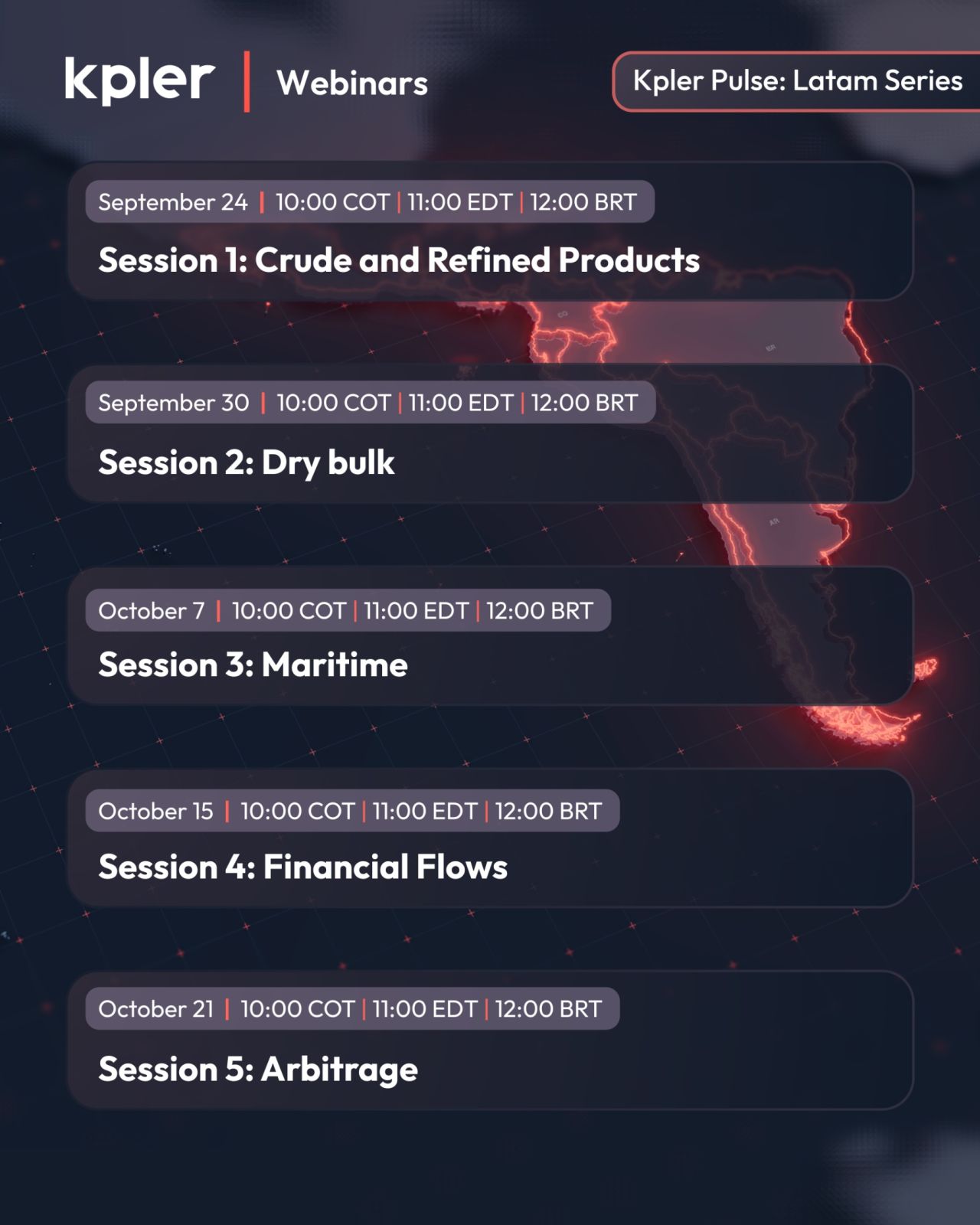
- Mark your calendars: Kpler Pulse Latam Series is back Starting 24 September, we're bringing together Kpler experts for five webinars exploring the forces shaping Latin America's commodity and maritime markets. 📍 24 Sep: Crude & Refined Products 📍 30 Sep: Dry Bulk 📍 7 Oct: Maritime 📍 15 Oct: Financial Flows 📍 21 Oct: Arbitrage First up: "Latam under pressure: Crude, fuel, and freight in a shifting world." Join us as we unpack how changing crude flows, fuel markets and freight dynamics are reshaping the region. 🕙 10:00 COT
- Global trade shifts in focus in our latest Kpler Commodity Brief ◾ Red Sea risks tighten gasoil ◾ Security shocks constrain Kirkuk exports ◾ Longer balances, cracks stay resilient ◾ Saudi export routes face strain Get the full breakdown in the latest update 👇
- US copper imports stay elevated as record-value cargo heads for US shores The CME-LME arbitrage continues to pull copper cathode into the US, with imports running well above year-ago levels through 2026. After record arrivals in July and a softer but still elevated August, Kpler is tracking cargoes scheduled to discharge in September and October. The question now: can US copper imports hold this pace as tariff uncertainty persists? Stay ahead of the market with #Kpler Insight: https://okt.to/HRWTMJ
- Oil markets are navigating a new wave of uncertainty. Are you prepared for what comes next? Join Kpler experts Homayoun F., Andon Pavlov and Matt Stanley for Oil Insight: Navigating uncertainty, a focused briefing on the latest developments shaping crude and refined products markets. From Middle East disruption and US–Iran tensions to shifting supply, demand, flows, pricing and margins, our experts will unpack what’s happening now — and the key signals to watch next. Register now and join us live: https://okt.to/WSnipL

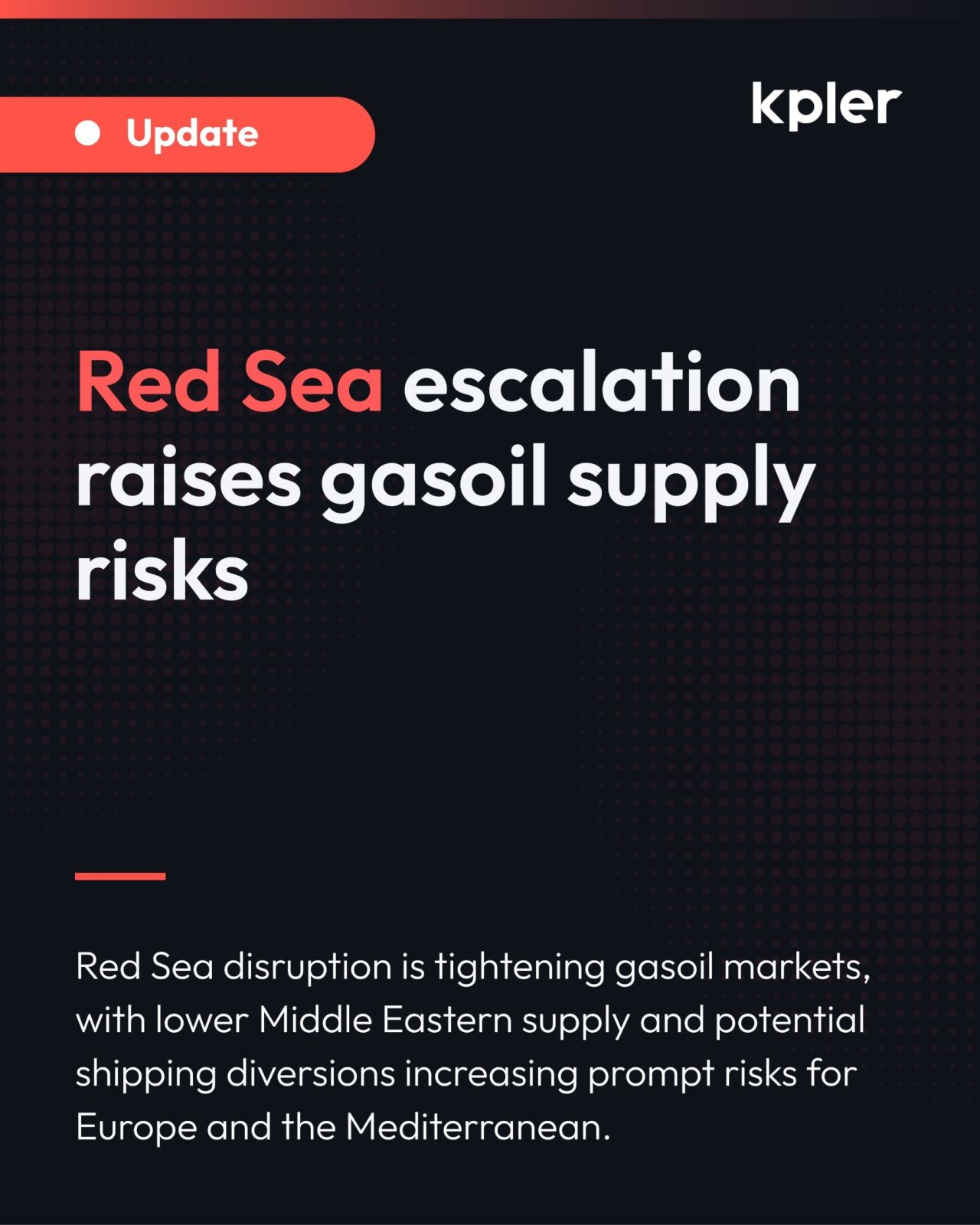
- Red Sea risks tighten gasoil The Red Sea escalation is moving from crude logistics into gasoil markets. European refinery runs could fall by around 200kbd, while Yanbu gasoil and diesel outflows are already nearly 50% lower year on year. Further aversion to the Bab El Mandeb Strait could delay Indian cargoes and tighten prompt supply in Europe and the Mediterranean. In Asia, concerns over crude feedstock availability could restrain refinery runs and reduce opportunistic diesel exports, including from China. With global refining
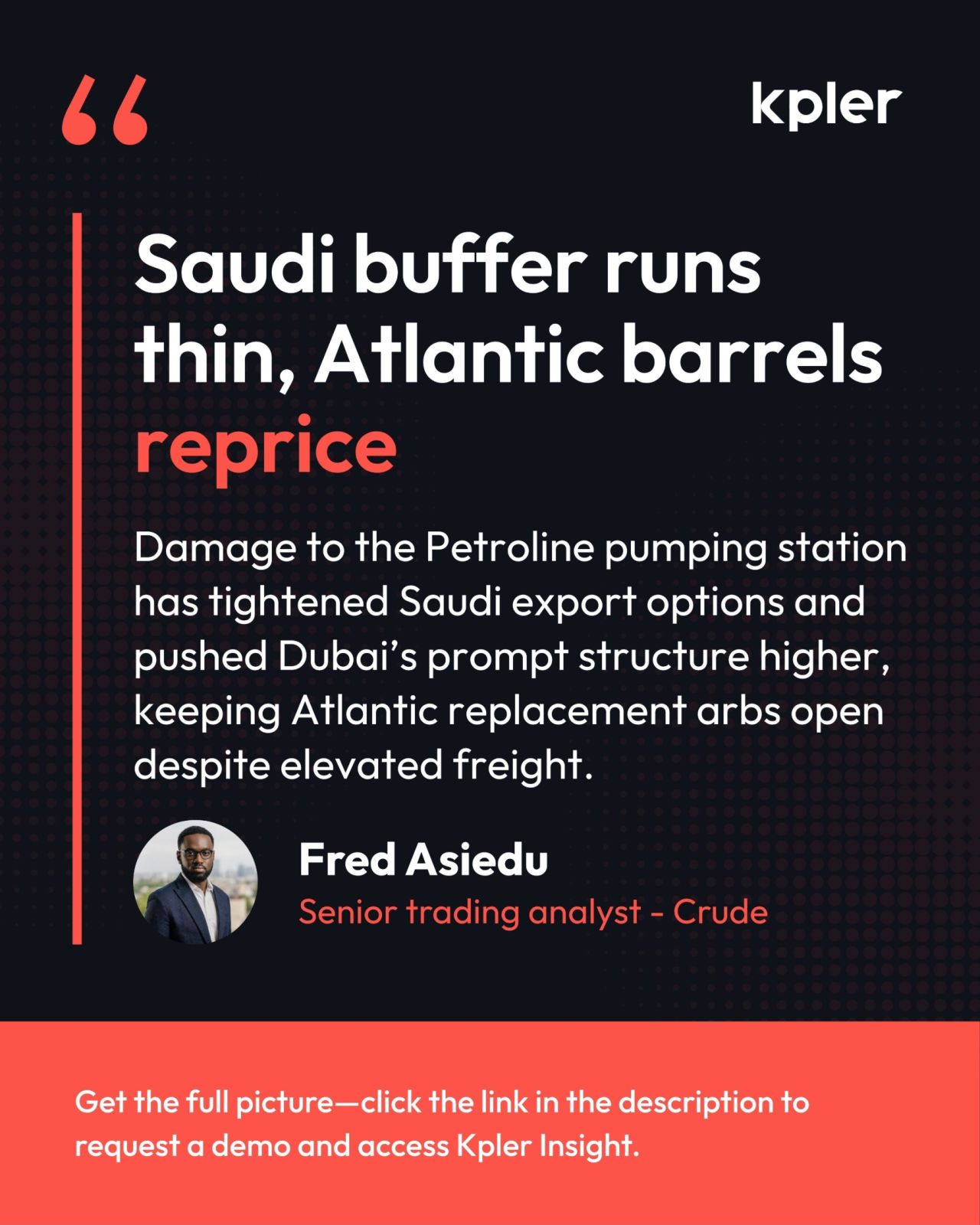
- Saudi disruption reshapes crude flows Saudi Arabia’s East-West pipeline disruption has removed a key bypass around Hormuz just as Yanbu inventories are running low. Stronger Dubai structure has reopened west-to-east arbs and intensified competition for Atlantic barrels. Europe remains tight as Forties moves east and Saudi availability falls, while WTI looks increasingly cheap abroad despite tightening US balances. Real-time tools to enable faster, better decisions: https://okt.to/3c0QVM
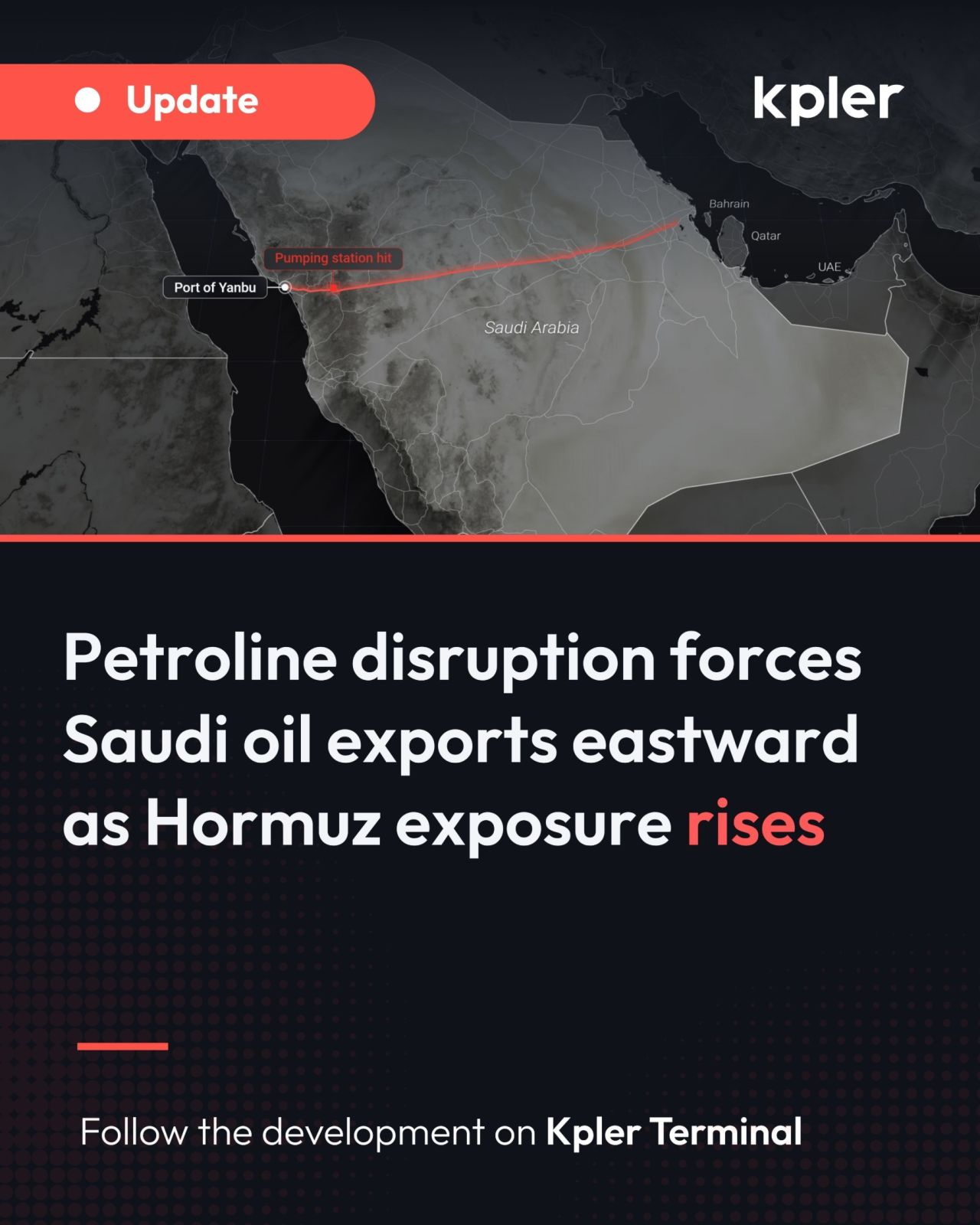
- Saudi oil exports pivot east Damage to Saudi Arabia’s East West Pipeline has shifted the #oil market’s focus from pipeline integrity to export logistics. Kpler’s base case assumes Petroline returns at around 50% of its pre-attack throughput after repairs of up to six weeks, potentially cutting Yanbu exports by 2.5 to 2.7 mbd. Saudi Arabia has sufficient tanker capacity to redirect roughly 3 mbd through Ras Tanura, requiring about 25 additional shuttle VLCCs per month. The bigger constraint is geopolitical. Greater reliance on
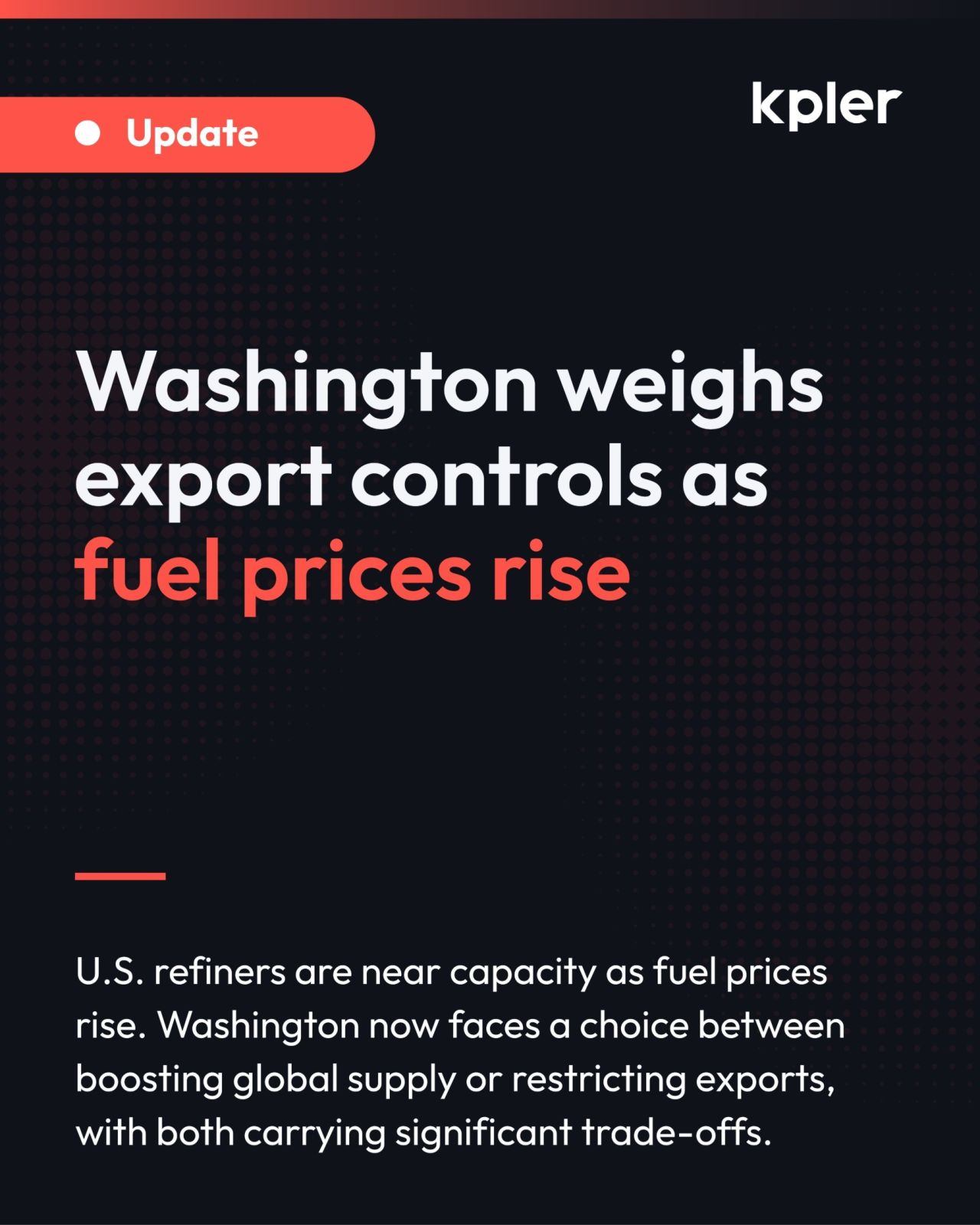
- Washington runs out of levers US refiners are already running near their limits, yet fuel prices and refining margins remain elevated. Now, Washington is pulling another lever: supply diplomacy. President Trump has urged Ukraine to halt strikes on Russian refineries as disruption to global fuel supply intensifies. But with refining capacity stretched and pressure at the pump persisting, the options are narrowing. Stay ahead of the market with #Kpler Insight: https://okt.to/lzL6kH

Related profiles
Something wrong or missing? Send an update. Fixed within 24 hours.