
Overview
Meezy is a marketplace management service that streamlines selling across European marketplaces. The company offers services including set-up, creation, marketing, and management, with a focus on listings optimization based on marketplace algorithms. Pricing is a fixed monthly subscription with no setup fees or hidden charges.
Leadership & org chart

In the news
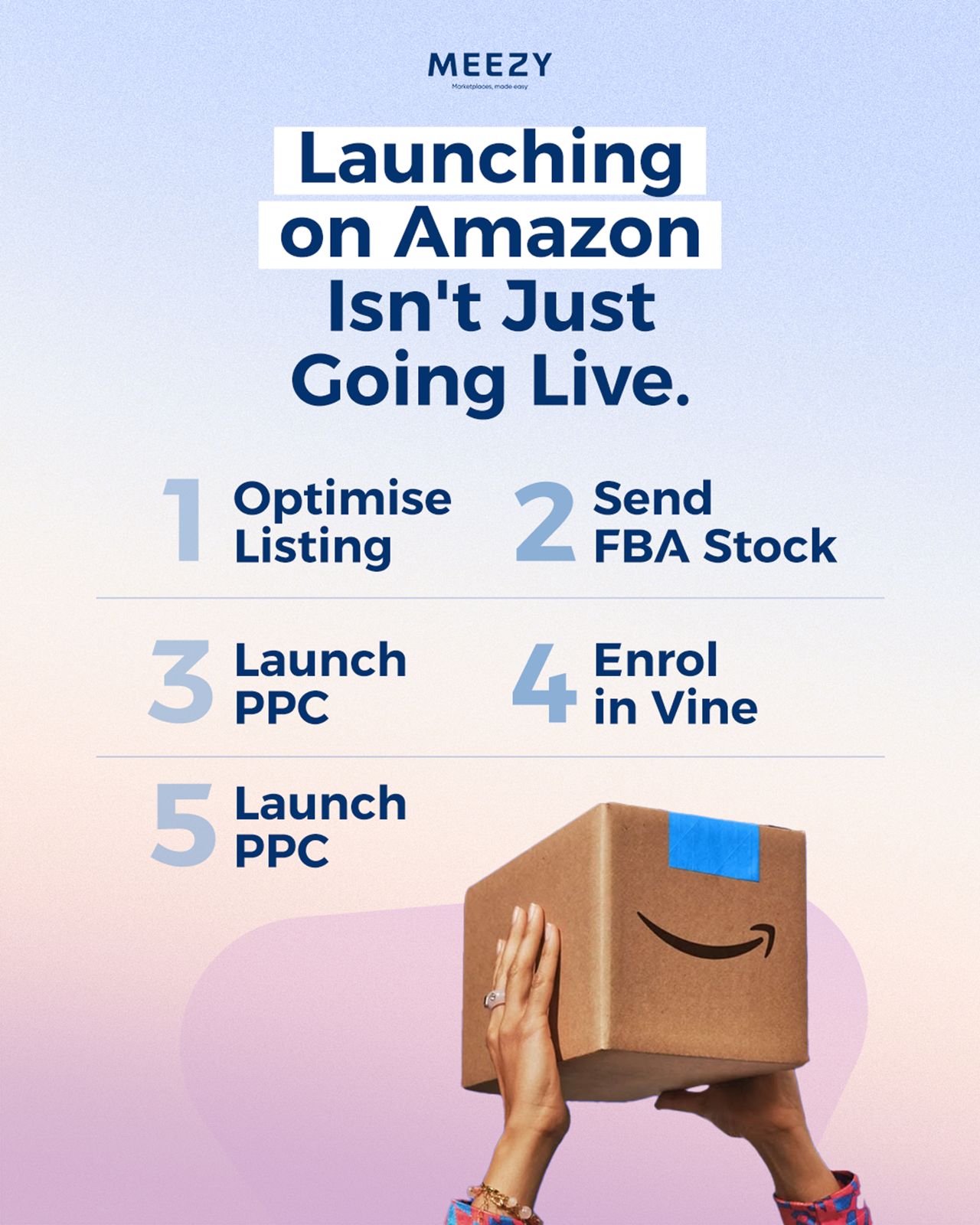
- Most brands just hit publish and wonder why nothing happens. Because launching on Amazon isn't about going live. It's about what you do before, during, and right after. Here's the exact launch sequence that drives results: → Step1 Optimise Your Listing: Title, bullets, images, A+ Content. If your listing isn't conversion-ready before launch, no amount of traffic will save it. → Step 2 Send FBA Stock: Get your inventory into Amazon's warehouse before you launch. Prime eligibility from day one changes everything. → Step 3 Launch
- Most brands are on 1 marketplace. The fastest growing ones are on 45. Scaling across marketplaces isn't complicated. It just requires the right infrastructure and the right partner. Here's what that looks like in practice: 1. Sell: Listing optimization, A+ Content, PPC management, and keyword strategy. Everything that makes your product visible and your listing convert. 2. Scale: EU and MENA expansion across Amazon Pan-EU, Kaufland, Bol.com, Noon UAE, Noon KSA, and beyond. New markets. New audiences. New revenue streams. 3.
- The 4-Step Marketplace Expansion Playbook Every Brand Should Follow One marketplace is a start: Most brands stay stuck on one platform not because they don't want to grow, but because they don't know the right order to do it in. Here's the exact playbook: → Step 1: Establish, Master Amazon UK or DE first. One market. Done right. Get your listings, logistics, and PPC dialled in before you move. → Step 2: Expand EU, Use Pan-EU FBA to add France, Italy, Spain, Netherlands, and Poland from one single stock pool. Same inventory. Five new
- Most Amazon sellers treat Sponsored Products and Sponsored Brands like they're interchangeable. They're not. Using them the same way is one of the fastest ways to waste ad budget. Here's the breakdown: Sponsored Products → Where it appears: Search results and product detail pages → What it shows: A single product listing → Best used for: Capturing direct keyword intent → Targeting: Keywords and ASINs Sponsored Brands → Where it appears: Top of search results and PDPs → What it shows: Your logo, headline, and multiple products → Best
- There are sellers on Amazon right now listing under your brand name. Without Brand Registry, you can't stop them. Brand Registry isn't just a protection tool. It's the key that unlocks everything serious sellers need to compete and win on Amazon. Here's what you get the moment you're registered: → Brand Protection: Fakes and counterfeits removed automatically. Amazon's proactive tools defend your intellectual property before damage is done. No manual reporting. No waiting. → A+ Content Unlocked: Richer listing pages. Better visuals.
- Amazon already knows what your customers are searching for. The question is, are you using that data? Brand Analytics is one of the most powerful tools in Seller Central. It's free. It's updated weekly. And most sellers aren't using it. Here's what it gives you: → Search Term Report: See the top keywords by search frequency rank and share of clicks. Know exactly what buyers type before they find your product or your competitor's. → Market Basket: Discover what buyers purchase alongside your product. Use it to build bundles,
- Every day you run Amazon ads without negative keywords, you're paying for clicks that will never convert. And you probably don't even know which ones. Here's what's actually happening: You bid on "yoga mat." Amazon shows your ad for "yoga mat bag." "yoga mat strap." "yoga mat cleaner." None of those are your product. But you're paying for every single click. 💸 Here's how negative keywords fix that instantly: ❌ "yoga mat bag": Not your product. Negative it. Stop paying. ❌ "yoga mat strap": Wrong category entirely. Negative it. Stop
- What if you could sell across new territories without managing a single shipment yourself? That's exactly what FBA does. Here's how it works in 3 simple steps: → Step 1, You Send Stock: Ship your inventory to an Amazon warehouse in UAE, KSA, or Egypt. That's your one job. → Step 2, Customer Orders: A buyer finds your product on Amazon and places an order. You don't lift a finger. → Step 3, Amazon Delivers : Amazon picks, packs, ships, and even handles returns. End to end. Every time. That's it. No warehouse. No logistics team.

Something wrong or missing? Send an update. Fixed within 24 hours.