
Overview
NIA brings together innovators, manufacturers, researchers, and policymakers to establish shared frameworks across the nanomaterials value chain. The organization helps companies overcome barriers to market entry by connecting them with partners, capital, customers, and guidance. It provides access to a global network of 50+ leading organizations, regulatory advocacy to EU/US/global bodies, and industry resources including position papers, webinars, and technical standards.
In the news
- Potential REACH Restriction on Fibre-Form Substances Added to EU Roadmap The European Commission's updated REACH Restrictions Roadmap includes work towards a potential restriction on substances in critical fibre form that may release biopersistent fibre dusts meeting WHO fibre criteria. The initiative, submitted by Germany, builds on work undertaken by BAuA and covers a broad range of fibre-form materials, including nanofibres and carbon nanotubes. While the scope and timeline remain under development, the roadmap signals an
- OIM² Europe 2027 Opens Registration Registration and abstract submissions are now open for OIM2.EU | Open Innovation Materials & Manufacturing Europe 2027. Taking place in Grenoble, France, from 16-18 February 2027, the event will bring together researchers, industry leaders and policymakers working across advanced materials, nanotechnology and sustainable manufacturing. The programme will focus on technology transfer, industrial deployment and market-ready innovation. NIA's Sean Kelly is a member of the event steering

- Building the Skills Needed for Safe-and-Sustainable-by-Design Safe-and-Sustainable-by-Design (SSbD) will only succeed if the right skills are in place. A new article published in Frontiers in Nanoscience and Nanotechnology and co-authored by NIA's Sean Kelly examines the training and capacity-building needed to support the implementation of SSbD for nano and advanced materials. The paper argues that Europe needs a coordinated training ecosystem bringing together researchers, industry and policymakers to ensure that safety

- From Invention to Industrialisation of Materials in Europe Europe's challenge is no longer inventing advanced materials. It's scaling them. A new article in Nature Materials, co-authored by NIA Interim Director General Sean Kelly and Professor Paula Vilarinho, sets out five priorities for the forthcoming Advanced Materials Act: • Scale-up infrastructure and pilot facilities • Private investment and financing mechanisms • Efficient and integrated regulation • Stronger links between developers and industry • Talent and industrial
- NIA and Yordas Publish Study on Surface-Treated Nanomaterials How does surface treatment affect the safety profile of a nanomaterial? A new study prepared by Yordas Group and the Nanotechnology Industries Association (NIA) for the EU Observatory for Nanomaterials (EUON) examines the health and environmental hazards and risks of surface-treated nanomaterials. The report finds that while the core material of a nanoparticle is generally the main determinant of hazard, changes to surface chemistry can influence toxicity in some
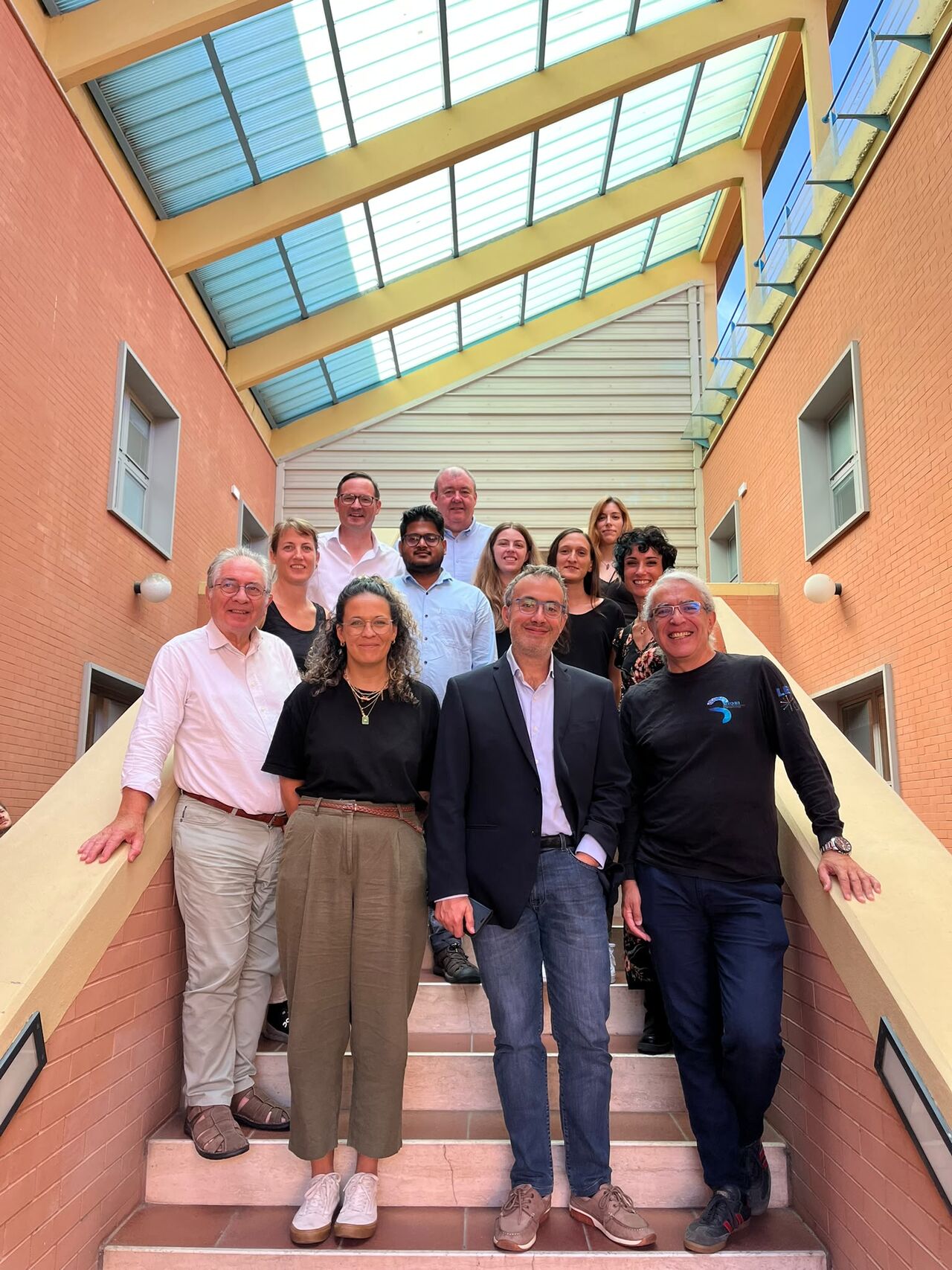
- The iCare consortium met in Pisa on 25-26 August for its penultimate General Assembly, hosted by the Istituto Italiano di Tecnologia (IIT). Partners reviewed progress across the project, discussed the remaining work ahead of its conclusion, and explored how new testing methods developed in iCare are being applied in the project's industrial case studies. The meeting also included a visit to IIT's laboratories, where partners were able to see some of the ongoing research activities. The consortium also began preparations for
- European Commission updates REACH restrictions roadmap The European Commission has published a refreshed version of its REACH Restrictions Roadmap, updating stakeholders on the status of hazardous substance restrictions since the roadmap launched in 2022. Eleven restrictions covering hundreds of substances have now been adopted, with six more proposals nearing completion, including work on PFAS, hexavalent chromium, octocrylene and other persistent or endocrine-disrupting chemicals. The revision adds no new
- Germany pushes for stronger nano-specific REACH requirements Five years after nano-specific information requirements entered into force under REACH, Germany has told the European Commission they need reinforcement. The call follows a national review by German competent authorities, feeding into the OECD's compilation of country activities on manufactured nanomaterials. While the original requirements were a useful first step, Germany's review found real gaps: missing test methods for nano-specific endpoints, few updates to

Something wrong or missing? Send an update. Fixed within 24 hours.