
Overview
Netaxis Solutions builds software and services for the telecommunications industry that automate end-to-end customer processes and transform service provider networks. The company was founded in Belgium in 2010 by a team of VoIP telecoms engineers; the legal entity, an NV, was registered on 27 August 2010 and is headquartered at Rue du Trône 60 in Brussels. Products include Nemo (voice network monitoring), Sigma (voice call simulator), NPACT (number portability) and NIMS (number inventory management). Solutions include Netaxis Fusion for UCaaS voice automation and SBCaaS, a managed session border controller service. Proximus selected SRE as the routing core of its voice interconnect infrastructure, in a project with Oracle to modernise the national interconnection platform; the deployment handles up to 1,500 SIP calls per second against a 17 million entry ENUM database. Gaetan Brichet is CEO and previously held a senior role at Voxbone. The company has 11-50 employees, with offices in Marche-en-Famenne, Nieuwegein, Lincoln, Paris, Milan and Miami. It won Best VoIP Innovation at the Comms Council UK Awards 2021 and obtained ISO 9001 and ISO 27001 certification in 2024.
Stated facts & numbers
- Founded: 2010
- Headquarters: Brussels (Ixelles)
- Legal form: NV, VAT BE0828790071
- Employees: 11-50
- CEO: Gaetan Brichet
- Products: APIO, SRE, Nemo, Sigma, NPACT, NIMS, Netaxis Fusion, SBCaaS
- Customers: 70+ operators, including Proximus, Telenet, TalkTalk Business, AQL, MTN South Africa
- Offices: Brussels, Marche-en-Famenne, Nieuwegein, Lincoln, Paris, Milan, Miami
- Certifications: ISO 9001 (2024), ISO 27001 (2024)
- Awards: Best VoIP Innovation, Comms Council UK Awards 2021
Leadership & org chart
In the news
- New voice services take months to launch, and the network is rarely the reason. The delay sits in the integrations, because every portal, catalogue and OSS/BSS system has its own direct link into every SBC, IMS core and UC platform. A control layer between the two removes that tangle: 🧩 One stable contract instead of a dozen vendor APIs 🔁 Adapters and service models reused from one service to the next 📋 Status and audit evidence returned with every action ⚙️ Operations freed from being the manual link between systems Cloud SBC
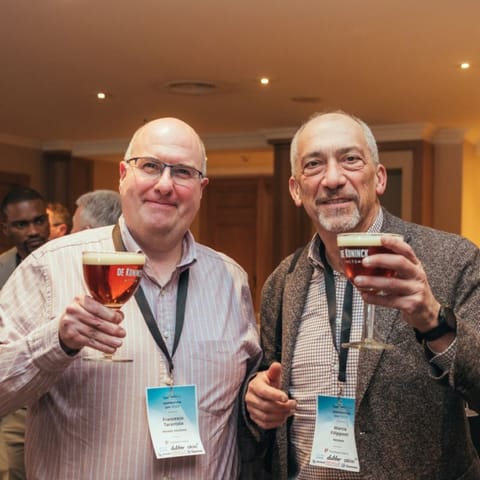
- ThrowbackThursday to Inspiration Day 2025 🍻 Francesco Tarantola, our Chief Operating Officer, and Marco Filipponi, Sales Director Southern Europe & Middle East, doing what the end of an Antwerp conference day calls for: a De Koninck and a conversation. Planning for the next Netaxis Inspiration Day is underway. If there’s a topic you’d like to see on the agenda, or you’d like to join us as a speaker or partner, get in touch with the Netaxis team. 📩 https://lnkd.in/dczTkfKu #NetaxisInspirationDay #Telecoms #Telco
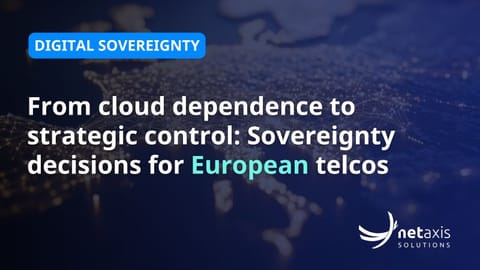
- When we published this piece in January, the argument was that sovereignty for European telcos should be treated as graduated control across the stack rather than an all-or-nothing choice. Nine months on, the policy and market side has moved faster than most expected. A few developments since then: 🇪🇺 The European Parliament adopted its technological sovereignty resolution in January. ☁️ The Commission awarded its first €180 million sovereign cloud tender in April, with Proximus among the selected providers. 🌐 Five of
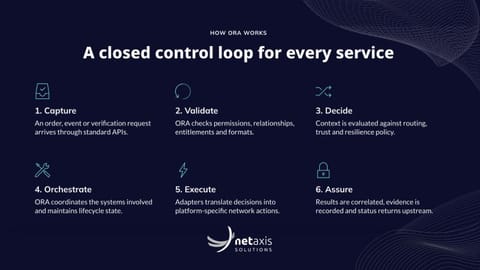
- What happens between a service request and its execution across the network? ⚙️ The journey can involve multiple systems, vendors, policies and manual processes. Keeping everything coordinated, reliable and traceable is no small task. That's why we lanched Netaxis ORA to provide a closed control loop for service execution. 📋 Audit evidence is produced during execution, not reconstructed later ⚠️ Exceptions surface at the stage they occur, before they reach the network 🔁 Models, adapters and workflows are reused, so each service
- A recent operator trial put live language translation and AI noise cancellation inside a mobile call. The AI engines sat in the network, connected to the IMS core through APIs, and worked on the call as it happened. What makes this different from app-based translation is who controls the experience. When the capability lives in the network, the operator can offer it to every customer on every device, bundle it into business tariffs, and apply it consistently across calls that cross borders or interconnect partners. That opens up
- Who controls direct-to-device connectivity in Europe after May 2027? The 2 GHz mobile satellite band is up for reallocation, and the Commission proposes splitting it three ways: 🏛️ A third for a government operator tied to IRIS² 🇪🇺 A third reserved for EU-controlled commercial operators 🌍 A third open to international bidders Starlink is contesting that open third, arguing fragmentation hurts D2D efficiency, while several European mobile groups are reportedly weighing a joint bid for the reserved share. For European

- Every operator has a version of the same problem: a new service is agreed commercially, then waits months because it touches four platforms, three vendor APIs and an OSS/BSS backlog that was already full. ORA was built for that gap. It sits between business systems and the network as a service control layer, so northbound systems work against one stable contract while vendor specifics stay inside ORA's adapters. Services get created, modified, suspended and migrated through a governed control loop, with status and audit
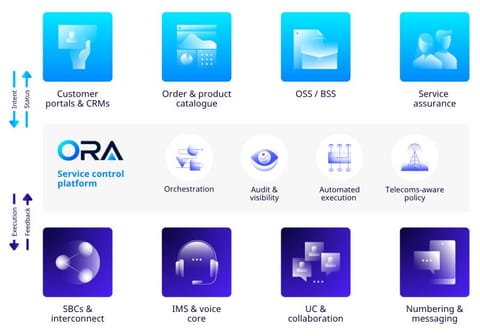
- Where does Netaxis ORA actually sit in a telecoms stack? ⬆️ Above ORA are the systems that express what a service needs: customer portals and CRMs, order and product catalogues, OSS/BSS, and service assurance. ⬇️ Below ORA are the platforms that make it happen: SBCs and interconnect, IMS and voice core, UC and collaboration, numbering and messaging. ORA is the control layer in between. Intent comes down from the business systems, execution goes out to the network, and status and feedback travel back up, so both sides always know

Alumni
 Francesco TarantolaHead of Integration & Delivery
 Gaetan BrichetCOO
 Raphael BenedetCo-Founder, Head of R&D
Something wrong or missing? Send an update. Fixed within 24 hours.