
Overview
Neuropsychology Lab Leuven was founded in 2016. The lab conducts research and publishes findings, with sections for news, people, research, publications, and participation opportunities for clinicians and students.
In the news
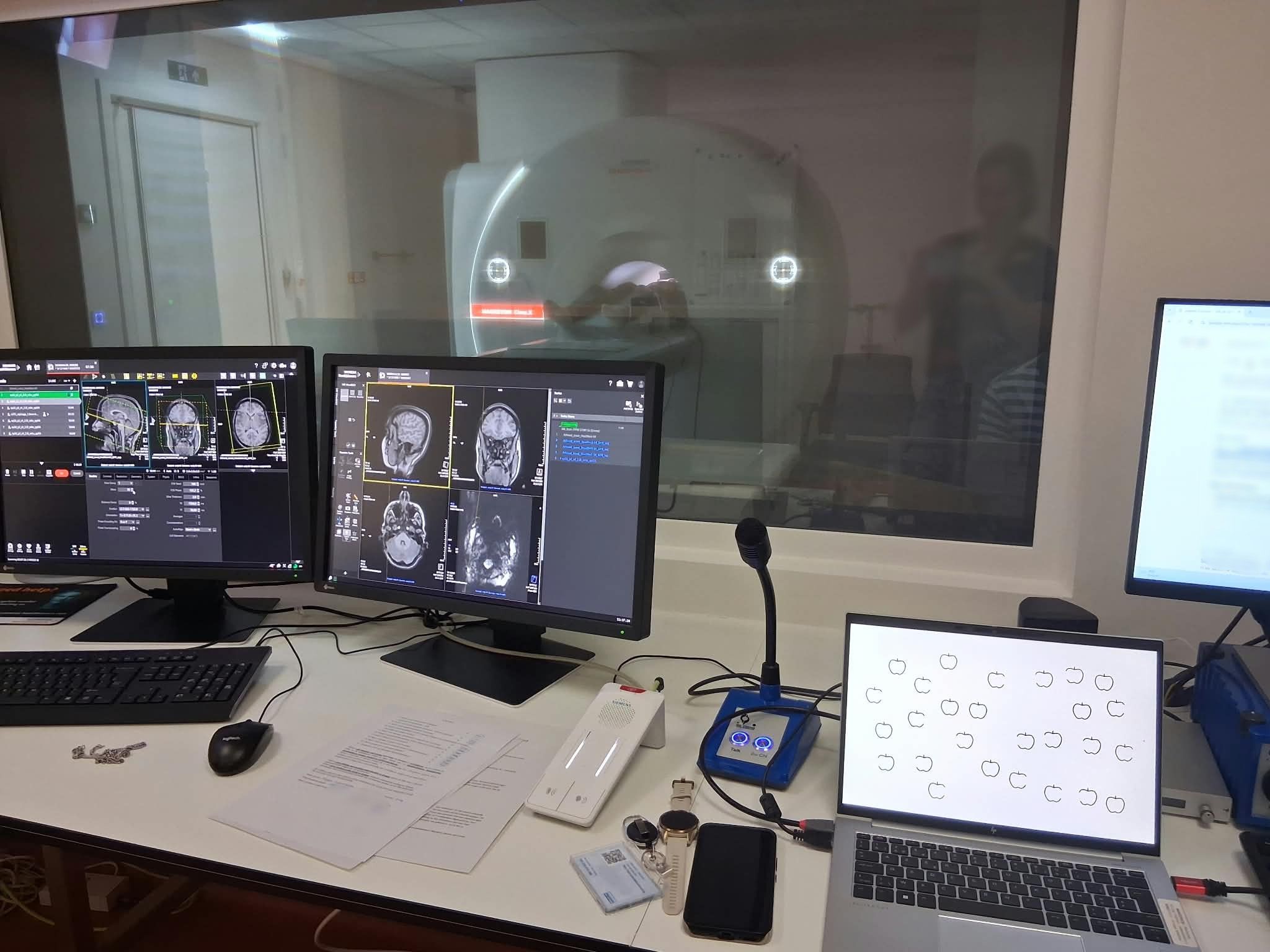
- We successfully completed our first scanning session on the new fMRI scanner at UZ Gasthuisberg! 🧠 The test session went very well, and we are excited to soon start data acquisition for Emma Goris’ study. In this study, Emma will perform a comprehensive neuropsychological assessment while undergoing fMRI. This provides us a unique opportunity to study the neural correlates of cognitive functioning in vivo. Very exciting to see this project moving towards data collection! 🚀 Leuven Brain Institute, NeuroSPACE
- Help our colleague Simon Ladouce by filling out this questionnaire about smart glasses and AI-powered wearable cameras. There is also a Dutch version! 👓
- Congratulations to our postdoctoral researcher Joyce Bosmans on presenting her latest research at EWIC 2026 in Leiden! Her presentation explored the importance of the vestibular system for spatial learning and offered a behind-the-scenes look at conduction spatial learning research in humans, including both the successes and inevitable challenges. The talk sparked engaging discussions with fellow researchers.
- Walking through a city feels effortless, but your eyes and feet are quietly adapting to the ground beneath you. A new study from our lab shows how the historic streets of Leuven shape attention and action 👀🚶♀️➡️. by Simon Ladouce and Céline Gillebert
- We have a new Dr. in the lab! 🎓 Congratulations to Shonimá Gangaram Panday, who successfully defended her PhD dissertation: Screening for post-stroke neurocognitive disorders in a culturally diverse population in Suriname. Her work helps improve how cognitive difficulties after stroke are assessed and interpreted in culturally diverse populations, with a strong focus on the Surinamese context. A PhD across continents, time zones, and clinical realities 🌍, carried out with dedication, creativity, and perseverance. 💪
- Can we stay attentive when we are no longer actively driving? Self-driving cars ask us to do exactly that: remain ready to intervene, while the car takes over many of the actions. But attention and action are normally tightly linked. We attend in order to act, and acting keeps us engaged. Decoupling the two is difficult for the brain, especially over time. Automation can reduce human error, but it does not take over our attention. Céline Gillebert discussed this in De Wereld Vandaag on Radio 1 and VRT NWS.
- Today the lab gathered for lunch - poke bowls on the menu - to mark the end of the internship of Lotte and Aino, Applied Psychology students from the Thomas More University of Applied Sciences in Antwerp. Over the past months, they contributed to several ongoing projects in the lab, including our work on post-stroke visual perception, led by Laura Soen, and cognitive reserve, led by Ibe Couwels. Their official evaluation is tomorrow, but today we already wanted to thank them for the energy, curiosity and kindness they brought

Related profiles
Something wrong or missing? Send an update. Fixed within 24 hours.