
Overview
Panenco works with ambitious organizations on AI products across their critical workflows. The studio offers AI strategy, product definition, and deployment services, helping clients cut through hype to identify where AI adds genuine business value and build practical roadmaps.
Key people

In the news
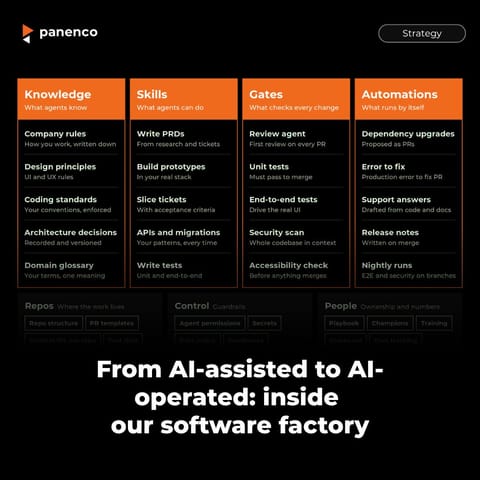
- We're moving towards an end-to-end software factory. Like most teams, we started with AI as an assistant. Engineers wrote code faster, but review, testing and support didn't speed up with them, so that's where work started to wait. Going from AI-assisted to AI-operated means agents take on the steps around the code as well: → Knowledge, so they follow our company rules, coding standards and architecture decisions → Skills, so they can draft PRDs, build prototypes in the real stack, slice tickets and write tests → Gates on every pull
- Thanks to everyone who joined our second "Building in the age of AI" roundtable in Leuven on September 30th. The conversations were open and practical, and many of you brought cases from your own teams to the table. That’s what makes these evenings worth organizing. The aftermovie gives a good impression of the night. We’re already looking forward to the next edition on Thursday 21 January 2027: setting up an end-to-end software factory. Most teams now use AI agents somewhere, but delivery speed insufficiently moves because there
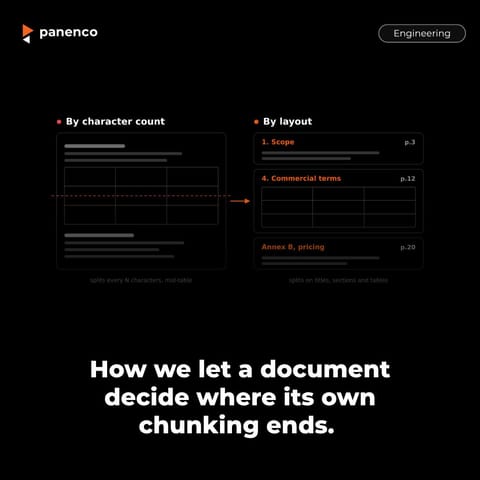
- Whenever we put an AI assistant on top of a company's own documents, the model turns out to be the easy part. The files we get are scanned, laid out in two columns and full of tables, and the clause that answers the question tends to sit around page 40. If you split that text every N characters, which is what most tutorials suggest, you get tables cut down the middle and fragments that no longer say what they are about. We built it that way first and spent a while wondering why retrieval kept returning passages that looked relevant
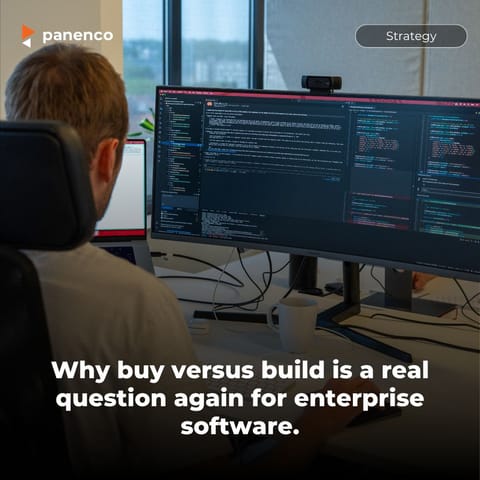
- For years, the default for enterprise software was to buy and only build when there was no alternative. AI-assisted engineering changed the math. Implementation now takes days instead of weeks, and the real work has moved to definition. With argenx, we compared build cost against full license cost over the same period. Building came out ahead, and the system now follows their process and their roadmap. If a process works the same everywhere, license it. If it’s specific to how you work, the comparison deserves a fresh look. More in

- Meet the team: Thomas Callens, one of our software engineers in Leuven. Thomas didn't take the usual route into software. His background is in mechanical engineering, with a PhD in robotics spent building control algorithms for exoskeletons, before the software side won him over. We asked him how he ended up here, what his work looks like, and what he gets out of it. Good to have you building with us, Thomas.
- Buy unless you have no other option" has been the enterprise software rule for about a decade. It was good advice. Building meant a long project, a dedicated team and a system to maintain for years. A license moved that risk to a vendor. It also came with a trade most companies accepted without much debate: working the way the vendor works. That rule deserves a second look, because the cost of building has dropped fast. AI-assisted engineering takes care of a large share of the implementation effort, and a small team now delivers
- We hebben een volwaardige software factory uitgebouwd met agents in elk aspect van het product ontwikkelingsproces. Van de opmaak van functionele requirements en PRDs tot software ontwikkeling en geautomatiseerde testing & QA. Ook customer success en interactie met eindgebruikers pakken we structureel anders aan. De onderliggende filosofie is altijd weer dezelfde: met kleinere teams (en een leger aan agents) meer gedaan krijgen. Maximale automatisatie. Menselijke begeleiding blijft cruciaal in dit proces, maar de dagelijkse
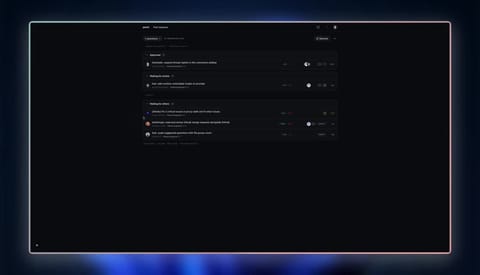
- We've built "Panel" to ease the bottleneck in code review. As we kept improving our agentic software factory, writing code got faster and faster, and the bottleneck in our delivery shifted to code review. Most of our review is already automated, but depending on risk, pull requests still need an engineer. Our approach: review less, and make the reviews that remain as efficient as possible. Panel runs locally on each engineer's machine, on top of the Github CLI and Claude CLI they already use. There's nothing to deploy and no extra

Related profiles
Something wrong or missing? Send an update. Fixed within 24 hours.