
Overview
ESPP addresses phosphorus as essential for agriculture, food security, and industry, while tackling critical challenges for water quality and the environment. The platform organizes events, research activities, and regulatory engagement around nutrient recovery technologies and sustainable phosphorus management.
In the news
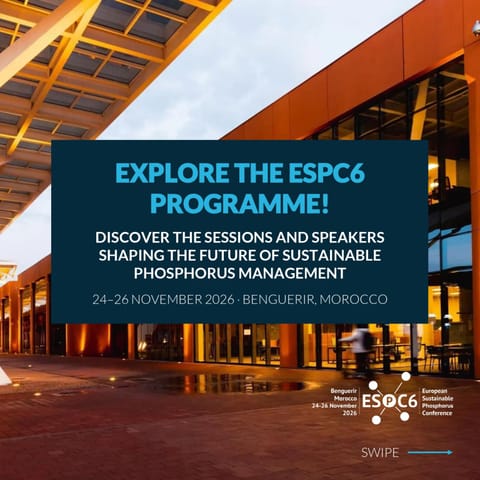
- 𝗘𝗦𝗣𝗖𝟲: 𝗘𝘅𝗽𝗹𝗼𝗿𝗲 𝘁𝗵𝗲 𝗰𝗼𝗻𝗳𝗲𝗿𝗲𝗻𝗰𝗲 𝗽𝗿𝗼𝗴𝗿𝗮𝗺𝗺𝗲! Discover the conference programme, bringing together researchers, industry representatives, policymakers and innovators to discuss the future of sustainable phosphorus management. From the strategic role of phosphorus in food security to environmental challenges, recovery and recycling technologies, and industrial innovation, ESPC6 will offer opportunities to exchange knowledge, explore new solutions and build collaborations. 📄 Swipe through the
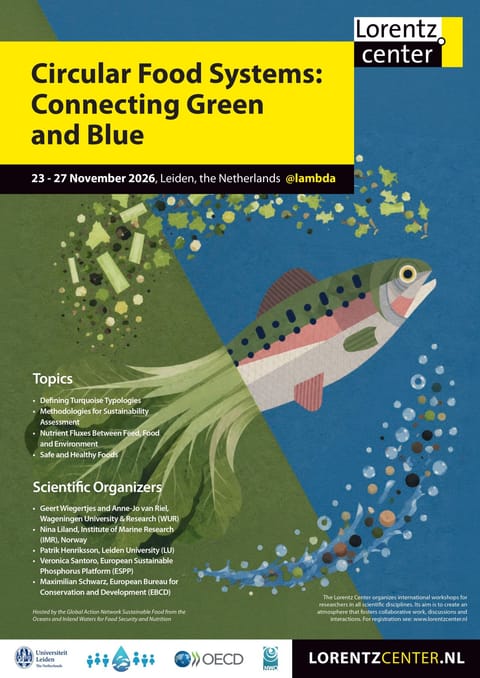
- 𝗖𝗼𝗻𝗻𝗲𝗰𝘁𝗶𝗻𝗴 𝗴𝗿𝗲𝗲𝗻 𝗮𝗻𝗱 𝗯𝗹𝘂𝗲 𝗳𝗼𝗼𝗱 𝘀𝘆𝘀𝘁𝗲𝗺𝘀: 𝗷𝗼𝗶𝗻 𝘁𝘄𝗼 𝗽𝘂𝗯𝗹𝗶𝗰 𝘄𝗲𝗯𝗶𝗻𝗮𝗿𝘀! How can agriculture and aquaculture work together to create more circular and sustainable food systems? The workshop “Circular Food Systems: Connecting Green and Blue”, taking place at the Lorentz Center in Leiden, the Netherlands, on 23–27 November 2026, will explore how terrestrial and aquatic food production can be better connected through nutrient cycling, resource reuse and food safety. Co-organised
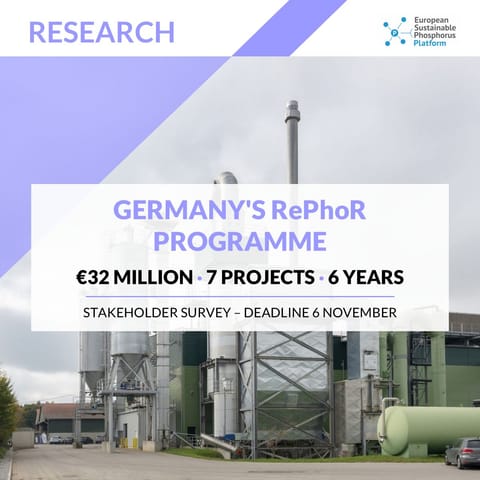
- 𝐆𝐞𝐫𝐦𝐚𝐧𝐲’𝐬 𝐑𝐞𝐏𝐡𝐨𝐑 𝐩𝐫𝐨𝐠𝐫𝐚𝐦𝐦𝐞: 𝐟𝐫𝐨𝐦 𝐩𝐡𝐨𝐬𝐩𝐡𝐨𝐫𝐮𝐬 𝐫𝐞𝐜𝐨𝐯𝐞𝐫𝐲 𝐫𝐞𝐬𝐞𝐚𝐫𝐜𝐡 𝐭𝐨 𝐢𝐦𝐩𝐥𝐞𝐦𝐞𝐧𝐭𝐚𝐭𝐢𝐨𝐧 After six years of research and demonstration, Germany’s RePhoR programme (2020–2026) is coming to an end. Supported by the German Federal Research Ministry with around €32 million, RePhoR funded seven demonstration-scale projects developing technologies to recover phosphorus from sewage sludge and sewage sludge ash. Among the developments: 🔹 AshDec®: the first
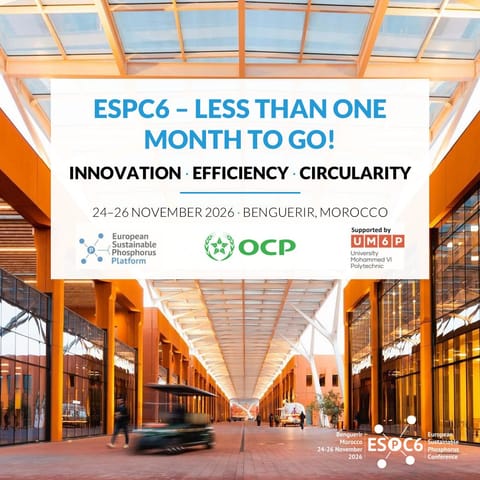
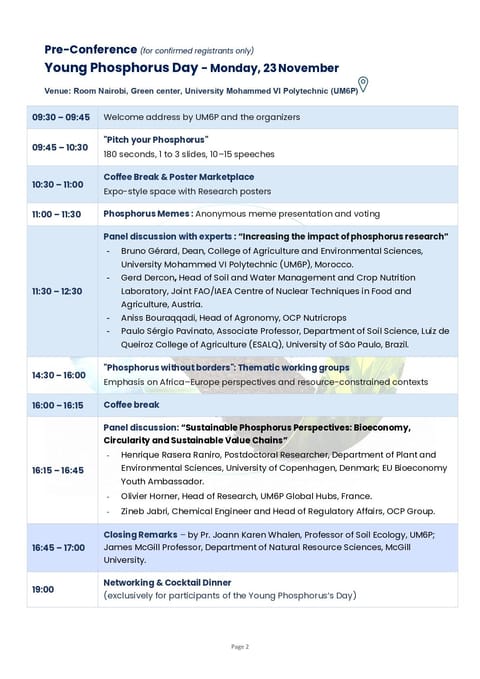
- Less than one month to ESPC6 – Join us in Morocco! The 6th European Sustainable Phosphorus Conference (#ESPC6) will bring together researchers, industry, policymakers and innovators to discuss the future of sustainable phosphorus management. 📍 Benguerir, Morocco | 24–26 November 2026 Under the theme “Sustainable phosphorus: innovation, efficiency and circularity”, the conference will explore: 🔹 Phosphorus and food security, from mining to agriculture and nutrition 🔹 Phosphorus recovery, recycling and resource efficiency
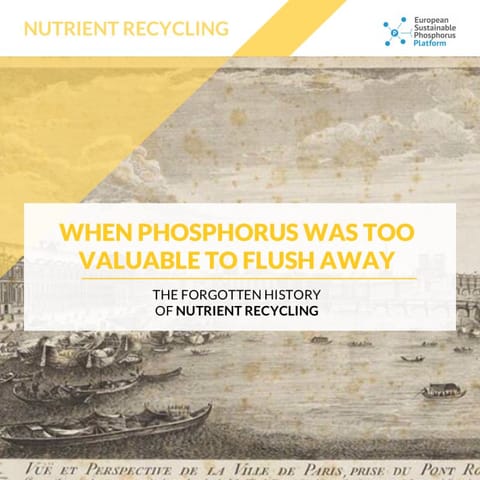
- Did you know that in the 19th-century, the Paris region recycled around two-thirds of the phosphorus contained in human excreta, compared with only around 40% today? In his new book "Une autre histoire des excréments", Fabien Esculier (OCAPI) explores how human urine and faeces went from being valuable agricultural resources to a costly sanitation and pollution challenge. Combining history, literature, agronomy and environmental science, the book explores how cities historically collected and recycled human excreta as fertilisers;
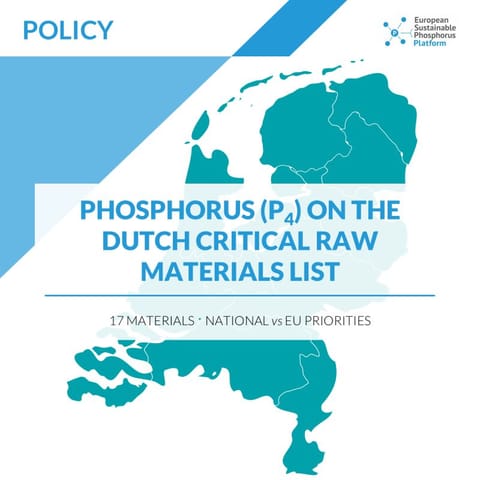
- Phosphorus (P4) included in the Netherlands' national critical raw materials list❗ The Dutch Government has established a national list of 17 critical raw materials, including phosphorus (P4), but not phosphate rock. The list is intended to guide government support for recycling, refining and logistics, including investment support and faster permitting procedures. So at the moment: 🔹 Netherlands: Phosphorus (P4) is included among the 17 nationally designated critical raw materials. 🔹 European Union: Both phosphorus (P4) and
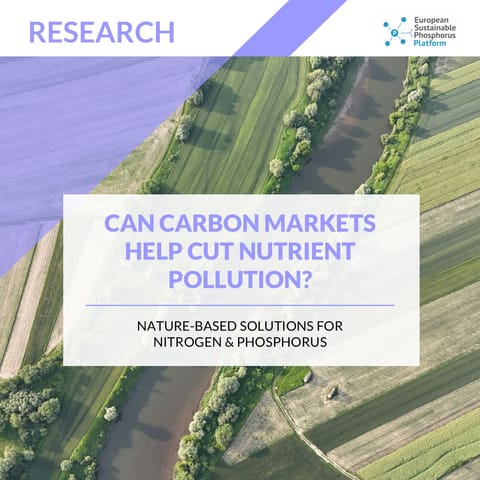
- Nature-based solutions, such as buffer strips and constructed wetlands, can reduce #nitrogen and #phosphorus losses from agriculture. But how can these measures be financed? A study published in Communications Earth & Environment explores whether carbon markets could help support nutrient pollution reduction, by recognising the climate benefits of green infrastructure. Using modelling across US watersheds, researchers compared the costs and carbon emissions of increasingly advanced wastewater treatment with nature-based measures
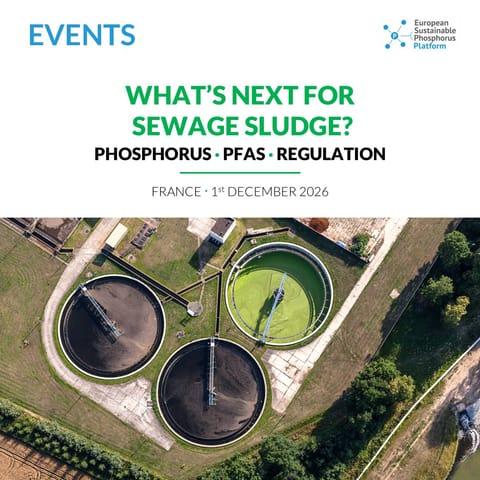
- What is the future of sewage sludge management and valorisation? On 1 December 2026, RISPO, in partnership with SIAH and ASTEE, will organise a technical workshop in Bonneuil-en-France (near Paris) to discuss the future of sewage sludge (in French). The programme will address: 🔹 European and French regulatory developments 🔹 Phosphorus recovery and recycling 🔹 PFAS and other challenges for sludge management 🔹 The agronomic value of sewage sludge The event will also include a site visit to the wastewater treatment

Something wrong or missing? Send an update. Fixed within 24 hours.