
Overview
EDDIE introduces a decentralized, distributed, open-source Data Space to address the lack of standardized procedures for energy data access across the EU, as established by the Clean Energy Package. The infrastructure reduces data integration costs for energy service companies and includes an Administrative Interface for In-house Data Access (AIIDA) to ensure secure access to real-time data based on customer consent.
In the news
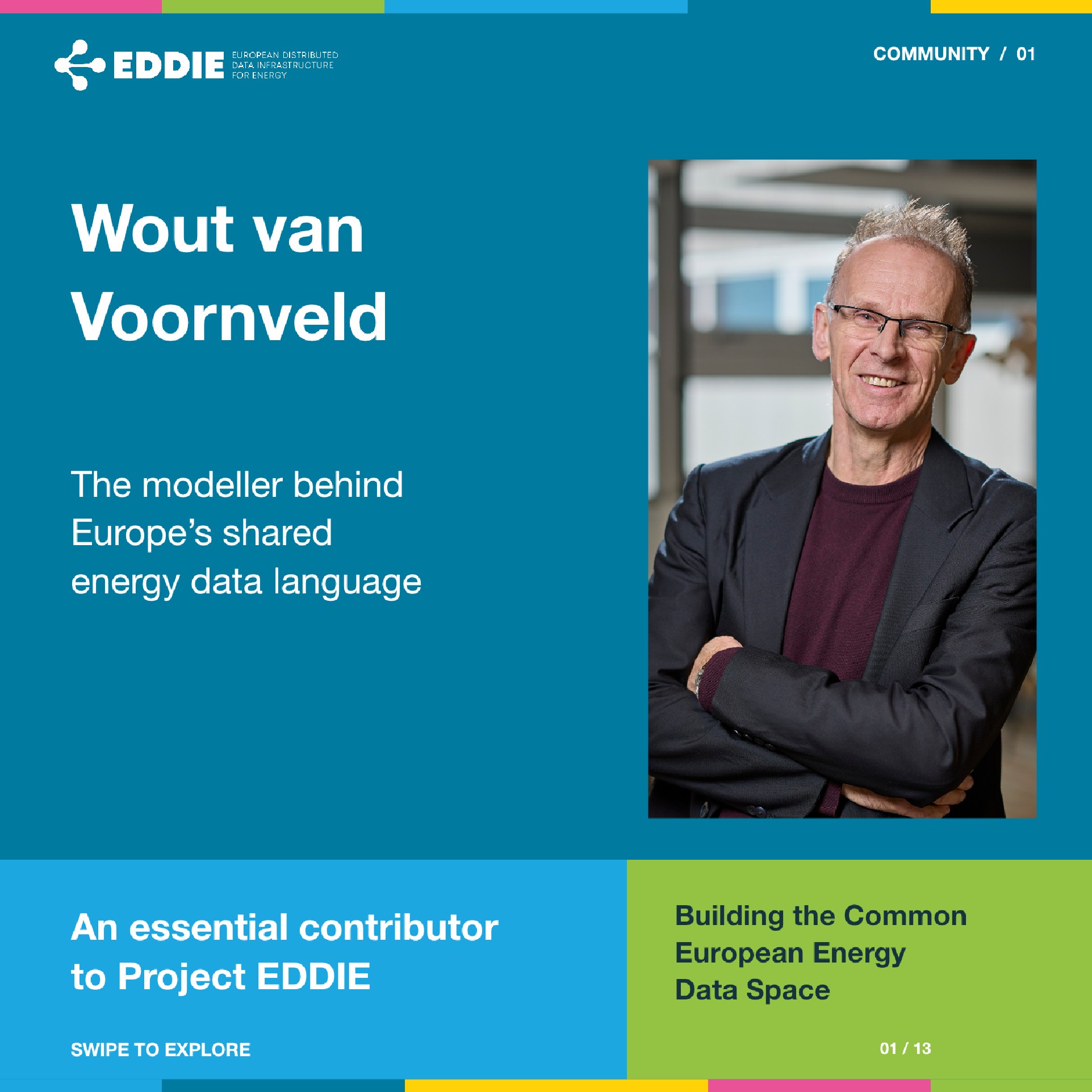
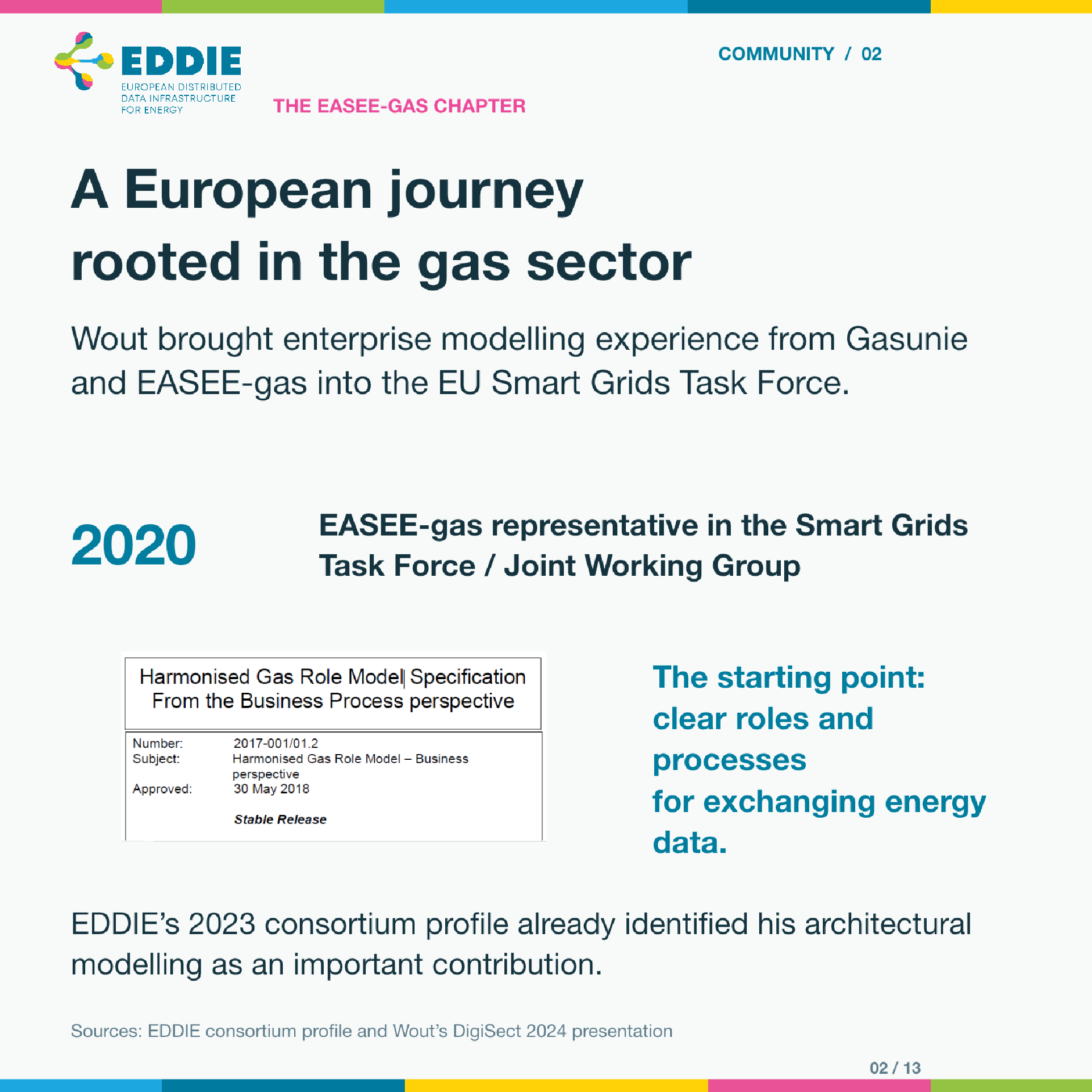
- Some of EDDIE’s most important contributions happened behind the scenes. Today, we want to recognise Wout van Voornveld, whose modelling work helped make a shared European interface for energy data possible. His contribution began well before EDDIE. Through his enterprise modelling work with EASEE-gas, Wout brought experience in defining clear roles, processes and information exchanges into the EU Smart Grids Task Force. Together with Georg Hartner, he helped secure a place for BPMN in the interoperability work that led to
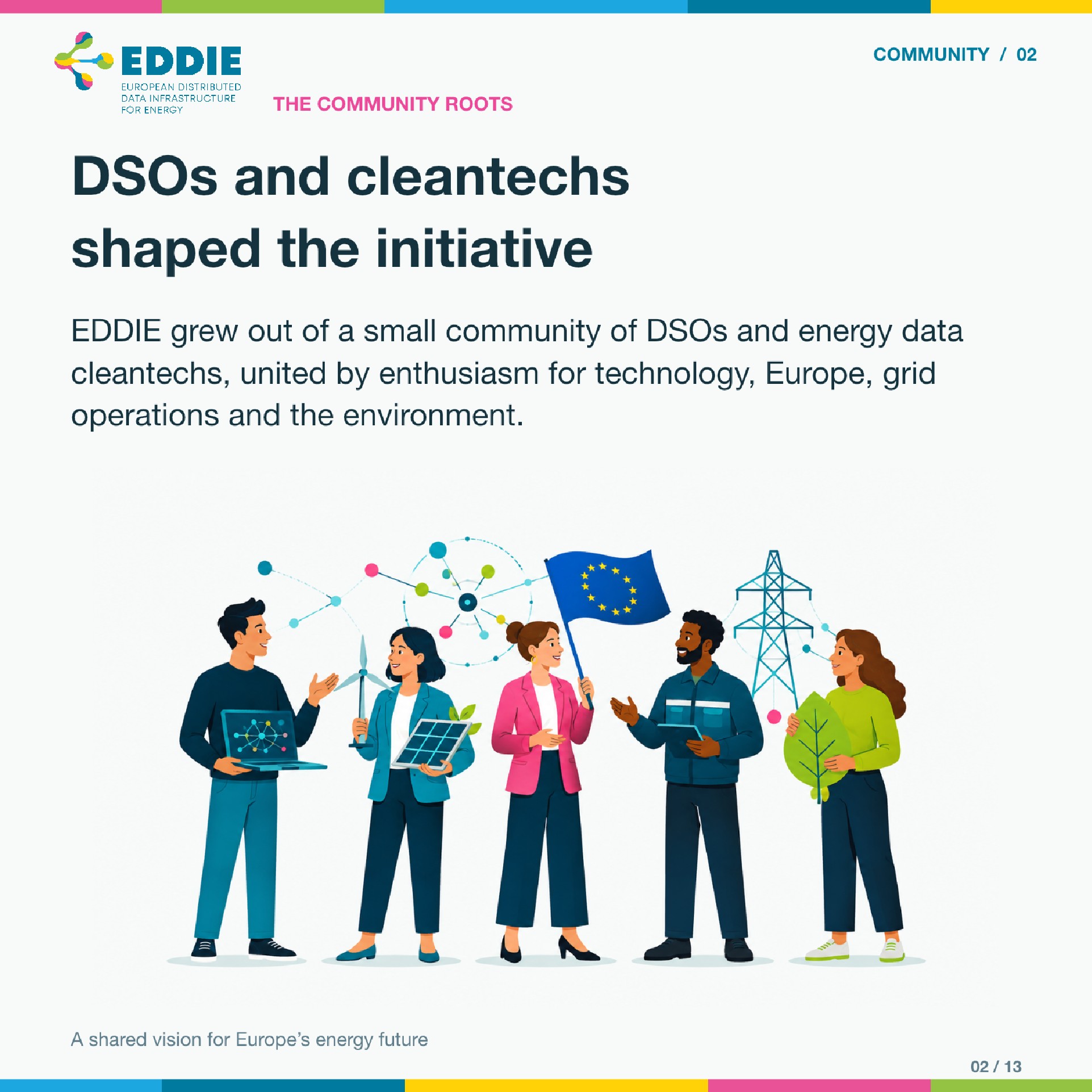
- EDDIE began with a community of distribution system operators and energy data-driven cleantechs who shared a vision: a European Distributed Data Infrastructure for Energy. Laurent Schmitt recognised its potential early. During the proposal’s design phase, he called with a message we still remember: “I heard of the vision - I need to be part of THIS!” He brought decades of experience building grid control rooms around the world, together with the curiosity to help shape what comes next. Laurent sharpened EDDIE’s focus on grid-edge
- 23 publications. 70 contributors. One connected European energy-data mission. ⚡ What does it take to make energy data accessible, interoperable, trustworthy and genuinely useful? Between 2023 and 2026, Project EDDIE built a multidisciplinary research trail spanning: • data sovereignty, cloud services and technical infrastructure • economics, interoperability and cost allocation • identity, participation and consumer rights • standards, governance and the EU Data Act • human-centred design, IoT and user control Our new
- A final milestone for EDDIE 💚 Last week, we successfully completed the Final Review of the EDDIE project, marking the end of an exciting journey towards a more open, interoperable and consumer-centric European energy data ecosystem. A big thank you to all our project partners, contributors and everyone who supported EDDIE along the way. It has been a great collaboration, filled with valuable exchanges, joint achievements and plenty of energy 💐 While the project itself is coming to an end, its results are here to stay. Explore the

- Customer sovereignty only becomes practical when communication works both ways. EDDIE Framework's AIIDA provides a Digital Customer Interface for standardised, secure and bidirectional communication at the grid edge. It understands both inbound and outbound DataNeeds: → Outbound measurements and near-real-time telemetry ← Inbound setpoints, operational envelopes and control instructions Together, EDDIE and AIIDA connect both sides of the energy data space: • EDDIE integrates applications with energy market infrastructure and
- Open source is not an add-on to EDDIE and AIIDA—it is part of the architecture. ⚡ Our new carousel explores the key open-source technologies behind the stack, what they are used for, and why they were chosen: 🔹 Spring Boot and Java for modular backend services 🔹 PostgreSQL and TimescaleDB for operational and time-series data 🔹 MQTT for interoperable, authenticated IT/OT communication 🔹 Kafka and AMQP for different integration patterns 🔹 Keycloak and open identity standards 🔹 Vue, Lit and Vite for user interfaces and
- Why should a European energy application describe essentially the same Data Exchange Need again and again—in a different national process and format? It shouldn’t. An application requesting validated hourly electricity data for the previous 12 months needs fundamentally the same data in France, Denmark, Spain or Austria. What changes is the regional implementation: → Enedis Data Connect: redirect, customer login and callback → Energinet Eloverblik: API key, metering point and refresh token → aelec Datadis: portal approval, CUPS and
- As Project EDDIE nears its final review, we found time to pause and reflect on where it came from—and how far it has evolved. EDDIE did not start with a Horizon Europe grant. Its foundations were laid in 2019 through work on a European approach to energy-data interoperability. In early 2021, those foundations became the first EDDIE architecture: common European APIs to key energy services. Later that year, architecture, grid-edge flexibility, standards, implementation, research and data-economy thinking came together in a European

Related profiles
Something wrong or missing? Send an update. Fixed within 24 hours.