
Overview
Project TRIREME focuses on continuous skills intelligence gathering, sectoral skills strategy development, and curricula updates for the mobility ecosystem. The project supports regional roll-out and tracks social impact of transformations, with a Skills Hub connecting training providers across Europe.
In the news
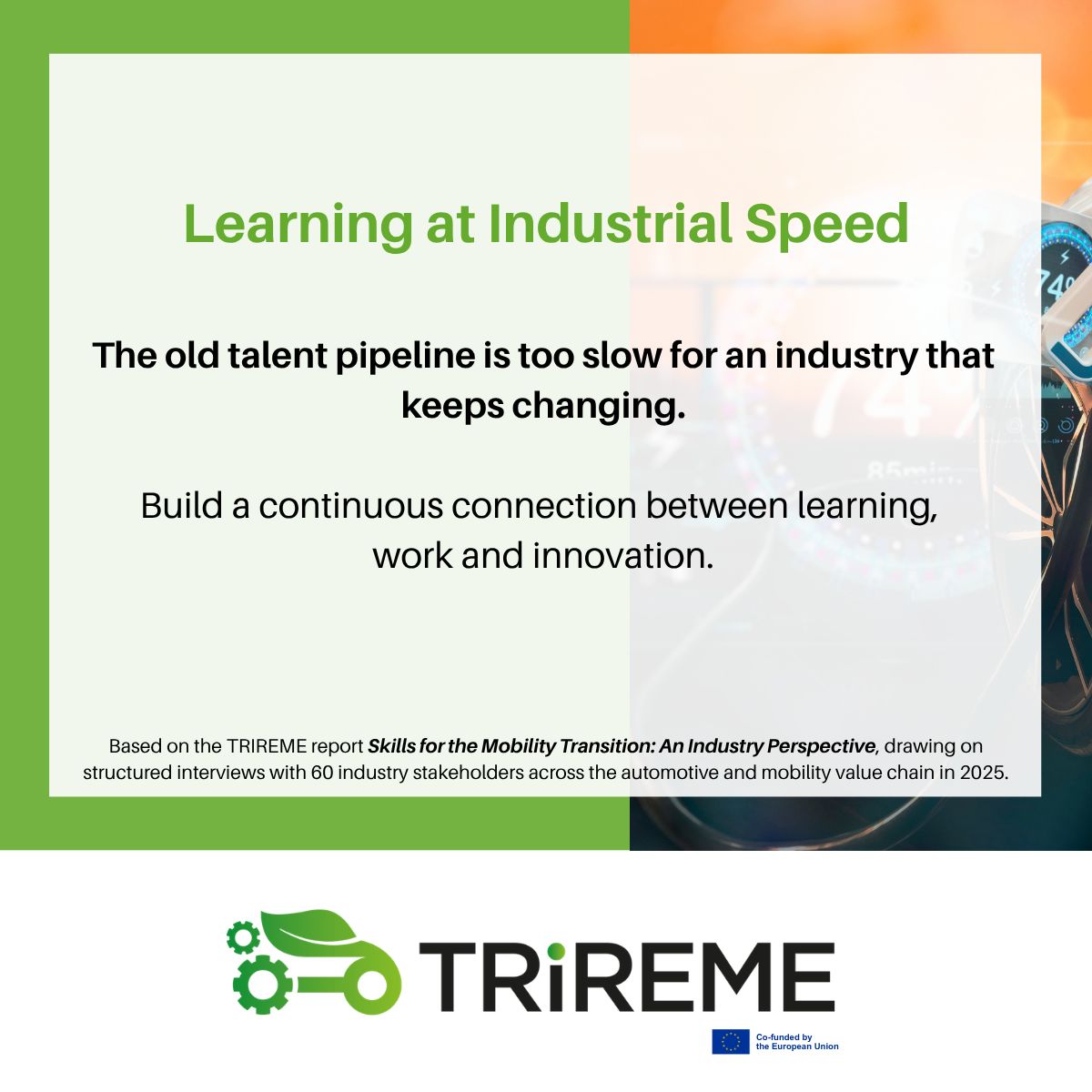
- 𝗧𝗵𝗲 𝘁𝗿𝗮𝗱𝗶𝘁𝗶𝗼𝗻𝗮𝗹 𝗷𝗼𝘂𝗿𝗻𝗲𝘆 𝗳𝗿𝗼𝗺 𝘀𝗰𝗵𝗼𝗼𝗹 𝘁𝗼 𝗷𝗼𝗯 𝗶𝘀 𝗯𝗲𝗰𝗼𝗺𝗶𝗻𝗴 𝘁𝗼𝗼 𝘀𝗹𝗼𝘄 𝗳𝗼𝗿 𝘁𝗵𝗲 𝗺𝗼𝗯𝗶𝗹𝗶𝘁𝘆 𝗶𝗻𝗱𝘂𝘀𝘁𝗿𝘆. Software-defined vehicles, electrification, AI and cybersecurity are changing faster than many curricula can adapt. So companies are increasingly moving upstream, into universities, schools and training, to help shape the skills they will need next. But is the future really about creating more courses? Or about creating a continuous connection between learning
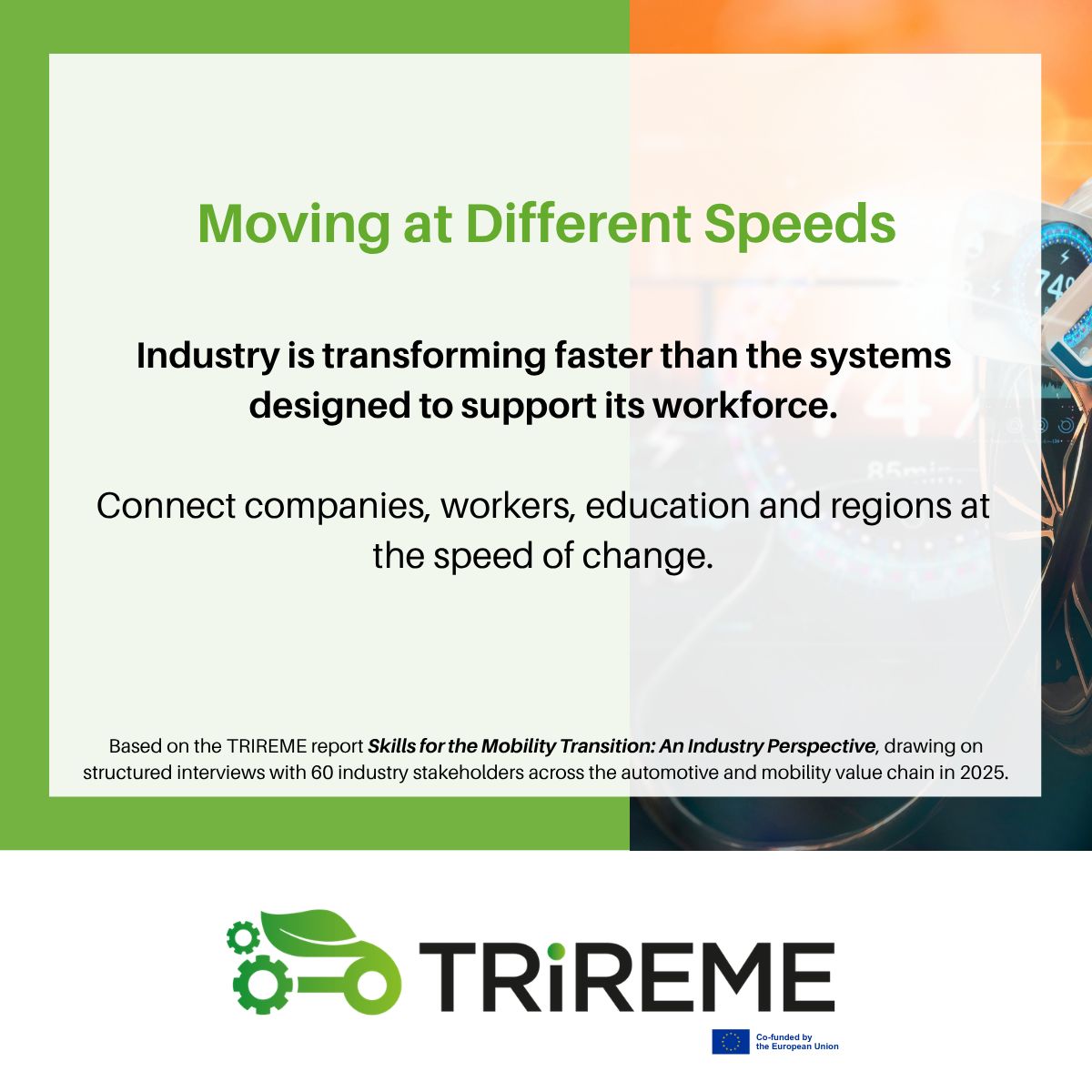
- 𝗧𝗵𝗲 𝗮𝘂𝘁𝗼𝗺𝗼𝘁𝗶𝘃𝗲 𝗶𝗻𝗱𝘂𝘀𝘁𝗿𝘆 𝗶𝘀 𝗺𝗼𝘃𝗶𝗻𝗴 𝗳𝗮𝘀𝘁. 𝗧𝗵𝗲 𝘀𝘆𝘀𝘁𝗲𝗺𝘀 𝘀𝘂𝗽𝗽𝗼𝗿𝘁𝗶𝗻𝗴 𝘄𝗼𝗿𝗸𝗳𝗼𝗿𝗰𝗲 𝘁𝗿𝗮𝗻𝘀𝗶𝘁𝗶𝗼𝗻 𝗼𝗳𝘁𝗲𝗻 𝗱𝗼 𝗻𝗼𝘁. Companies face rapidly changing skills needs, but labour rules, education systems, funding programmes and employment services can operate on very different timelines. What happens when every part of the ecosystem is working to a different clock? Read our full brief to explore what a more responsive regional skills infrastructure could look like. 👇
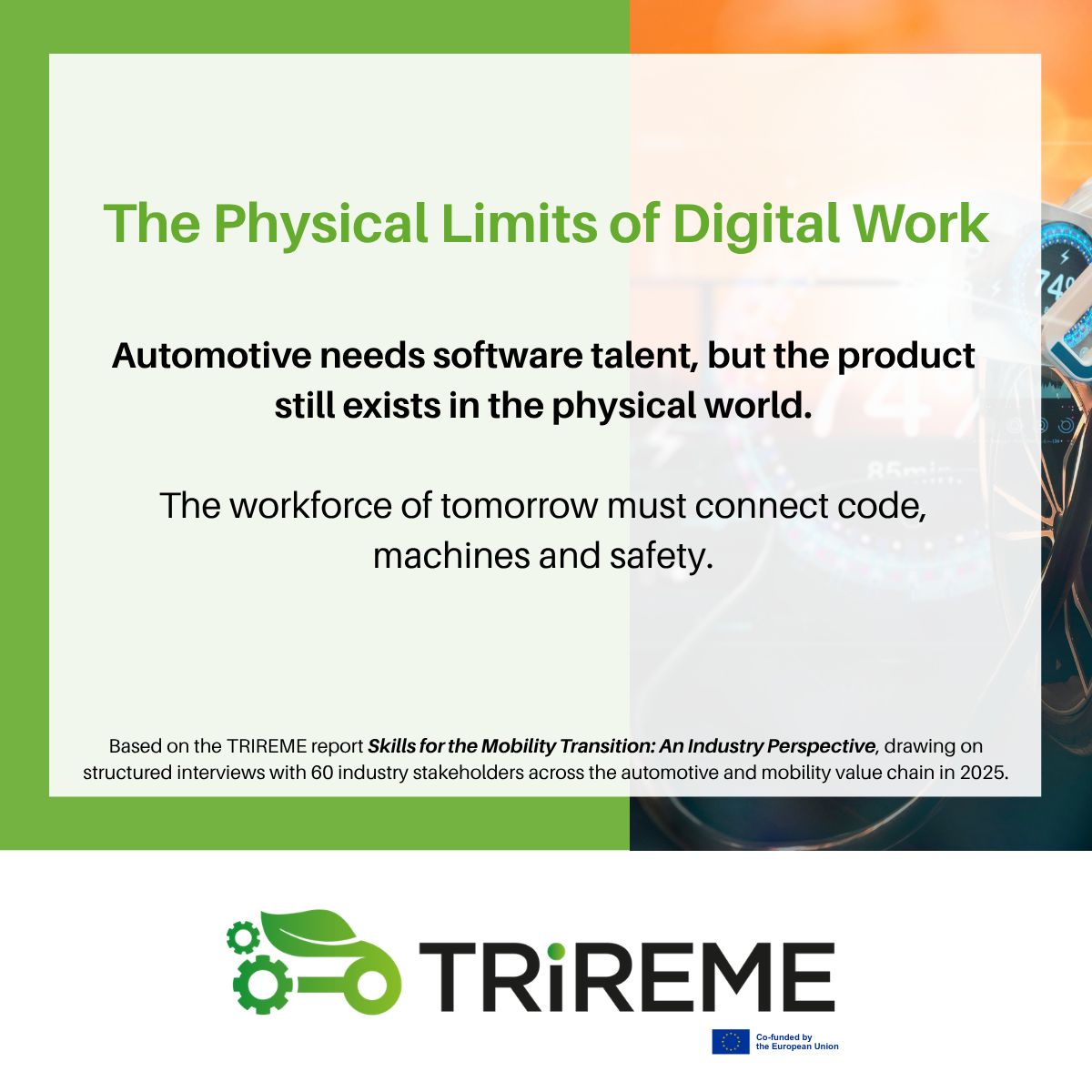
- 𝗔𝘂𝘁𝗼𝗺𝗼𝘁𝗶𝘃𝗲 𝗰𝗼𝗺𝗽𝗮𝗻𝗶𝗲𝘀 𝗻𝗲𝗲𝗱 𝘀𝗼𝗳𝘁𝘄𝗮𝗿𝗲 𝘁𝗮𝗹𝗲𝗻𝘁, 𝗯𝘂𝘁 𝘁𝗵𝗲𝘆 𝗰𝗮𝗻’𝘁 𝗯𝗲𝗰𝗼𝗺𝗲 𝗷𝘂𝘀𝘁 𝗮𝗻𝗼𝘁𝗵𝗲𝗿 𝘁𝗲𝗰𝗵 𝗰𝗼𝗺𝗽𝗮𝗻𝘆. Developers may expect flexibility and remote working. But automotive still depends on factories, laboratories, prototypes, testing and physical systems. Where should the boundary lie between digital flexibility and physical presence? And what happens when safety and cybersecurity add another layer of complexity? Read our full brief to explore the changing
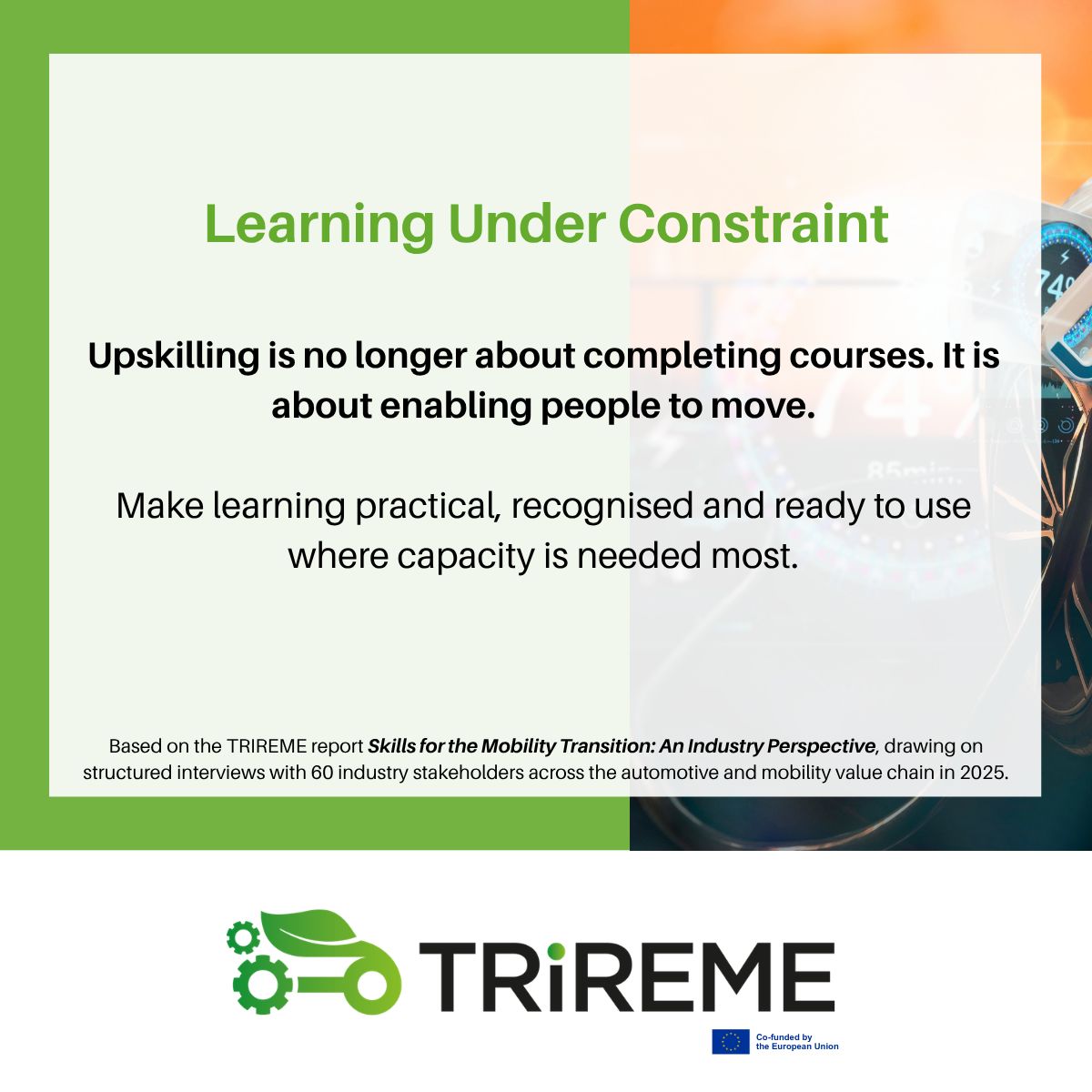
- 𝗪𝗵𝗮𝘁 𝗶𝗳 𝘁𝗵𝗲 𝗯𝗶𝗴𝗴𝗲𝘀𝘁 𝗯𝗮𝗿𝗿𝗶𝗲𝗿 𝘁𝗼 𝗿𝗲𝘀𝗸𝗶𝗹𝗹𝗶𝗻𝗴 𝗶𝘀𝗻’𝘁 𝘁𝗵𝗲 𝗹𝗮𝗰𝗸 𝗼𝗳 𝗰𝗼𝘂𝗿𝘀𝗲𝘀, 𝗯𝘂𝘁 𝘁𝗵𝗲 𝗹𝗮𝗰𝗸 𝗼𝗳 𝘁𝗶𝗺𝗲? In a production environment under constant pressure, taking people away from the line to learn can be difficult. And the experts who could train them are often needed on the job themselves. So what does effective upskilling look like when training has to happen at industrial speed? Read our full brief to discover how companies are tackling learning, redeployment and
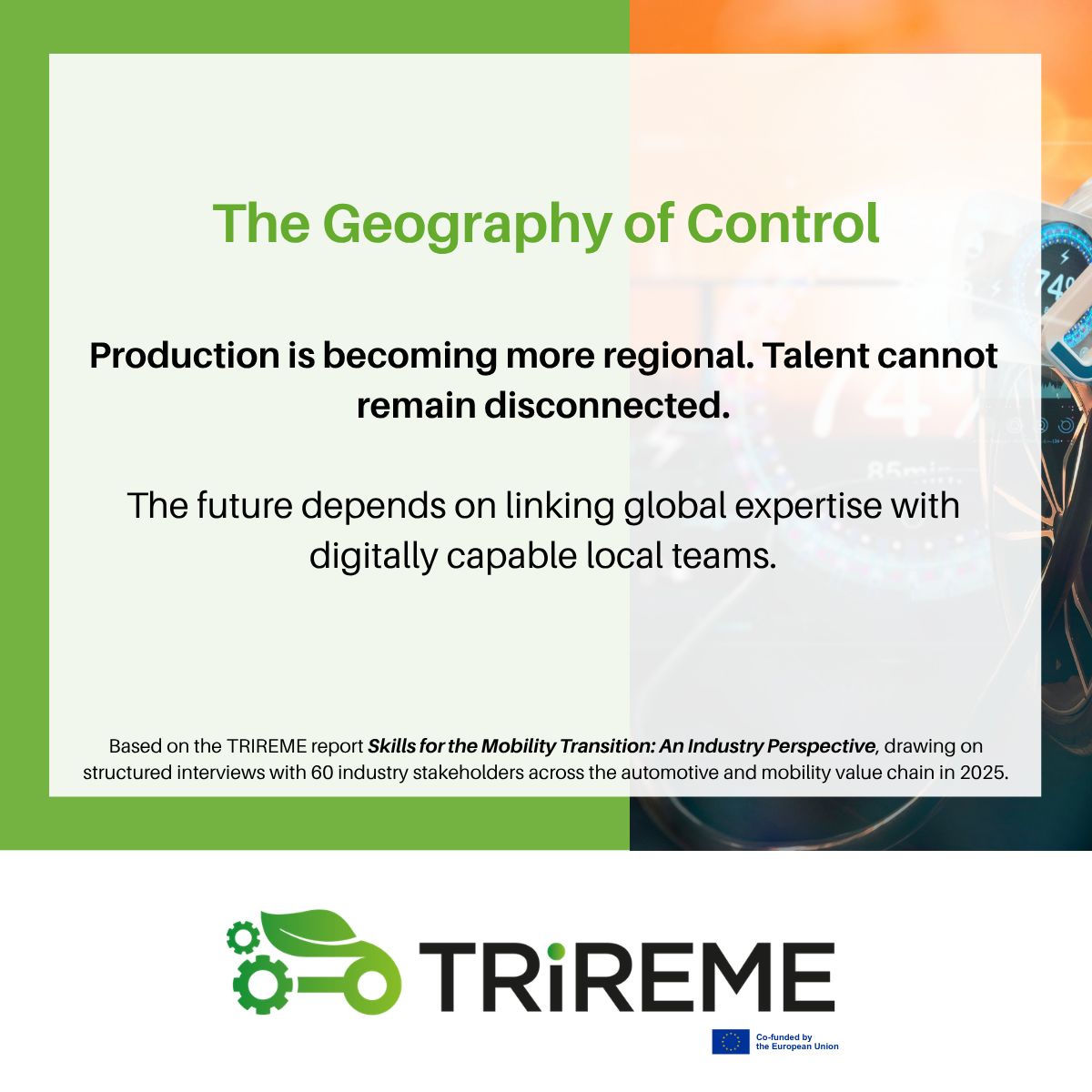
- 𝗪𝗵𝗲𝗿𝗲 𝗮 𝗰𝗮𝗿 𝗶𝘀 𝗯𝘂𝗶𝗹𝘁 𝗶𝘀 𝗯𝗲𝗰𝗼𝗺𝗶𝗻𝗴 𝗹𝗲𝘀𝘀 𝗶𝗺𝗽𝗼𝗿𝘁𝗮𝗻𝘁 𝘁𝗵𝗮𝗻 𝘄𝗵𝗲𝗿𝗲 𝗸𝗻𝗼𝘄𝗹𝗲𝗱𝗴𝗲 𝗮𝗻𝗱 𝗰𝗼𝗻𝘁𝗿𝗼𝗹 𝘀𝗶𝘁. Regionalisation is changing the automotive production model. But if advanced expertise remains concentrated in global hubs, how can local plants stay competitive? The answer may lie in a new relationship between global knowledge centres and digitally capable local teams, with important implications for talent, outsourcing and regional skills infrastructure. Read our full
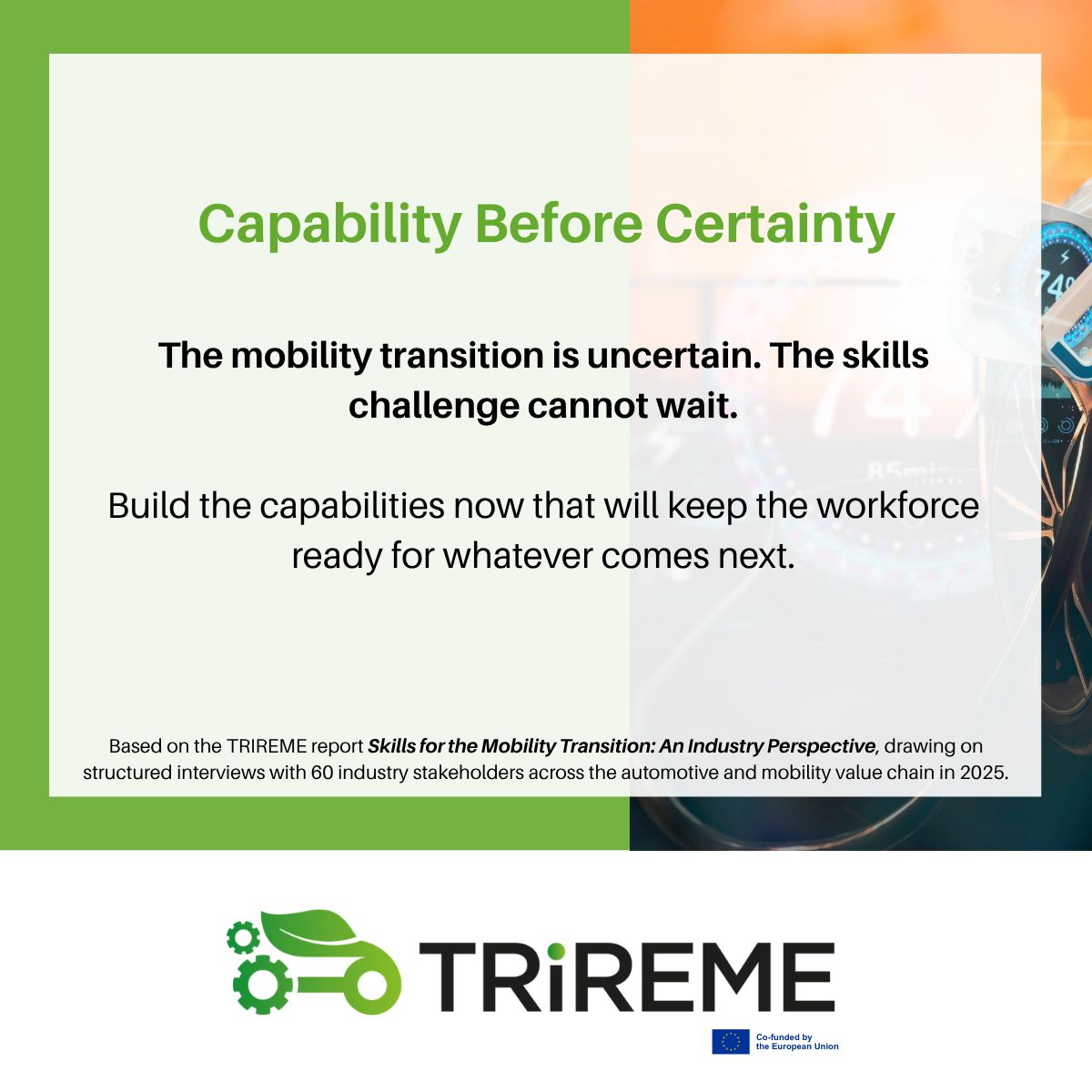
- 𝗧𝗵𝗲 𝗘𝗩 𝘁𝗿𝗮𝗻𝘀𝗶𝘁𝗶𝗼𝗻 𝗺𝗮𝘆 𝗯𝗲 𝘂𝗻𝗰𝗲𝗿𝘁𝗮𝗶𝗻, 𝗯𝘂𝘁 𝘄𝗮𝗶𝘁𝗶𝗻𝗴 𝗳𝗼𝗿 𝗰𝗲𝗿𝘁𝗮𝗶𝗻𝘁𝘆 𝗰𝗼𝘂𝗹𝗱 𝗯𝗲 𝘁𝗵𝗲 𝗴𝗿𝗲𝗮𝘁𝗲𝘀𝘁 𝘀𝗸𝗶𝗹𝗹𝘀 𝗿𝗶𝘀𝗸. As ICE, hybrid and BEV technologies continue to coexist, companies are having to prepare for several possible futures at once. But what capabilities will matter most when the direction of travel is still shifting? And which profiles can connect technologies, production and people? Read our full brief to explore what industry sees as the real workforce
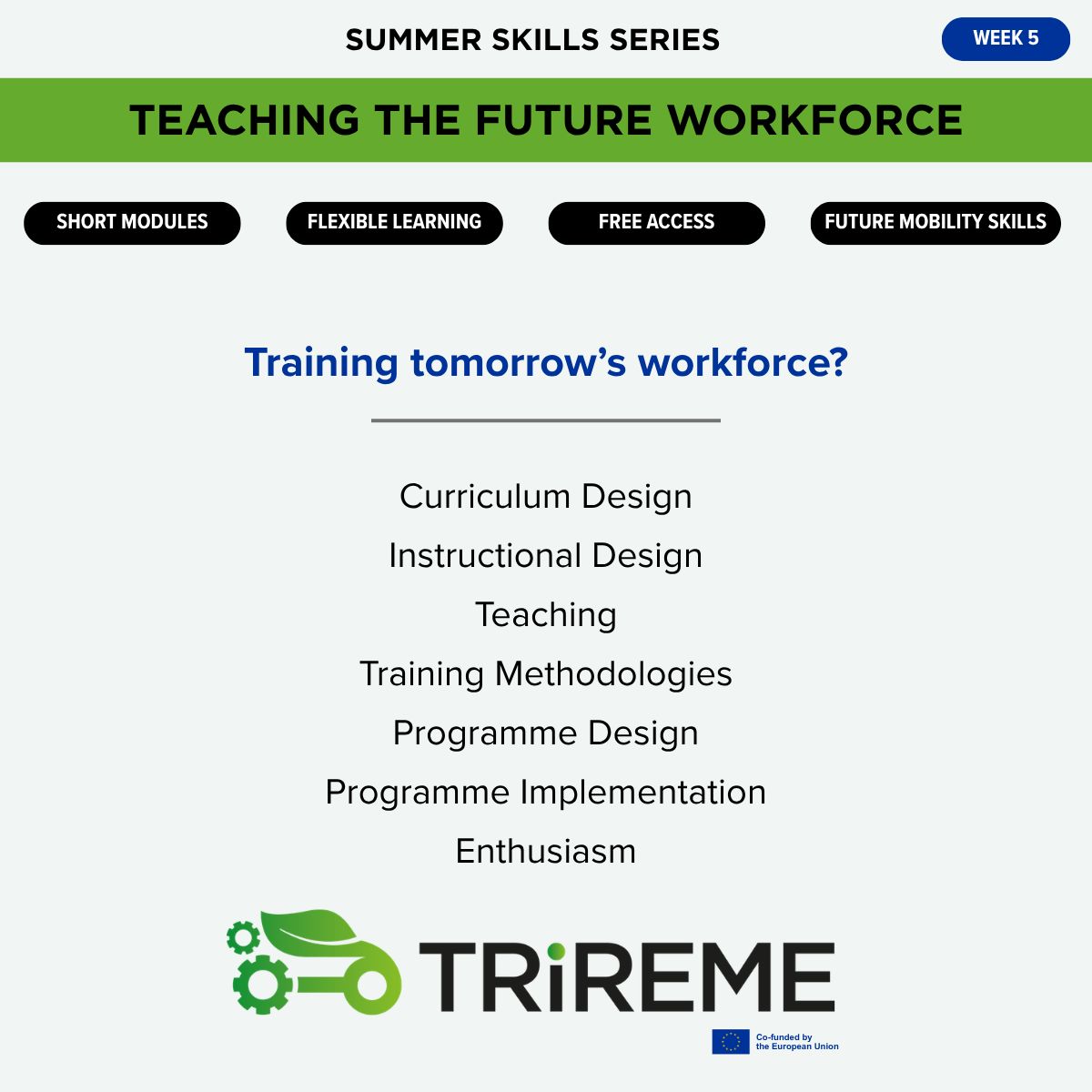
- 𝗧𝗵𝗲 𝗳𝘂𝘁𝘂𝗿𝗲 𝘄𝗼𝗿𝗸𝗳𝗼𝗿𝗰𝗲 𝗻𝗲𝗲𝗱𝘀 𝗳𝘂𝘁𝘂𝗿𝗲-𝗿𝗲𝗮𝗱𝘆 𝗲𝗱𝘂𝗰𝗮𝘁𝗼𝗿𝘀. High-quality training begins with well-designed curricula, engaging teaching practices and effective learning methodologies. TRIREME supports educators, trainers and programme designers with modular courses that help create flexible, learner-centred training for the green and digital transition. Build your learning pathway with TRIREME's modular training offer: https://lnkd.in/dxAMw_c2 #ProjectTRIREME #FutureOfWork #ErasmusPlus
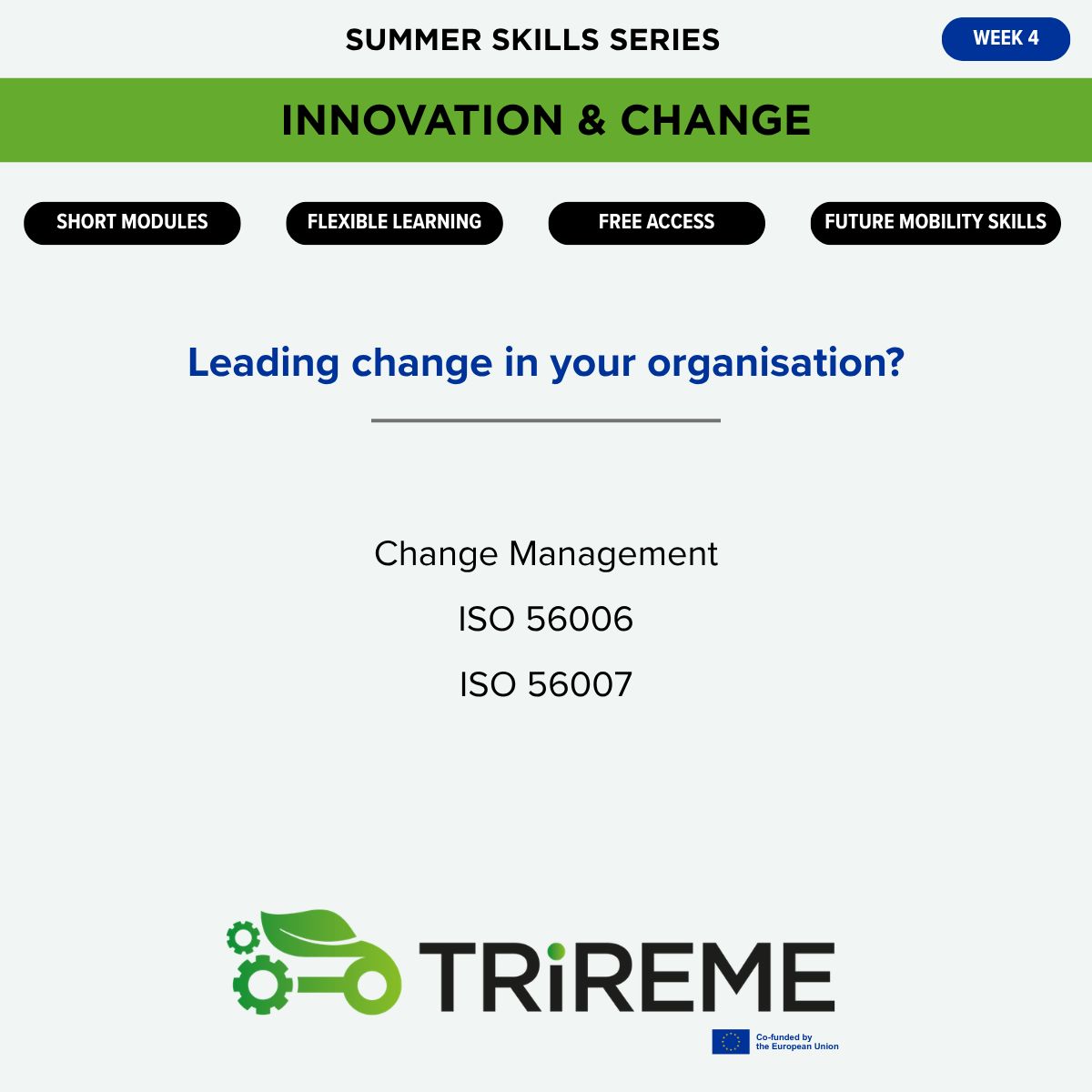
- 𝗜𝗻𝗻𝗼𝘃𝗮𝘁𝗶𝗼𝗻 𝗶𝘀𝗻'𝘁 𝗷𝘂𝘀𝘁 𝗮𝗯𝗼𝘂𝘁 𝘁𝗲𝗰𝗵𝗻𝗼𝗹𝗼𝗴𝘆. 𝗜𝘁'𝘀 𝗮𝗯𝗼𝘂𝘁 𝗽𝗲𝗼𝗽𝗹𝗲, 𝘀𝘁𝗿𝗮𝘁𝗲𝗴𝘆 𝗮𝗻𝗱 𝗰𝗵𝗮𝗻𝗴𝗲. Managing transformation, developing innovation capabilities and embedding sustainability into decision-making are key to building resilient organisations. TRIREME's modular courses provide practical knowledge to support professionals leading the green and digital transition. Build your learning pathway with TRIREME's modular training offer: https://lnkd.in/dxAMw_c2 #ProjectTRIREME

Something wrong or missing? Send an update. Fixed within 24 hours.